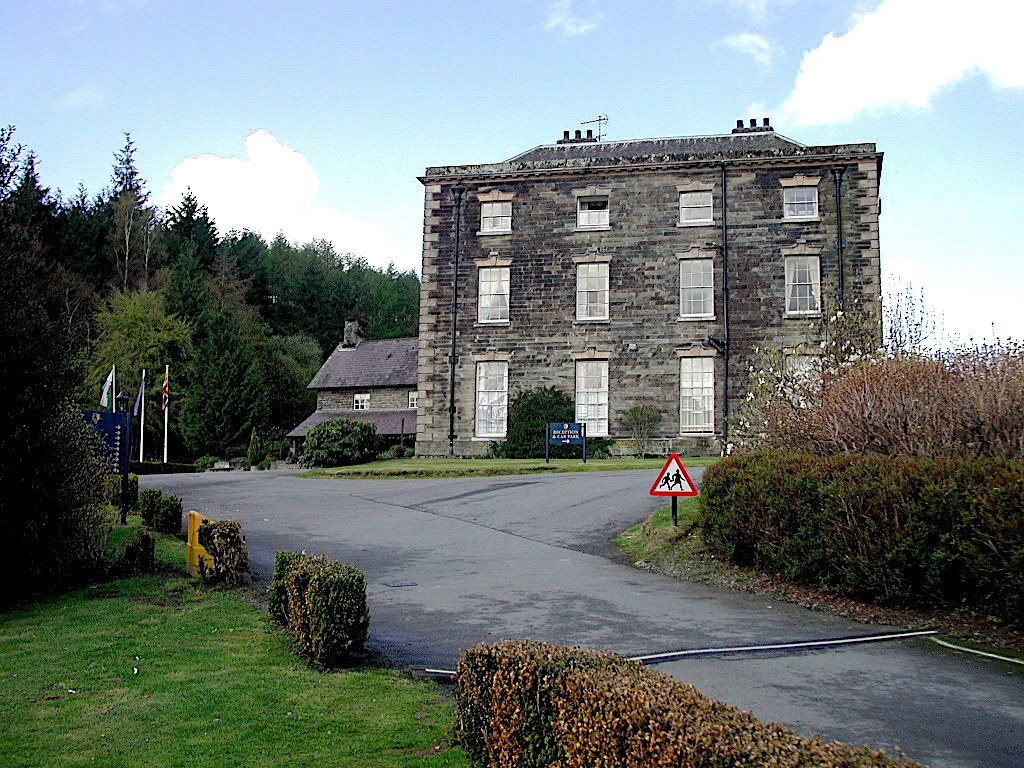
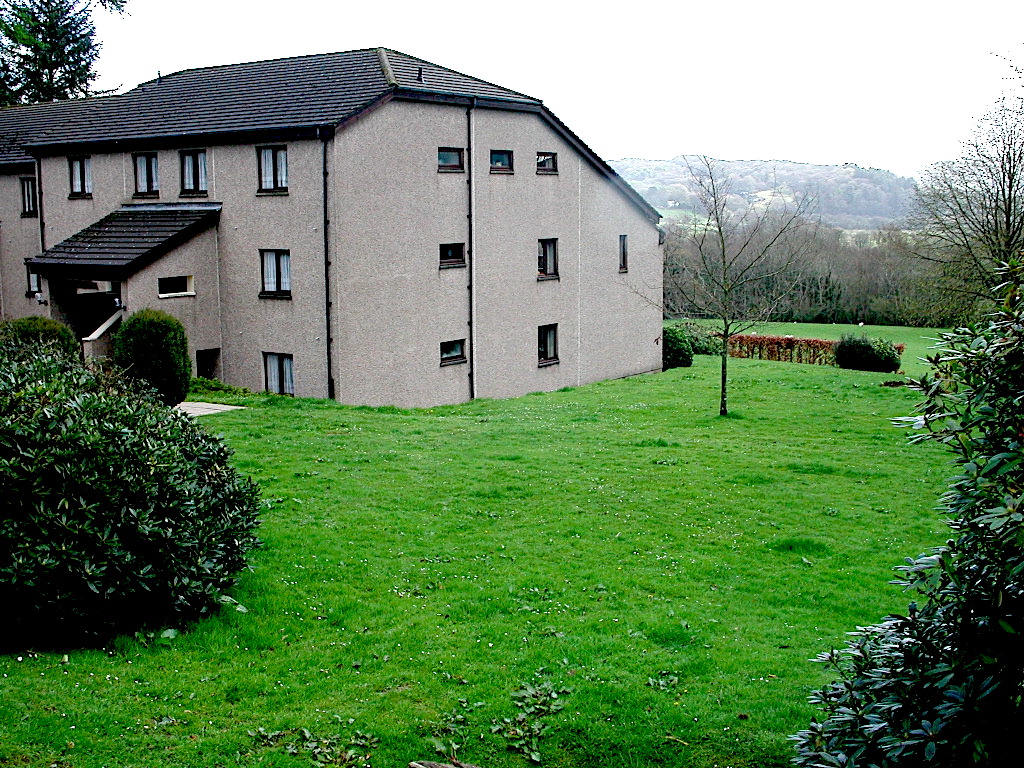
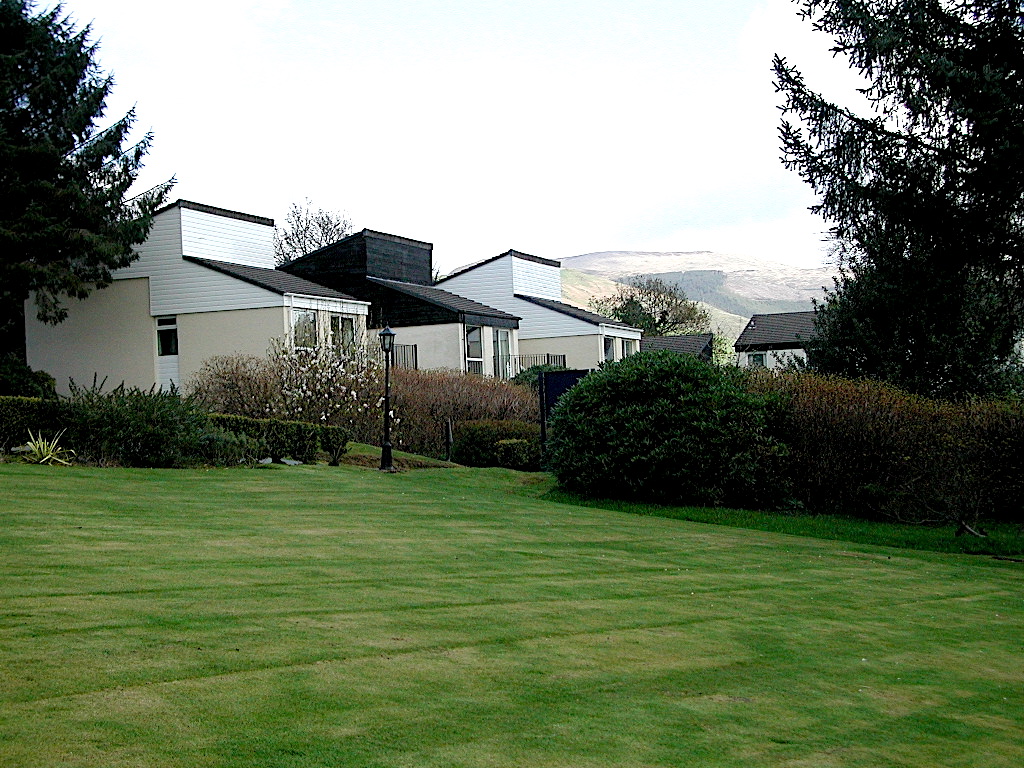
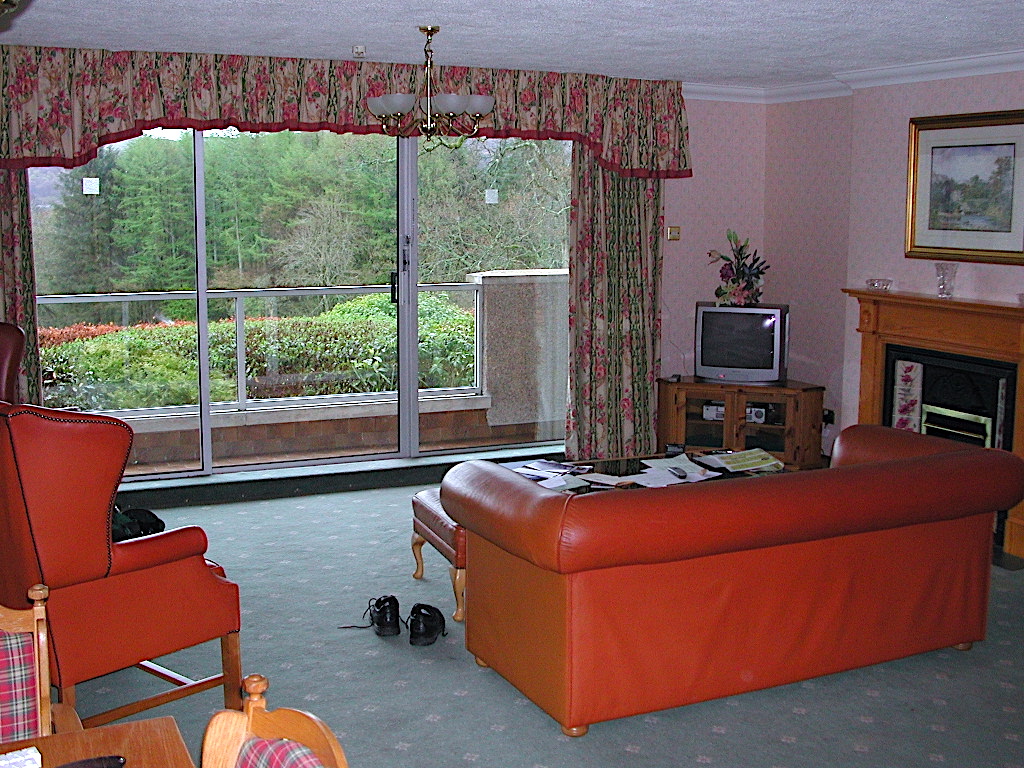
Having created a travelogue page I thought I would also create a page listing some of our favorite accommodations in Britain over the years. My wife and I have stayed in castles, B&Bs, hotels, manor houses, and self-catering timeshare accommodations. Below are some of of our favorites, with text and photos taken primarily from our travel essays. Generally, my photos that predate digital cameras (2002) are of a lesser quality. As always, your comments are welcome.
Favorite Hotels:
1992: Francis Hotel, Bath → Miskin Manor, Pontyclun, Wales → Ivy Bush Royal, Carmarthen → Conrah Country House Hotel, Aberystwyth, Wales →
1992: Portmeirion, Gwynedd, Wales → Randolph Hotel, Oxford → St Ermin's Hotel, London
1994: Dean Court Hotel, York → Park Hall Hotel, Conwy, Wales → St Davids Vacation Club, St Davids, Wales
1995: Pear Tree Cottage, Wilmcote, England → Ty'n-y-Celyn House, Betws-y-Coed, Wales → The Old Vicarage, Wiltshire
1996: Fairyhill Hotel, Reynoldston, Wales → Royal Victoria Hotel, Llanberis → Ye Olde Bull's Head Hotel, Beauamris → Royal Hotel, Llangollen →
1996: Randolph Hotel, Oxford
1998: Penyclawdd Court, Wales → Oak Bank Hotel, Grasmere → Langley Castle, Hexham → Culcreuch Castle Hotel, Scotland→ Goring Hotel, London
1999: Amberley Castle Hotel, Arundel, England → Stafford Hotel, London
2002: Cwm Chwefru Cottages, Llanafan Fawr, Wales → Pantglas Hall Owners Club, Llanfynydd, Wales → Francis Hotel, Bath
2004: Plas Talgarth, Pennal, Wales → Miskin Manor, Pontyclun, Wales (self-catering cottages) → Langley Hilton, London
2006: Graig Park, Prestatyn, Wales → Glangrwyney Court Country House B&B, Crickhowell, Wales → Tor Farm B&B, Cheddar
2009: Portmeirion, Gwynedd, Wales → Llangoed Hall, Llyswen, Wales → West Arms Hotel, Llanarmon, Wales
2012: Waldorf Hotel, London → Randolph Hotel, Oxford → Celtic Manor Resort, Newport, Wales → Portmeirion, Gwynedd, Wales

Miskin Manor, Pontyclun, Wales (1992 Travel Essay)
| After visiting Caerphilly Castle it was time to check into our accommodations, Miskin Manor just off the M4 in south Wales, for another one night stay. Miskin Manor is a Victorian manor house built in 1864 in a Tudor style, situated in the village of Miskin in Rhondda Cynon Taf, south Wales. The estate was owned by the Williams family including Rhys Rhys-Williams for many years who were descended from the Welsh bard David Williams. It features generous-sized rooms, grand public spaces and gardens, and an award-winning restaurant. My wife and I were centrally impressed with this grand estate. The front door to the hotel was flanked by a couple of menacing-looking gargoyles, referred to as "The King's Beasts." Everything in the hotel was on a grand scale, from the richly paneled walls to the luxurious period furniture. We enjoyed a formal dinner in the main dining room and an after dinner drink in the bar before retiring. We only spent one night here, but it was our first taste of upscale accommodations. It would be several years before we could afford to stay in such a place on our own. |
Conrah Country House Hotel, Aberystwyth, Wales (1992 Travel Essay)
| Our destination for the next couple of nights was Aberystwyth in west Wales. Our accommodation for this portion of the trip was a two night stay at the lovely Conrah County House Hotel, a stately country manor house offering first-class accommodations. The hotel has 22 acres of stunning Welsh countryside offering panoramic views towards the Merionnydd mountains. Our rooms were large and comfortable/ and the public rooms and restaurant were nicely appointed. We enjoyed tea in the lounge, with its large windows, overlooking the hotel gardens, grazing sheep, and the mountains. We had a very good dinner in the formal dining room, and afterwards enjoyed a drink (a glass of vintage port) in the hotel bar with the owners. Miskin Manor not withstanding, this was now the nicest overall accommodation we had yet experienced. |
Portmeirion, Minffordd, Gwynedd, Wales (1992, 2009, 2012)
|
My wife and I have stayed at Portmeirion on three different trips. It's a great location for exploring northwest Wales, and, needless to say, the grounds are rather interesting. The description and photos below is from our 2009 visit.
The Village of Portmeirion is something of an Italianate fantasy village created by Sir Clough Williams-Ellis on land he purchased in here 1925. He erected a collection of fanciful and sometimes bizarre buildings including several cottages. Portmeirion was famously used for the 1960s British spy drama, "The Prisoner," a series I vaguely remembered from my childhood. The village includes the Hotel Portmeirion, today a 4-Star hotel. This was our second stay in here and we had a booked one of the large village suites. During our stay we enjoyed dinner at the hotel, exploring the village, the formal and wild gardens, and the colorful buildings; some real, some just facades. We also took a long hike along a woodland trail located on the grounds. The going was steep in a couple of places, but our reward was hiking through a beautiful forest with trees and a variety of plants and wildlife. I bet that most people who come here don't know about or don't bother exploring this part of the village, and that's a shame. I think it's one of the best activities Portmeirion has to offer. The hotel is also a great location for exploring the beautiful Llyn Peninsula and north Wales, and that's exactly what we did.
|
St Davids Vacation Club, St Davids, Wales (1994 Travel Essay)
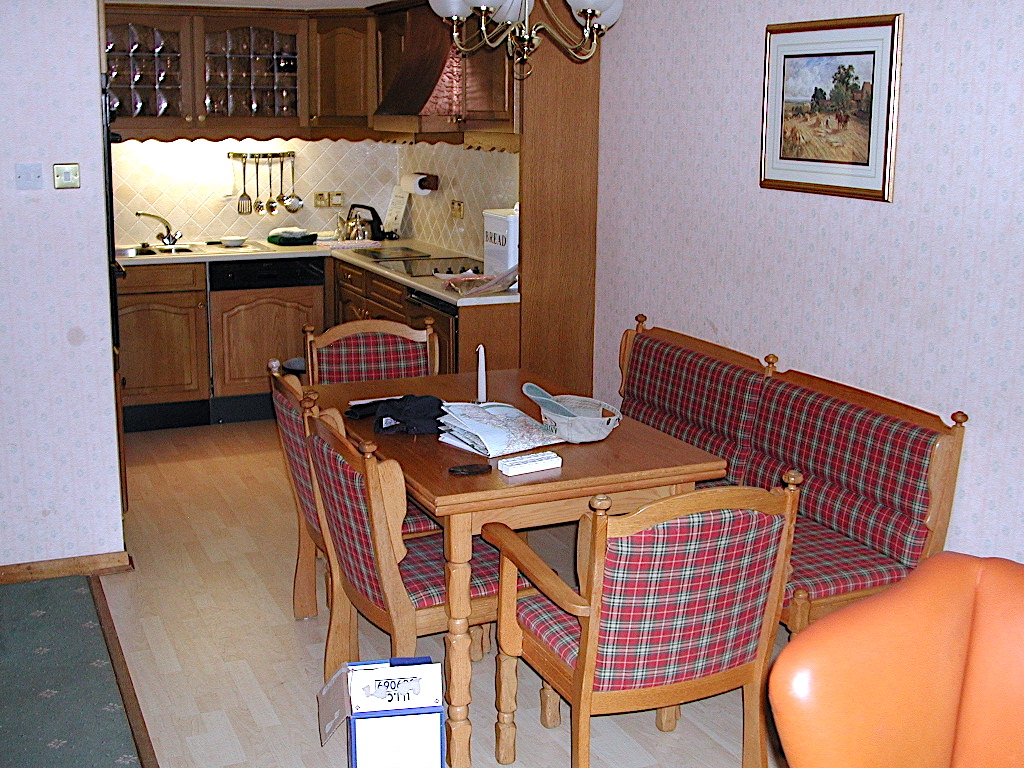
| We took our time getting to St David's; about a 5-hour drive straight down the A487 from Harlech. We had booked a one week time share exchange at the St. Davids Vacation Club, situated on High Street in the center of the city. We had a very nice upper floor two-bedroom unit that included a small kitchen, dining room table, and seating area with a sofa and chairs. All the rooms were surrounded a nicely-landscaped inner courtyard which gave the accommodation a sense of privacy. Nice! It was late in the day when we arrived so we checked in, unpacked and spent some time walking around the city. Since we had a self-catering unit we stopped by a nearby shop to purchase what we needed for the next couple of days (especially coffee). The hotel is centrally located and provides easy walking access to basically anything in the town, St Davids Cathedral and Bishop's Palace, St Non's Well and Chapel, and the beautiful Pembrokeshire Coast National Park Path. If you like hiking or even just walking some of Britain's most spectacular coastal paths, St Davids is perfect. Forget the car and just get out and walk. That's what we did! |
Pear Tree Cottage, Wilmcote, England (1995 Travel Essay)
|
Wilmcote is a small, pretty village about 3 miles northwest of Stratford. It is mentioned in the Domesday Book of the late 11th century. It has associations with Shakespeare as it was the home of William Shakespeare's mother, Mary Arden. Her house and Farm Museum are one of the main attractions here. We had booked a 5-night stay at lovely Pear Tree Cottage, a B&B just across the way from the Mary Arden House. According to the cottage's website:
| "The Cottage itself was built in the mid 16th century as a Yeoman farmer's dwelling and over the centuries has seen the effects of changes made by Georgian, Victorian and finally twentieth century owners, all of which have added to its great character and period charm. Recent investigations into the Arden Estates show that PEAR TREE COTTAGE once belonged to William Shakespeare's parents, Mary (nee Arden) and John Shakespeare, who inherited it from Robert Arden - Mary's father. They mortgaged the property in 1578 and forfeited it, by order of the Chancery Court in 1597 for failure to repay the loan." |
Our room was located on the 2nd floor with a lovely view of a green field with grazing cattle and the Mary Arden House across the lane. The room was a decent size, comfortable and had an en-suite bathroom. Perfect! The public rooms featured antique furniture, fresh flowers, beamed ceilings and flagstone floors in the sitting and dining rooms. Outside there was a small garden with a cafe table to relax and enjoy the cottage grounds. Our hosts for the week were Ted and Margaret Mander, a lovely, friendly couple who provided us with some helpful advice during our stay. We enjoyed breakfast and coffee here every day. We spent the rest of the day relaxing, walking around the village, and just soaking up the peaceful countryside. We had dinner at a local pub a bit later before retiring for the night.
|
Below: Pear Tree Cottage and the Mary Arden House
Ty'n-y-Celyn House, Betws-y-Coed, Wales (1995 Travel Essay)
| It only took us a little over an hour heading west on the A5 to arrive at out destination for the week, Betws-y-Coed. Betws is a busy village in the Conwy valley and a popular visitor destination for the Snowdonia National Park. The town features 19th-century buildings, lots of shops, hotels, and the Church of St Mary. We had a 7-night reservation at the Ty'n-y-Celyn House B&B, where our host was Clive Muskus and his friendly and entertaining Border Collie, Monty. The small B&B had four front-facing en-suite rooms with views of the Snowdonia landscape, and we booked a nice size room on the 2nd floor. Both Clive and Monty were great hosts. Clive was friendly and helpful, giving us suggestions about what to see in the area. I believe he was a World War II veteran. Monty entertained us all week. We played kick-ball in the front yard of the B&B, and on one occasion he escorted us into town, taking us over the bridge then returning home. Clive said that this was OK because he enjoyed showing people the way. What a good boy! One of my favorite things about Wales is interacting with these amazing, intelligent dogs. |
Ty'n-y-Celyn House, Sappers Suspension Bridge, Pont-y-Pair pub, Parthene & Monty
Fairyhill Hotel, Reynoldston, Wales (1996 Travel Essay)
|
We had booked a 5-night stay at the Fairyhill Hotel near Reynoldston, pretty much located in the center of the Gower Peninsula. We had chosen the Gower, not only for the castles, but because it is a designated area of "outstanding natural beauty" that we wanted to explore. I knew that here we could relax a bit, take our time and simply enjoy the countryside. We experienced the beauty and history of Three Cliff's Bay and the wild horses, Arthur's Stone, Rhosili and Wurm's Head, and most of the castles including Weobley, Loughor, Pennard, Penrice, Oxwich, and Oystermouth. We also visited Reynoldston where we enjoyed pub lunches and pints of real ale at the King Arthur Hotel, which offered both indoor and outdoor seating. We checked into Fairyhill and relaxed a bit before exploring the hotel and grounds. Fairyhill is a handsome and well-appointed manor house with period furniture, a bar, and a well-regarded restaurant and chef. We enjoyed dinner here a couple of nights and it was definitely a fine-dining experience. We had a very nice en-suite room with a queen bed and separate seating area. After a busy day we decided to simply rest at the hotel for the remainder of the day, topped off by dinner in the formal dining room. The food was excellent, including the desert!
Update: Fairyhill was sold in 2018 and transformed into a wedding venue. I'm not sure that the new hotel accepts non-wedding party reservations for their accommodations.
|
Ye Olde Bull's Head Hotel, Beaumaris, Wales (1996 Travel Essay)
| It was late afternoon when we checked in to the Ye Olde Bull's Head Inn, a lively pub offering accommodations. The pub dates to the 15th century and is a Grade II listed inn that retains its period character. The pub is located on the High Street close to the castle, and we had enjoyed lunch here on both of our previous trips to Beaumaris. The inn offers accommodations in the main building, but we booked one of the larger courtyard rooms (carriage house rooms) located at the rear of the property. Not only were these rooms larger but they were further away from the pub so they were quieter too. We were ready to relax when we arrived so after unpacking we walked around the town a bit and then had dinner at the pub. We also had the opportunity to try other places in town too; we had lunch at the George & Dragon pub nearby, and enjoyed fine dining at The Buckley Hotel across the street. |
The Royal Hotel, Llangollen, Wales (1996 Travel Essay)
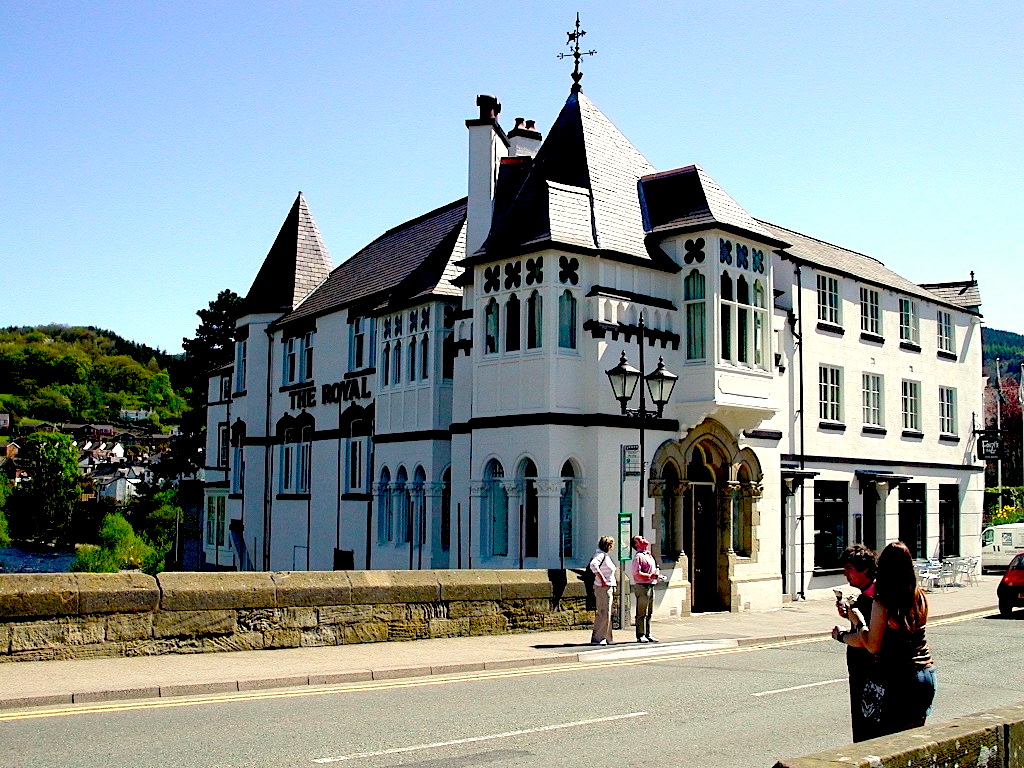
| We had booked the next few nights at the Royal Hotel in Llangollen. The hotel is pretty nice and occupies a prime location in the middle of town, next to the bridge overlooking the River Dee. We had been to Llangollen before, but only on day trips. This year with local accommodations, we would take more time exploring the region. We had a nice room on the 2nd floor at the back of the hotel with views of the the bridge and river from our windows. It was a great room because we had a river view and we could also see the action on the bridge. This included watching groups of boys and men jumping off the bridge into the river. We had enjoyed another full day's with a lot of driving, so we unpacked, rested a bit and then walked around the town, finding a shop where we purchased all the essentials for the room; beer, wine, cheese, bread, assorted snacks, and Welsh Cakes. Later we had dinner at the hotel and then enjoyed an after dinner drink as Gales Wine Bar. Our day was complete. |
Randolph Hotel, Oxford, England (1992, 1996, 2012)
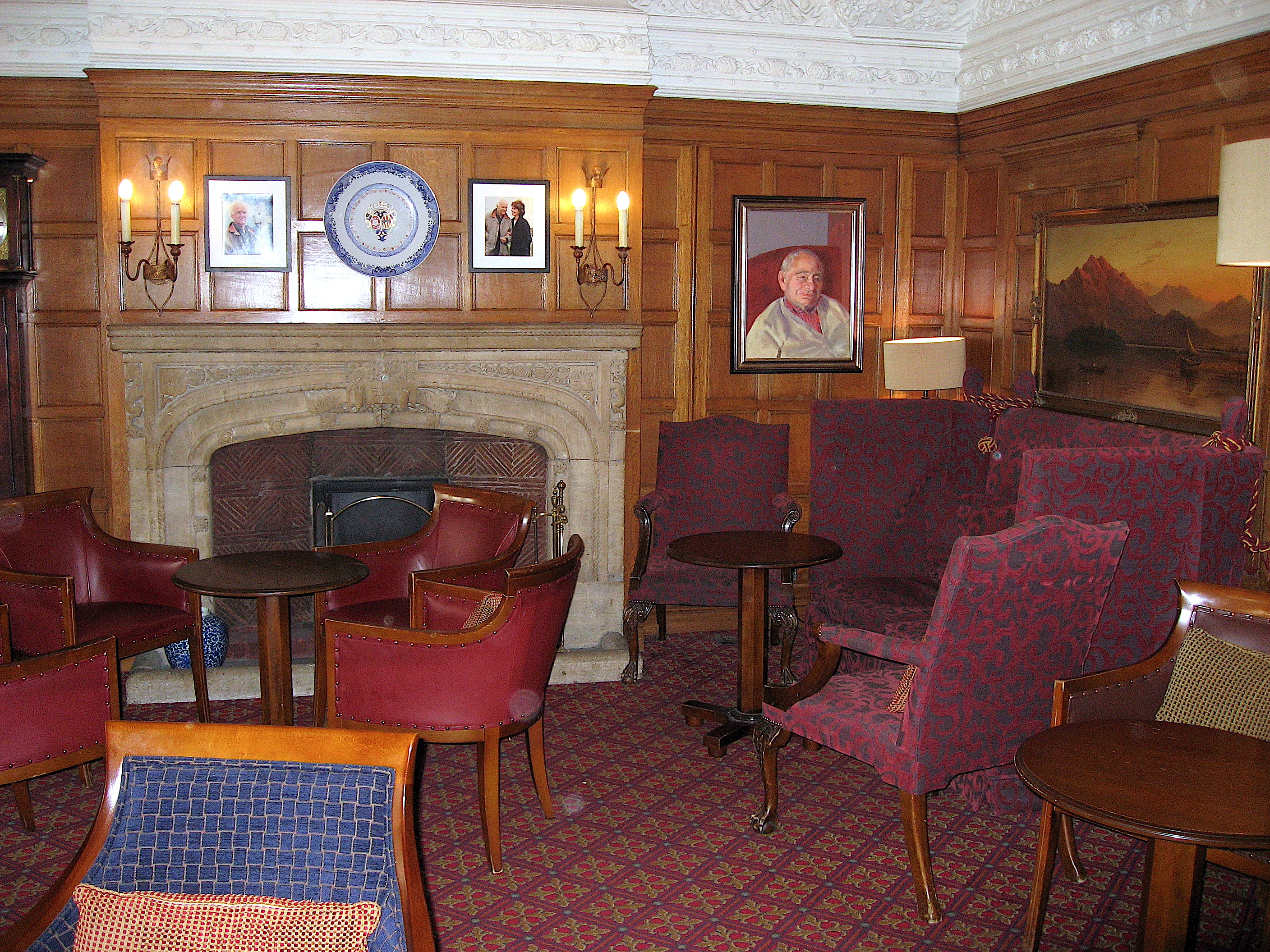
| The Randolph Hotel in Oxford is a good central location for exploring most of the city. The Ashmolean Museum is across the street which we always visit. We typically also visit a couple of the colleges, the Bodleian Library, Radcliffe Camera, the Bridge of Sighs, the Museum of Natural History and the Pitt Rivers Museum. We usually like to have dinner at the Trout Inn at least one night, and we like the King's Arms and White Hart pubs in town. |
Below: The Randolph Hotel, including the bar with painting of Colin Dexter, Ashmolean Museum
Penyclawdd Court & Castle, Llanvihangel Crucorney, Wales (1998 Travel Essay)
| Pen-y-Clawdd Court is a Grade I listed country house in Llanvihangel Crucorney situated 1 mile to the southwest of the village off the A465 road. It is a Tudor manor house, which lies within the bailey of what was Pen y Clawdd Castle, and is thought to date from circa 1625. The remains of an adjoining Norman motte and bailey castle known as Penyclawdd Castle are still discernible. Its history is not well documented, but it is thought to date from the late 11th century when Roger de Hastings was building castles in the area. The current house probably dates from the early 16th century, and began as a heavily timber-framed structure, but underwent major restructuring between about 1610 and 1625. Pen-y-Clawdd Court, described by The Welsh Academy encyclopaedia of Wales as "a memorable manor house with splendid chimney stacks", is built in an L-shaped plan on the site of a medieval manor. The interior is a maze of rooms set at different levels with low ceilings and a wealth of architectural detail. It was a quirky period accommodation; creaking stairs and floors, leaning walls and other structures. There was no electricity in dining room. We had breakfast by daylight and dinner by candlelight. There is also a little-known motte/ringwork castle behind the house. We loved this accommodation and it was a great base for exploring the Brecon Beacons and mid-Wales. |
Grasmere, England: Oak Bank Hotel (1998 Travel Essay)
|
As was the case with our 1996 holiday to Snowdonia, Wales, we were in the Lake District to hike the beautiful mountains, lakes, and fells. As we explored this part of England we kept thinking that much of the Lake District reminded us of Wales. Both areas possess extraordinary beauty.
One of the things that stood out during our time here were the many varieties of sheep. While there are certainly a lot of sheep in Wales, in The Lake District we found different breeds of sheep, of all colors, shapes and sizes. Later in the week we purchased a sheep poster from one of the local shops, to remind us of all the different varieties we encountered.
Our accommodation for the week was the Oak Bank Hotel (top left). We has a 2nd floor room facing the street and overlooking a field of sheep. The hotel had a bar and a dining room for breakfast and dinner. There was also a nice garden in the back (bottom left). In the late evening after dinner we relaxed by standing along the stone fence across from the hotel and watching the sheep and their ewes. We enjoyed a pub lunch, pints, and dinner at the Red Lion Hotel in the village (middle right). Bottom right: this was the view just down the road from our B&B. Not bad.
|
Langley Castle Hotel, Hexham, England (1998 Travel Essay)
|
Our accommodation for this part of our holiday was the Langley Castle Hotel near Hayton Bridge. Langley is a restored medieval tower house built in the middle of the 14th century by Sir Thomas de Lucy. It was attacked and severely damaged in 1405 by the forces of Henry IV in the campaign against the Percys, and remained as a ruin until it was bought and restored by a local historian, Cadwallader Bates, in 1882. Most medieval castles that have survived and are now habitable have undergone post-medieval restorations in the Tudor, Regency, Georgian, and/or Victorian periods. When a castle has undergone multiple restorations the true medieval castle is often lost, or at least hidden. Not so at Langley. Here the castle lay in ruins until it was restored in the late 19th century. Therefore, Bates had the luxury of restoring a true medieval castle that was untouched by subsequent restorations. You want to stay in a real medieval castle that is actually medieval? Langley is the one.
The interior of the castle is lavishly decorated with rich wood paneling complemented by the original medieval stonework. There are period fixtures in every room that seem very much in place and appropriate. We stayed in the "Percy Room" a decent-sized room with a Queen-size four poster bed, and En-suite bath and shower. Best of all was the window seat, a comfortable niche set into 7 ft walls overlooking the room's decorative window with two benches on either side (see below). We spent a lot of time relaxing here. My wife and I have enjoyed many different accommodations in Britain, everything from high-end hotels to modest B&B's but this was definitely one of our top rooms of all time. (Definitely the most medieval.)
|
Below: (top row) the front of the castle and main entrance, (bottom row) the Drawing Room (left), and Dining Room (right)
Below: (top row) up the stairs approaching the entrance to our room, (bottom row) interior views of our room
Tucked underneath a staircase are two of the castle's many medieval Garderobes (toilets). We preferred the one in our room.
Culcreuch Castle Hotel, Fintry, Scotland (1998 Travel Essay)
| For the second leg of our Scotland adventure we had booked a few nights at the Culcreuch Castle Hotel near Stirling. Culcreuch is an imposing former medieval fortress located in an impressive setting in the Campsie Fells in Central Scotland. For the last three centuries it has been a stately family home prior to being converted into a country house hotel. The main part of the castle comprises a Medieval Tower with a Georgian wing added later. The earliest parts date from the time of Maurice Galbraith (circa 1320), the Tower being completed by James Galbraith (10th Chief) by 1460. The walls are over 5' 6" thick in places. Our accommodations were in the "Naiper Suite," a second-floor 4-poster room located in the original tower, overlooking the front of the Castle. It was a very nice room. The grounds of the castle were beautiful. There were some lovely gardens and a nice lake in front of the castle, and we saw fields of grazing sheep, all framed by the mountains. Breakfast and dinner were served in the castle's well-appointed dining room. We enjoyed dinner here once during our stay. In the basement of the castle tower were two barrel vaulted cellars, originally lit by window-slits, that are now the "Dungeon" pub and restaurant. It was open to residents and the public and had picnic tables outside. The pub is popular with local residents. We enjoyed a couple of meals and pints of ale in pub and outside at the tables. We found Culcreuch similar to Langley in Northumberland. Langley Castle was a bit more medieval and a bit more formal, while Culcreuch seemed more casual, but also retains much of its medieval trappings. Langley had a formal after-dinner drawing room, and Culcreuch had a lively pub. Take your pick. We really liked both! |
 |
 |
 |
Below: The Dungeon, the castle's barrel vaulted cellars where we found a pub and restaurant.
The Goring Hotel, London (1998 Travel Essay)
| The Goring Hotel is a 5-star luxury hotel at 15 Beeston Place in the Victoria area of London, England. It is located just east of Belgravia, and to the southwest of Buckingham Palace. The hotel was opened by Otto Richard Goring on 2 March 1910 and professed to be the first hotel in the world in which every room had a private bathroom and central heating. The Goring is renowned for its warm, intimate atmosphere and personalized service, and is the only remaining hotel in London that is still owned and run by the family that built it. The hotel's restaurant holds one Michelin Star. We were treating ourselves by booking a couple of nights here. The Goring is luxurious, intimate, and more private than London's other famous luxury hotels. We had a spacious, comfortable, and well-appointed room on one of the top floors. Our fine-dining experience was excellent and the wine list was remarkable. The hotel is close to the back entrance to Buckingham palace and the Victoria tube station, so it's well-situated for exploring London. Want to treat yourself to a little bit of private luxury? Try The Goring. |
 |
 |
Amberley Castle Hotel, near Arundel, England (1999 Travel Essay)
|
For the first part of our holiday we had booked a room for three nights at the Amberley Castle Hotel near Arundel. The castle was erected as a 12th-century manor house and fortified in 1377, giving it a rhomboid shaped stonework enclosure with high curtain walls, internal towers in each corner, a hall and a gateway. It was used as a fortress by the bishops of Chichester. The walls, gateway and two of the towers remain as a Grade I listed building. The hotel website describes the castle further:
| "Privately owned, this magnificent 900-year-old castle is enclosed by a 60-foot-high curtain wall and portcullis that remains open, behind which you will discover an enchanting hotel offering the highest standards of food and service. Bedrooms are resplendent with the luxurious facilities you would expect from a country house hotel. The land where Amberley Castle stands was gifted to Bishop Wilfrid in 683 AD by Caedwalla, King of Wessex and the castle’s current buildings owe their origins to a timber-framed hunting lodge built in 1103 by Bishop Luffa. The following 400 years saw this lodge transformed into a fortified manor house complete with crenelations, battlements and a portcullis under the supervision of a number of resident bishops." |
Our accommodations were in the "Bramber" room located on the top floor of the Tower House Mews, with views on to the 17th-Century Manor House and flowerbeds. The room was a half-timber, Tudor-style accommodation that was comfortable and private. On one morning we awoke to find the castle's black cat perched outside our 2nd story window looking in. Wonder what he wanted? We spent lots of time exploring the castle, grounds, gardens, lake, and a working farm located next to the castle. We enjoyed breakfast and dinner in the castle dining room. The castle does a lot of event catering, and there was a wedding party there during our stay.
|
Top Row (R) & 2nd Row: our room was located in the Tower House Mews. Top Row (L): Looks like Santa is having some trouble getting down the chimney!
The Stafford Hotel, London (1999 Travel Essay)
| After three nights at Amberley Castle, we spent a week in London at the Stafford Hotel in St James. We had a nice room in the Carriage House outside the main hotel, with easy access to the Green Park Tube station. We spent time in the hotel bar, enjoyed a night of fine dining in the restaurant, and sampled the hotel's afternoon High Tea. We did some shopping in St James too. Lots of nice shops, but they were a bit on the expensive side. We visited Fortnum & Mason, which was like a mini Harrods, where we purchased food items for the room. London was very busy for a couple of reasons. It about a week before Christmas, and the preparations for the Millennium Celebration were entering their final stages. London was all decked out with lights, decorations, Christmas trees and greenery. The shops were beautifully decorated in both St. James and on Regent Street. |
Cwm Chwefru Cottages, Llanafan Fawr, Wales (2002 Travel Essay)
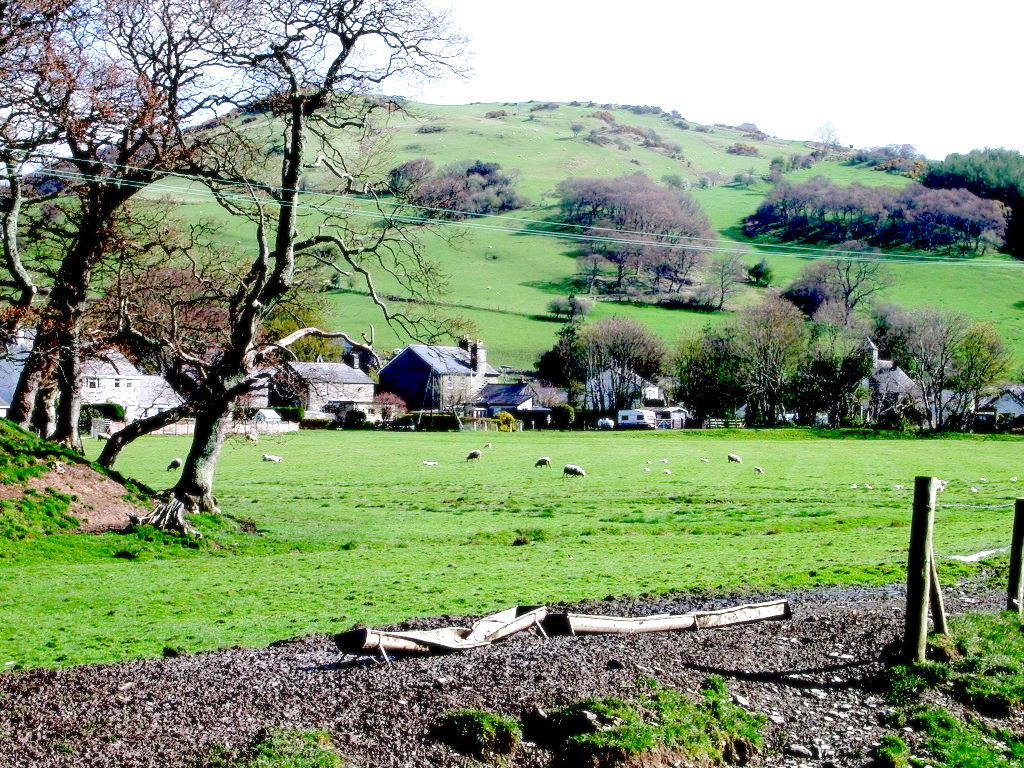
| By mid-afternoon it was time to leave and head for our accommodations near Builth; there would be no more castle hunting on this first day. It took us a couple of hours to finally arrive at Cwm Chwefru Cottages, a small group of lovely safe-catering accommodations located down a one lane track off the B road between Newbridge-on-Wye and Beulah. This was one of several time-share exchanges we've enjoyed in Wales, and it's a great way to save money. All of our exchanges have been self-catering, and we like that. The holiday cottages are at the end of a long, narrow lane, wide enough for only a single vehicle, and it takes about 10 minutes to reach the resort from the main road. Not to worry. The drive down the lane provides a glimpse of what lies ahead. As the lane ends you break out into a clearing where the cottages are found, fronted by a lake and framed by the mountains. Another spectacular and isolated accommodation. We stayed in the "Kingfisher" cottage, a large 2-bedroom cottage on the top floor with a full kitchen, living room and dining area. Our living room window looked out onto the lake, grazing sheep, and the mountains. This was mainly a family-oriented resort with a swimming pool, sauna, indoor game room, and tennis courts. It was a relaxing and perfect base for exploring castles in mid-Wales. |
Pantglas Hall Owners Club, Llanfynydd, Wales (2002 Travel Essay)
| Our next accommodation was a week stay at the Pantglas Hall Owners Club in Llanfynydd, near Carmarthen. This was a time-share holiday exchange, something we've done several times while traveling in Wales. The cottages here are Scandinavian style. We had a spacious cottage, "Dyfed," with a good sized living room, dining room, bedroom, and kitchen. The kitchen window had views of grazing sheep across the lane. There resort featured a main house with lots of activities for families and children. It was a good base to begin exploring some of the castles of south and west Wales. |
Francis Hotel, Bath, England (1992 & 2002)
Plas Talgarth Resort, Pennal, Wales (2004 Travel Essay)
|
We spent most of our 2004 holiday in west Wales. Our accommodation for the week was the Plas Talgarth Resort in Pennal, near Machynlleth. This was another time-share, self catering exchange, one of several we've done in Wales over the years. We had a large two-level unit with a living room, dining room, and kitchen. Our living room overlooked a field of grazing sheep and the mountains beyond. Their main building had a small shop for food items, and a cafe that served breakfast and dinner. Best of all, there are the remains of a medieval motte castle in a field along the driveway leading to the resort. This was certainly one of our more remote locations, and that was just fine with us. We were here to explore wild, western Wales, relax, and spend time visiting places off the beaten path.
In addition to being beautiful, the village is steeped in Welsh history as it was visited by Welsh patriot Owain Glyn Dwr in 1406. It is said that it was here that Glyn Dwr composed his famous "Pennal Letter," and visited the church of St. Peter Ad Vincula, and possibly the aforementioned motte castle of Doman Las on the grounds of the resort. Pennal is a small village and the only pub was the Riverside Hotel. We ate there several times during the week and the food was quite good. Plas Talgarth was another good location for exploring this part of Wales.
|
Miskin Manor, Pontyclun, Wales: self catering cottages (2004 Travel Essay)
| Our final accommodation for 2004 was a short stay at Miskin Manor in southeast Wales, sort of. We had stayed a night in the main hotel during our first trip to Wales in 1992, but this time we were staying in the self-catering cottages on the edge of the estate. We had a large, 2-floor room with living room, dining room and kitchen. There was also a lovey porch in the back that provided views of trees, green fields and some grazing sheep. Beyond the sheep we saw a group of men playing a game of rugby. We had full access to the hotel where we enjoyed dinner and a drink in the bar afterwards. It was a good way to relax towards the end of our holiday. |
Graig Park, Prestatyn, Wales (2006 Travel Essay)
| Our first accommodation on our 2009 holiday to Wales was a 7-night time share exchange at Graig Park, near the town of Dyserth in northeast Wales. This was a large holiday resort with different size cottages spread out over the grounds. Most of the cottages were Scandinavian style. Although I'm sure there were some nice, large units there, we were only able to exchange for a small one-bedroom unit that was a little worn and definitely in need of an upgrade. On the other hand, we were close to the the A55 expressway which provides easy to access to most of north Wales. During the week we were entertained daily by two pairs of peacocks, the noisiest of which (a male) we dubbed “Fred.” Amusing at first, by the end of the week we grew a bit tired of the loud screaming that continued well after dark and resumed about 4:30 the next morning. Still, we enjoyed Fred and his friends, even giving in twice and feeding him bread outside our door. It was, after all, their home. |
Glangrwyney Court Country House B&B, Crickhowell, Wales (2006 Travel Essay)
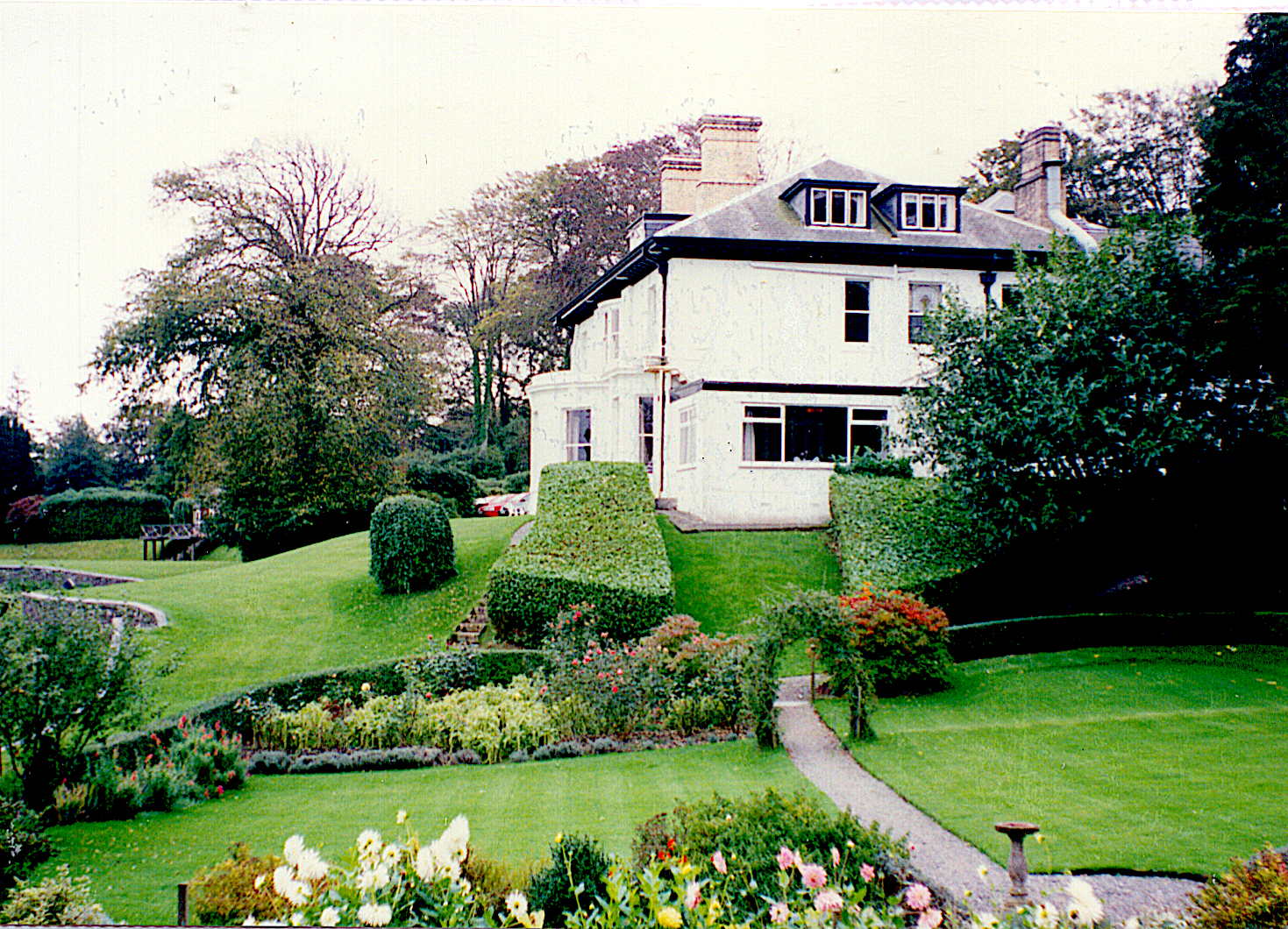
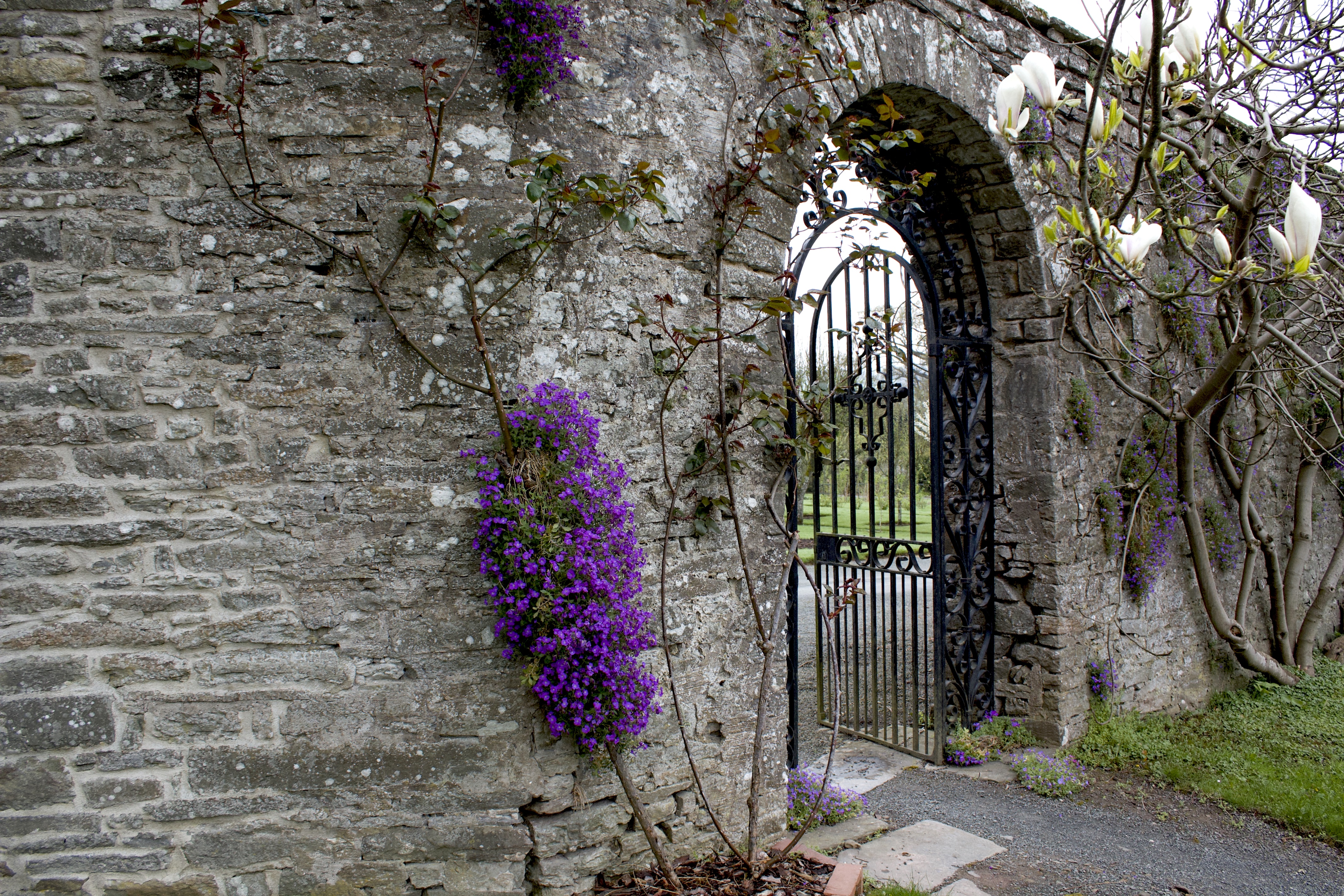
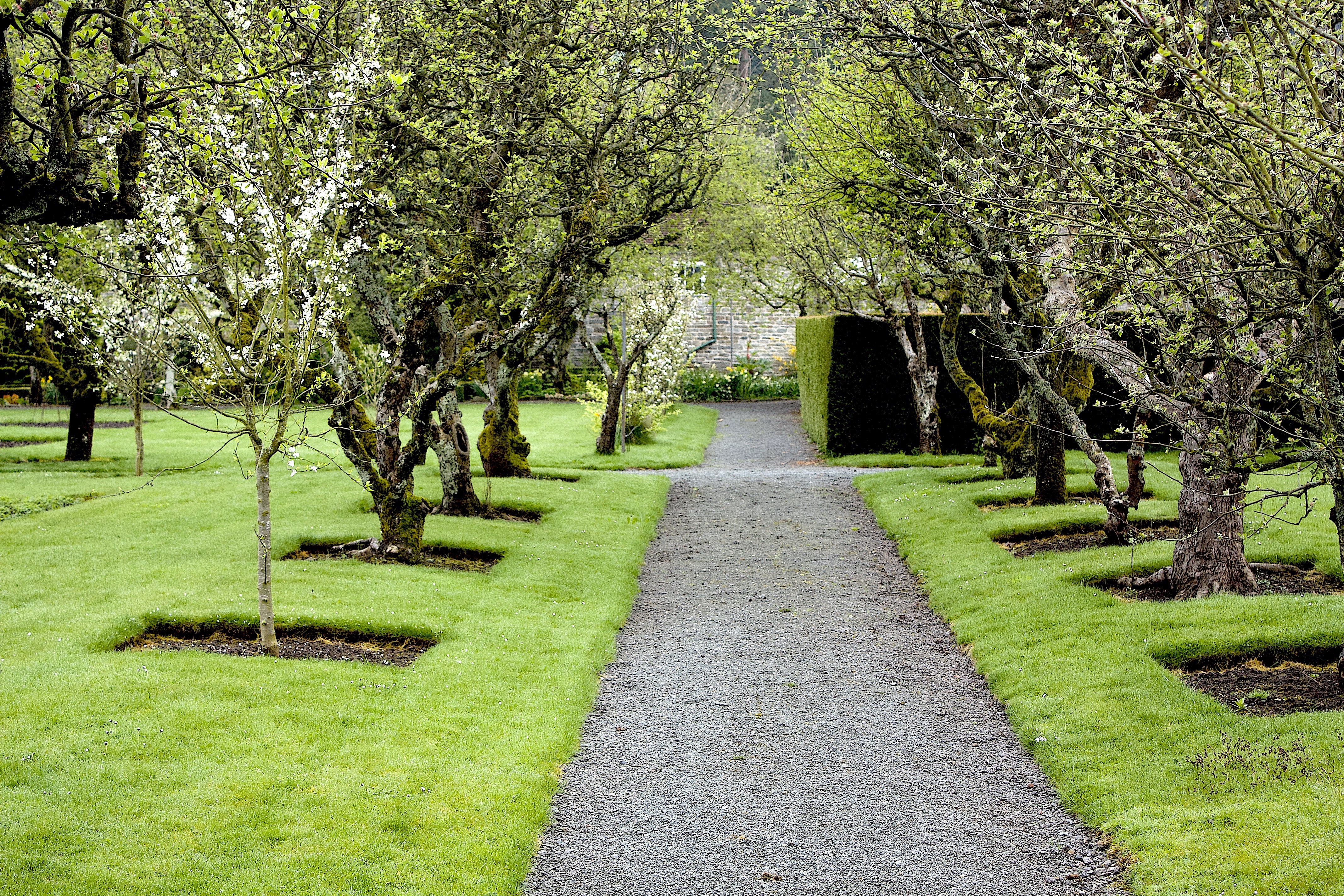
By now is was approaching check in time, so we decided to head down the road to our accommodations for the next four nights, Glangrwyney Court Country House Bed and Breakfast near Crickhowell. This is a lovely Georgian manor house surrounded by beautiful gardens, set in the Brecon Beacons with the rolling Black Mountains beyond. The house features four acres of walled gardens and thirty-three acres of parkland.
We had booked a four night stay in what I think was their best room, a luxury double room located on the 2nd floor (1st floor). The room featured a comfortable bed, two comfortable chairs, and large window overlooking the front of the house. We also had a large bathroom with a full sized tub and steam shower. Our room overlooked the front of the house where we enjoyed watching cattle grazing on the front lawn. The back of the house had a seating in the gardens and of views of the Black Mountains. The B&B did have a prohibition against eating or snacking in the room, as well as a charge for enjoying an adult beverage that wasn't purchased from the B&B. We didn't exactly follow either rule, but we very much enjoyed this accommodation. |
 |
Tor Farm B&B, Cheddar, England (2006 Travel Essay)
| By this time it was late afternoon and time to head towards the town of Cheddar and our accommodations for the next four nights – Tor Farm B&B near the village of Draycot. Tor Farm guest house is two miles down a small lane nestled among a collection of English farms and their fields of livestock (mostly cattle). We received a warm welcome from our hostess and were soon shown to our room, the garden suite which had its own private entrance overlooking the gardens. We enjoyed a large, comfortable room featuring a king size bed, separate seating area with a full size sofa and cocktail table, full bathtub and shower, and private patio with table and chairs. The decor was modern, and the room proved to be comfortable, cool and quiet. We unpacked and relaxed a bit before venturing out to explore the grounds. As had been the case with our previous accommodations in Crickhowell, the house and cottages were surrounded by beautiful gardens and landscaping. We enjoyed a couple of morning walks down the narrow lanes bordered by tall hedgerows that surround Tor Farm. We saw other working farms during our walks, and, on one occasion we had a friendly encounter with a cow and her calf. Surrounded by farms and the hills, it was difficult not to be impressed with the beauty of this part of Somerset. |
Llangoed Hall, Llyswen, Brecon, Wales (2009 Travel Essay)
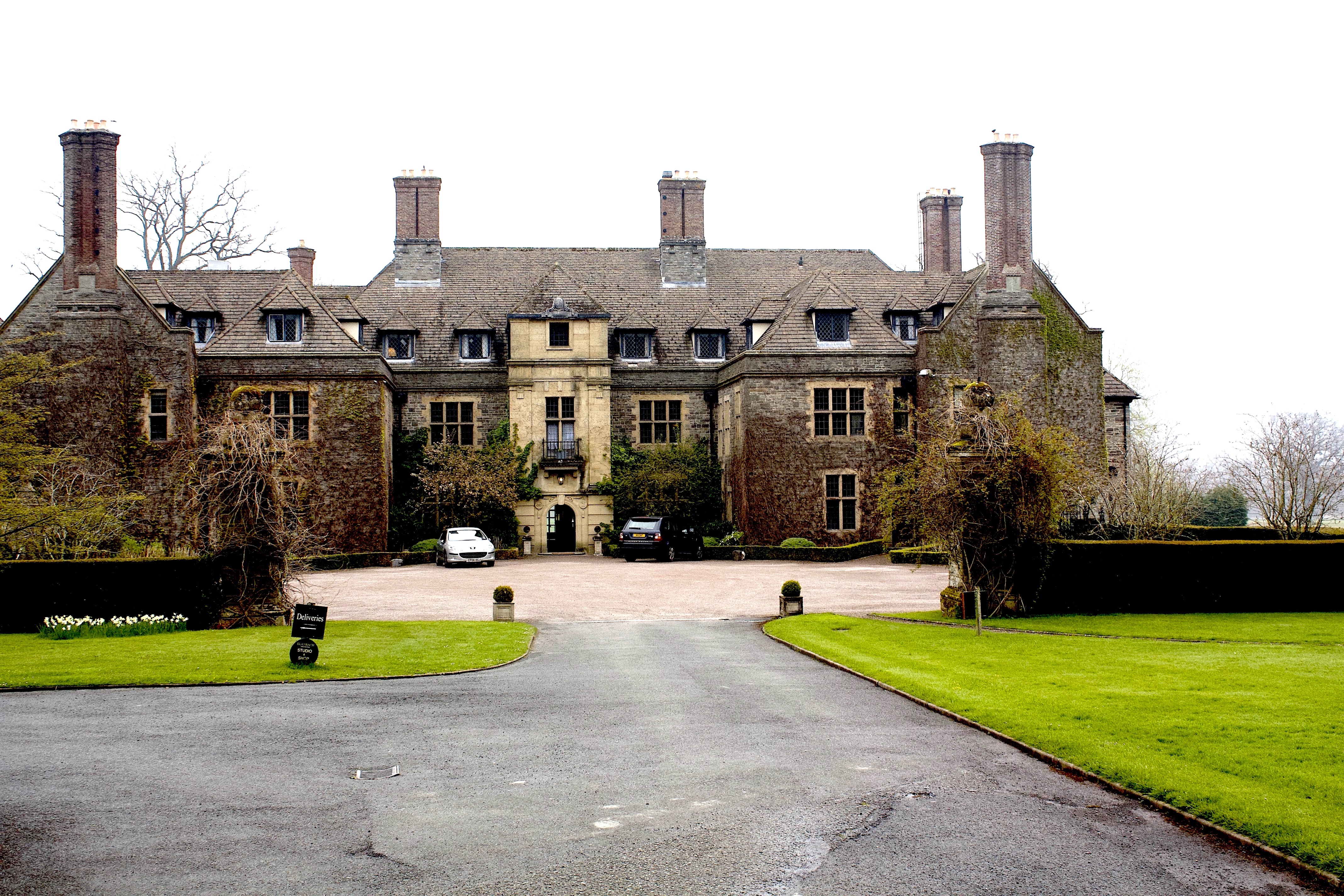
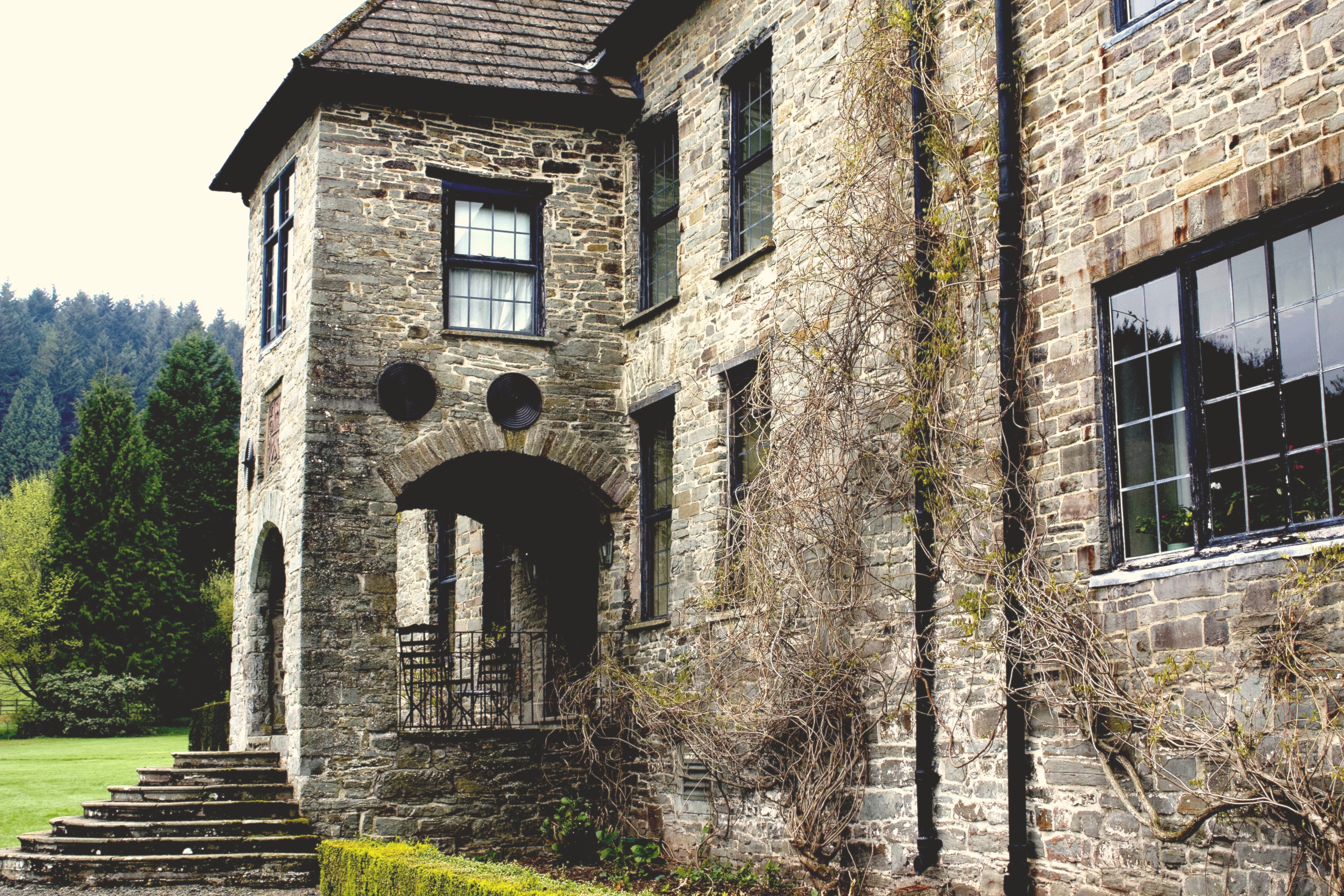
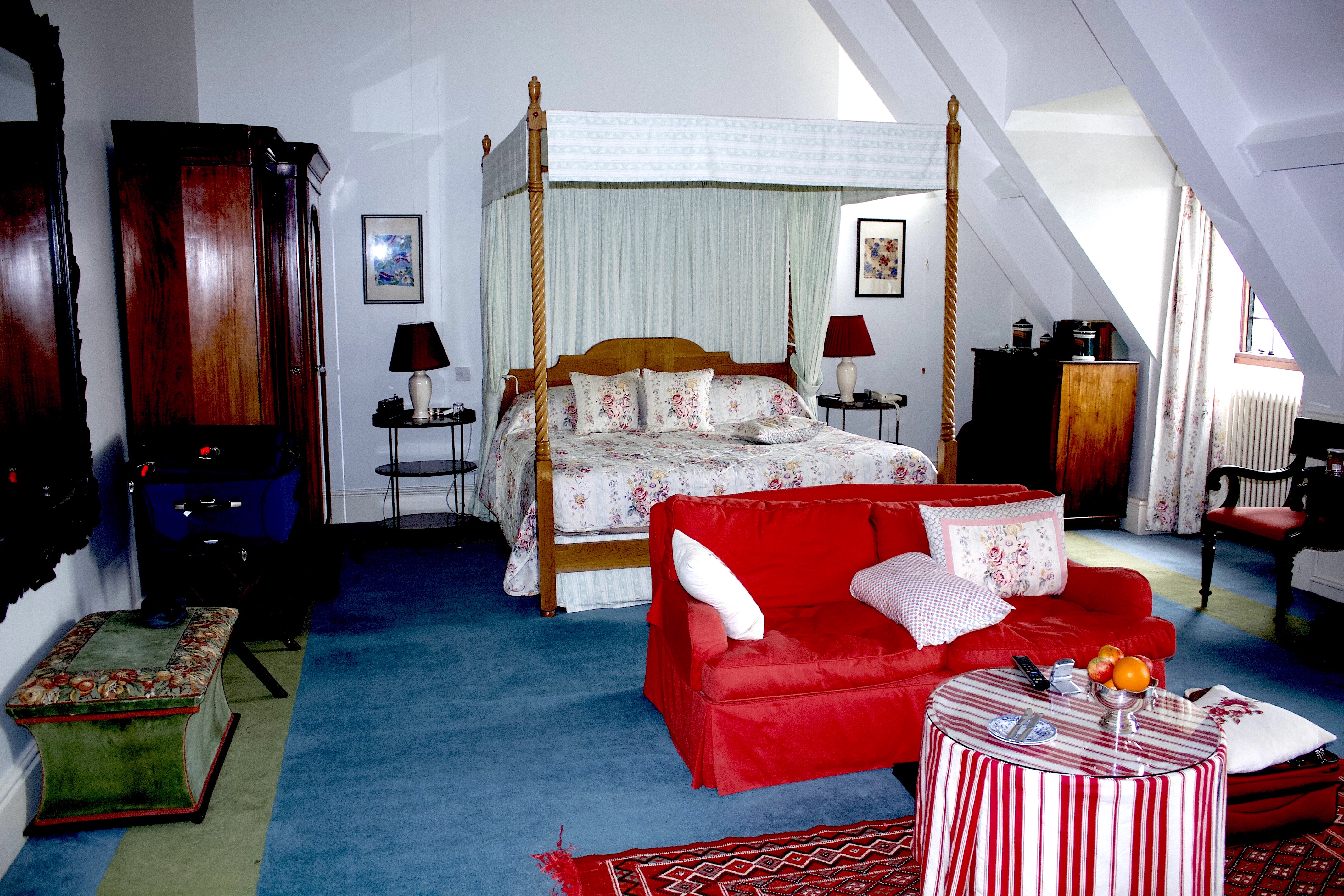
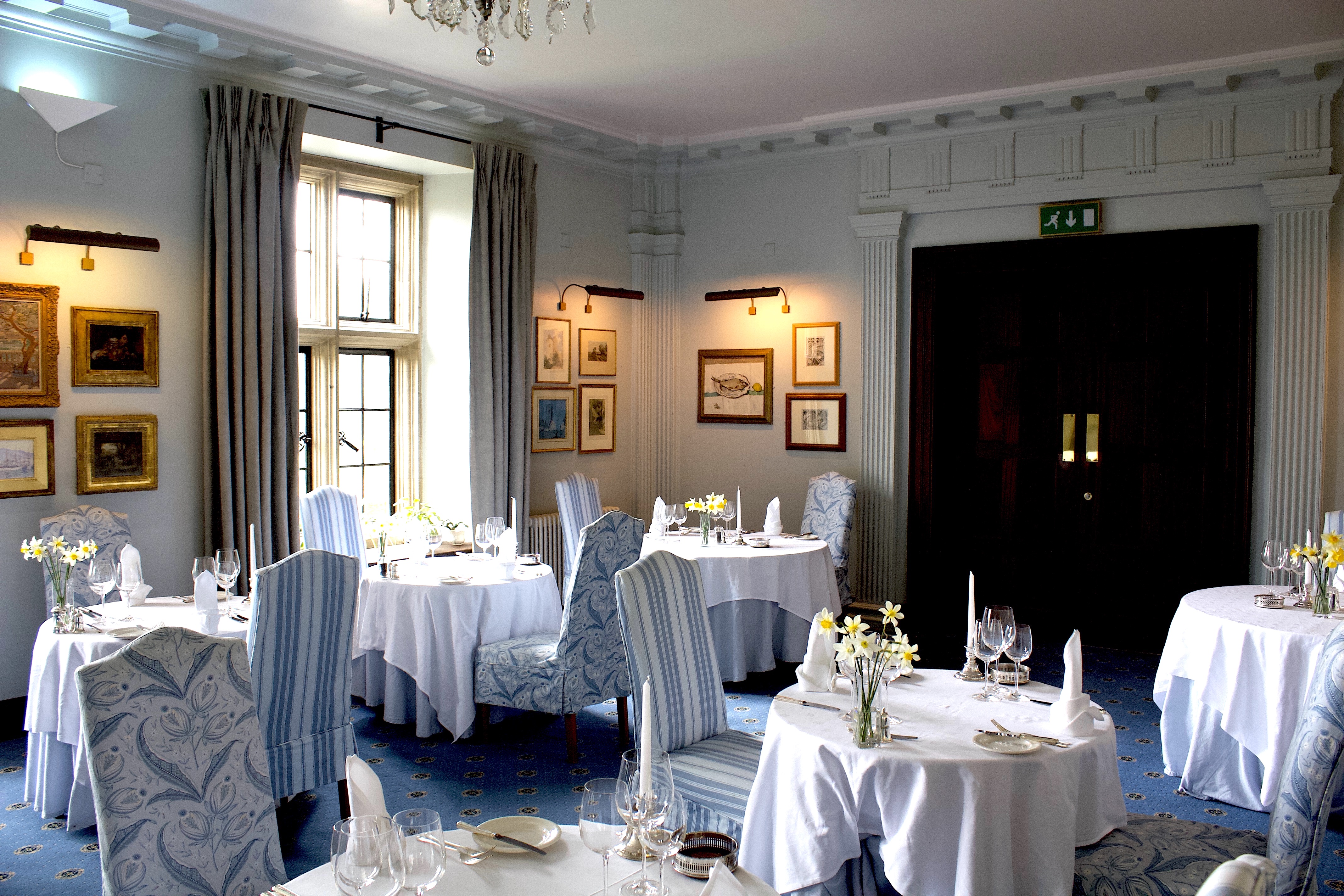
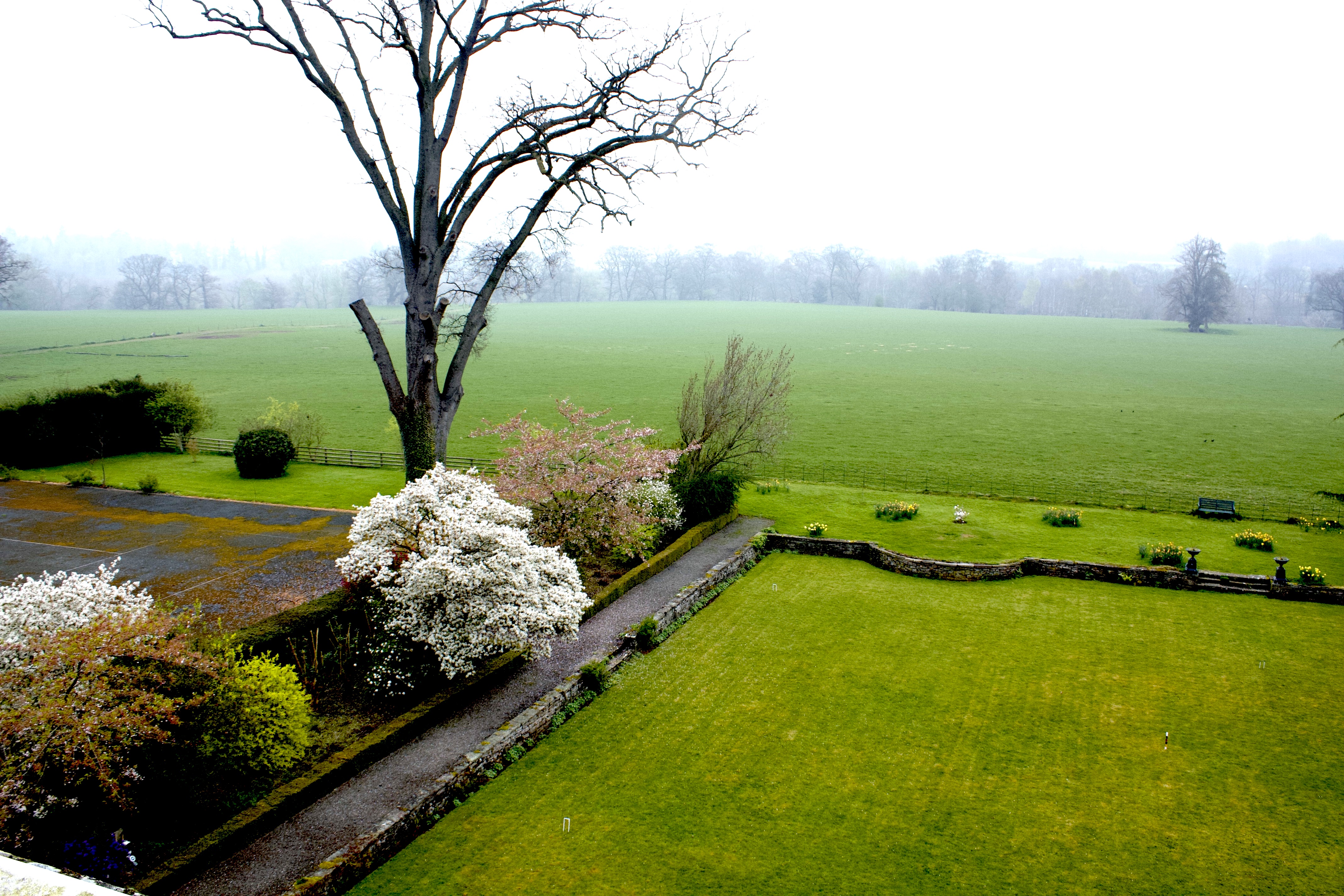
| Llangoed Hall is a country house hotel near the village of Llyswen, in Powys, mid-Wales. It is known for its decoration in Laura Ashley fabrics and styles, and was owned by Sir Bernard Ashley, the widower of the designer. It is a Grade II listed building, and its gardens and park are also Grade II listed. The Hall, originally known as Llangoed Castle, was donated to the church in 560 by Prince Iddon and this may have also been the site of the legendary White Palace, home of the first Welsh parliament. A mansion existed here from 1632. We have visited our share of stately manor houses during our travels, but we had never actually stayed in one, until now. Our room was the deluxe suite located on the top floor overlooking the back of the house, gardens and pastures. The room was huge, easily the largest hotel room we've ever stayed in. If you look at the photo of the back of the hotel (2nd row, left) the large window at the top trimmed in white was our room, which extended to the two windows on either side. It was a little eerie the first few days we were there. It was mid-week, off-season, and I think we may have been the only guests for the first couple of days. We basically had the house to ourselves. Most of the rooms on the ground floor were open to residents, and were lavishly appointed. The dining room was elegant and is where we enjoyed breakfast and a very nice dinner. They had a good wine list. There were manicured gardens and what looked like a croquet lawn in the back. At the end of the lawn was a ha-ha that served as the border between the hotel grounds and a herd of cattle. Llangoed Hall proved to be an excellent base for exploring mid-Wales, and we would definitely book there again. |
West Arms Hotel, Llanarmon Dyffryn-Ceiriog, Wales (2009 Travel Essay)
| For this part of our trip we stayed at the West Arms Hotel in Llanarmon Dyffryn Ceiriog, a small village on the River Ceiriog about 10 miles south of Llangollen. The village grew up at the intersection of several drovers' roads which forded the River Ceiriog. It still has two inns, the Hand and the West Arms, which originally served drovers taking their flocks to market. The village is small. When I say small, I mean small. Hotel, pub and church, that's it. It's is a stunningly-beautiful and isolated location, and very representative of the beauty found in the Dee and Ceiriog valleys. We booked a few nights at the West Arms Hotel and had a lovely room on the top floor that was spacious and comfortable, with a fireplace and great views from the window. Across the street was the Hand Hotel and Pub (and it's odd hand statue) where we enjoyed pints, lunch, and dinner during our stay. We had breakfast at the hotel. Across the road is the village church of St Garmon founded in the 5th century, and rebuilt in the medieval period. The churchyard contains a mound, the Tomen Garmon, which may be of Bronze Age origin, and some ancient Yew trees. The Yew trees, I think, give the church and the surrounding cemetery an ancient feel that I really liked. The church, and everything else here, is dominated by the mountains with their fields of sheep. Llanarmon Dyffryn Ceiriog was, and still is, a farming community. This is one of the most remote, and most beautiful places we've stayed, and it was magical. It was also a good base for exploring this part of Wales. |
 Return to the main Travelogue page Return to the main Travelogue page
|