Wales 2009: A more leisurely all-Wales trip, visiting northwest Wales, mid-Wales, and the Dee and Ceiriog Valleys. We took our time, didn't visit as many sites, and took lots of good photographs with my new camera. We had a rocky start to the trip, but everything turned out fine.
Places Visited:
Part I: North Wales → Portmeirion → Dolbenmaen Motte → Penarth Fawr Medieval Hall-House → Beddgerert → Dolbadarn Castle
Beaumaris Castle → Criccieth Castle → Aberdaron → Saint Hywyn's Church → Harlech Castle → Part II: Mid-Wales → Llangoed Hall → Brynmawr
Skenfrith Castle → Llanthony Priory → Croft Castle → Ludlow & Ludlow Castle → Stokesay Castle → Powis Castle → Chirk Castle
Part III: North Central Wales → Llanarmon → Llangollen → Castell Dinas Bran → Valle Crucis Abbey → Erddig Hall → Tomen y Rhodwydd
Conwy Castle

|
Part III: Llanarmon & The Dee & Ceiriog Valley
For this part of our trip we stayed at the West Arms Hotel in Llanarmon Dyffryn Ceiriog, a small village on the River Ceiriog about 10 miles south of Llangollen. The village grew up at the intersection of several drovers' roads which forded the River Ceiriog. It still has two inns, the Hand and the West Arms, which originally served drovers taking their flocks to market. The village is small. When I say small, I mean small. Hotel, pub and church, that's it. It's is a stunningly-beautiful and isolated location, and very representative of the beauty found in the Dee and Ceiriog valleys. We booked a few nights at the West Arms Hotel and had a lovely room on the top floor that was spacious and comfortable, with a fireplace and great views from the window. Across the street was the Hand Hotel and Pub (and it's odd hand statue) where we enjoyed pints, lunch, and dinner during our stay. We had breakfast at the hotel. Across the road is the village church of St Garmon founded in the 5th century, and rebuilt in the medieval period. The churchyard contains a mound, the Tomen Garmon, which may be of Bronze Age origin, and some ancient Yew trees. The Yew trees, I think, give the church and the surrounding cemetery an ancient feel that I really liked. The church, and everything else here, is dominated by the mountains with their fields of sheep. Llanarmon Dyffryn Ceiriog was, and still is, a farming community. This is one of the most remote, and most beautiful places we've stayed, and it was magical. It was also a good base for exploring this part of Wales.
|
|
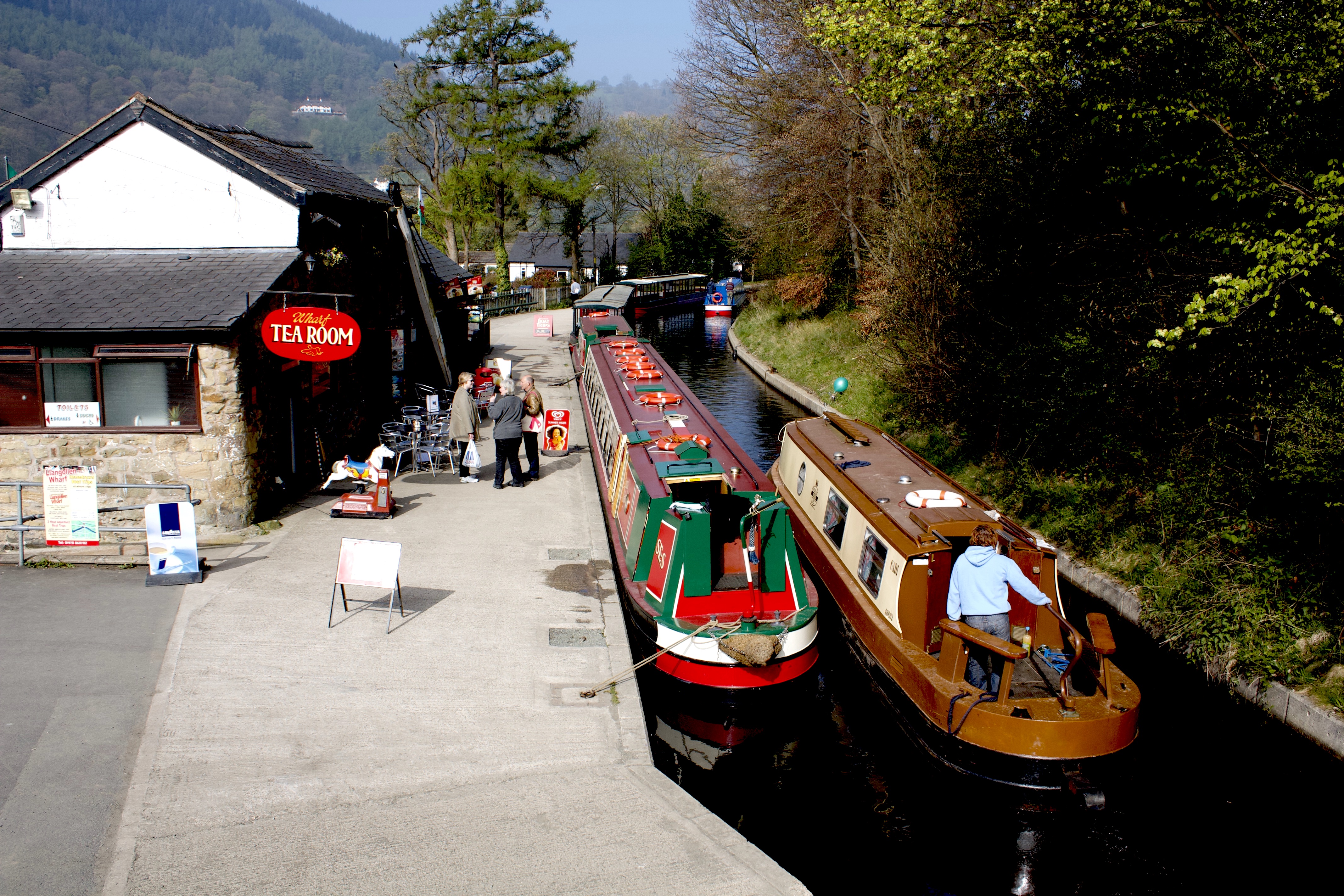
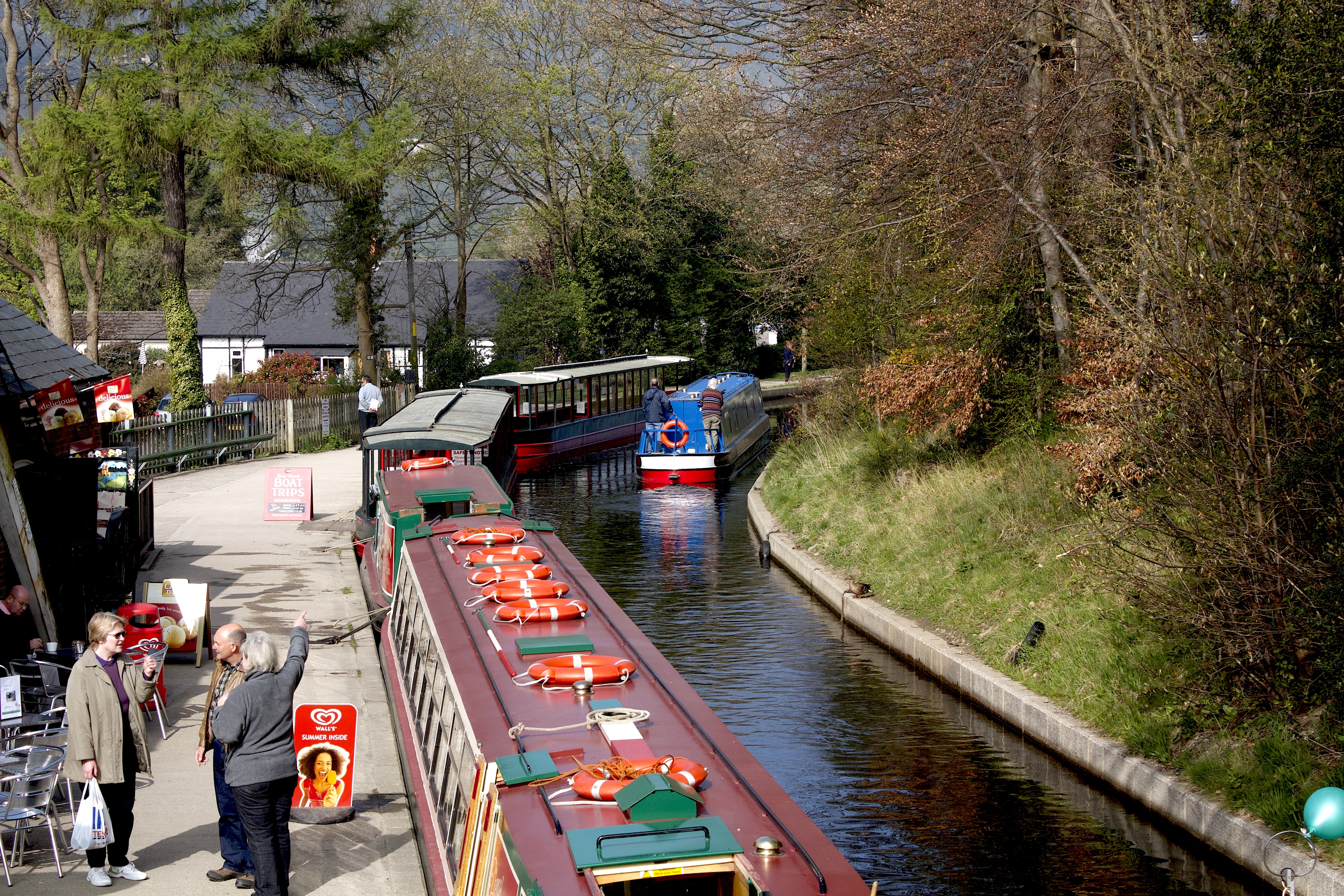
OK, here we were back in the Dee & Ceiriog valleys. Along with Snowdonia, this is our most visited area in Wales. I'm not sure which one I would pick if I had to because both are beautiful, almost beyond description. It was only a short drive from our hotel to the town of Llangollen, one of my favorite towns in Wales. Although we always enjoy walking around the town, doing some shopping, and eating at our favorite pubs, we were here once again to hike to the summit of Castell Dinas Bran. This would be our third time hiking to the summit, and this year we choose the route up from the town side of the castle. We found public parking, crossed the stone bridge fording the River Dee, and headed towards the Llangollen Canal Warf. The path to the castle lies close to the wharf. The Castle sits atop a hill about 1,000 ft above the valley floor, however, the climb to the top is not an easy one. Various sources, including the castle guidebook tell us that:
| "Castell Dinas Bran occupies one of Britain's most spectacular sites. A rugged, foreboding pinnacle, the hillock was the ideal spot to erect a castle. Reid (1973) speculated that the hill at Dinas Bran was occupied in the 8th century by a man named Eliseg. The same Eliseg also gave his name to an ancient pillar that stands just north of Valle Crucis Abbey, near Llangollen. The historical record also conflicts over whom really built the remains at Dinas Bran. The most reliable sources state that Gruffydd Maelor II, son of Madog ap Gruffydd Maelor I, began the castle in the late 1260's. The elder Madog founded nearby Valle Crucis Abbey, where both men were buried. During those final two decades, the castle on the hilltop became a prized possession of the princes of Powys Fadog. Dinas Bran's power did not go unnoticed by English forces. In 1277, during Edward I's initial foray into Wales, the Earl of Lincoln, Henry de Lacy, besieged the castle. The Welsh lord of Dinas Bran was forced to submit to the invading army, which promptly set the site afire, completely destroying it." |
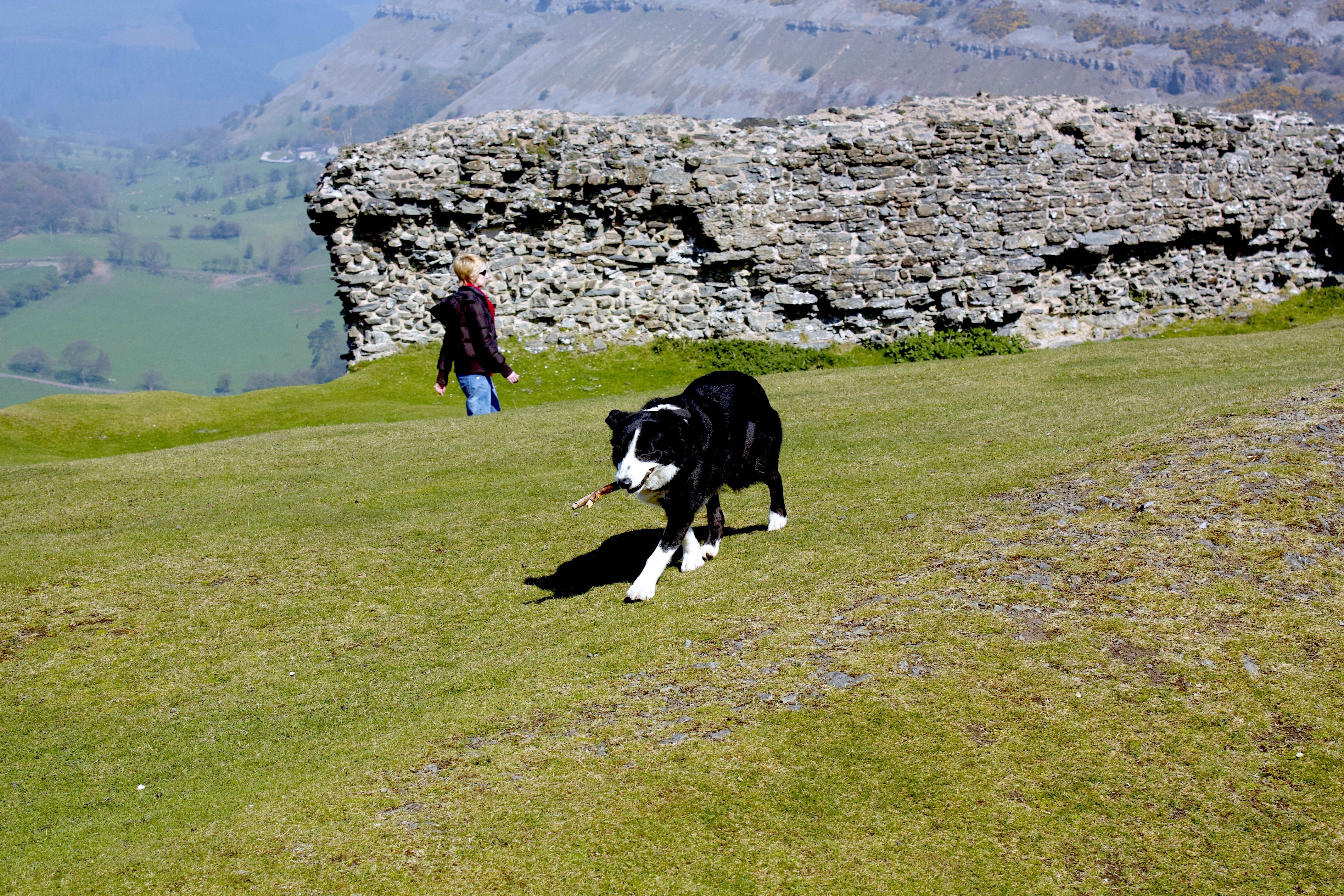
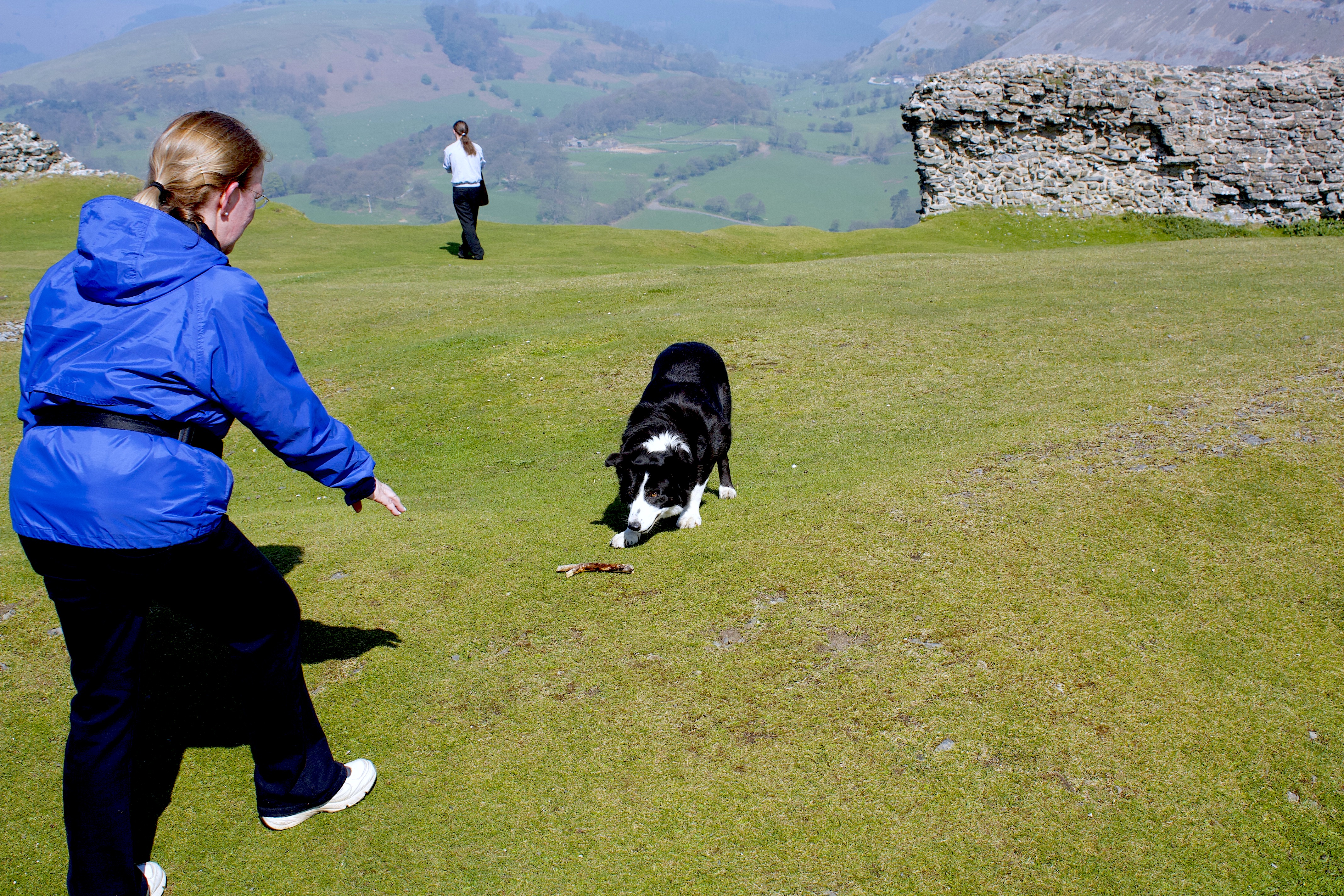
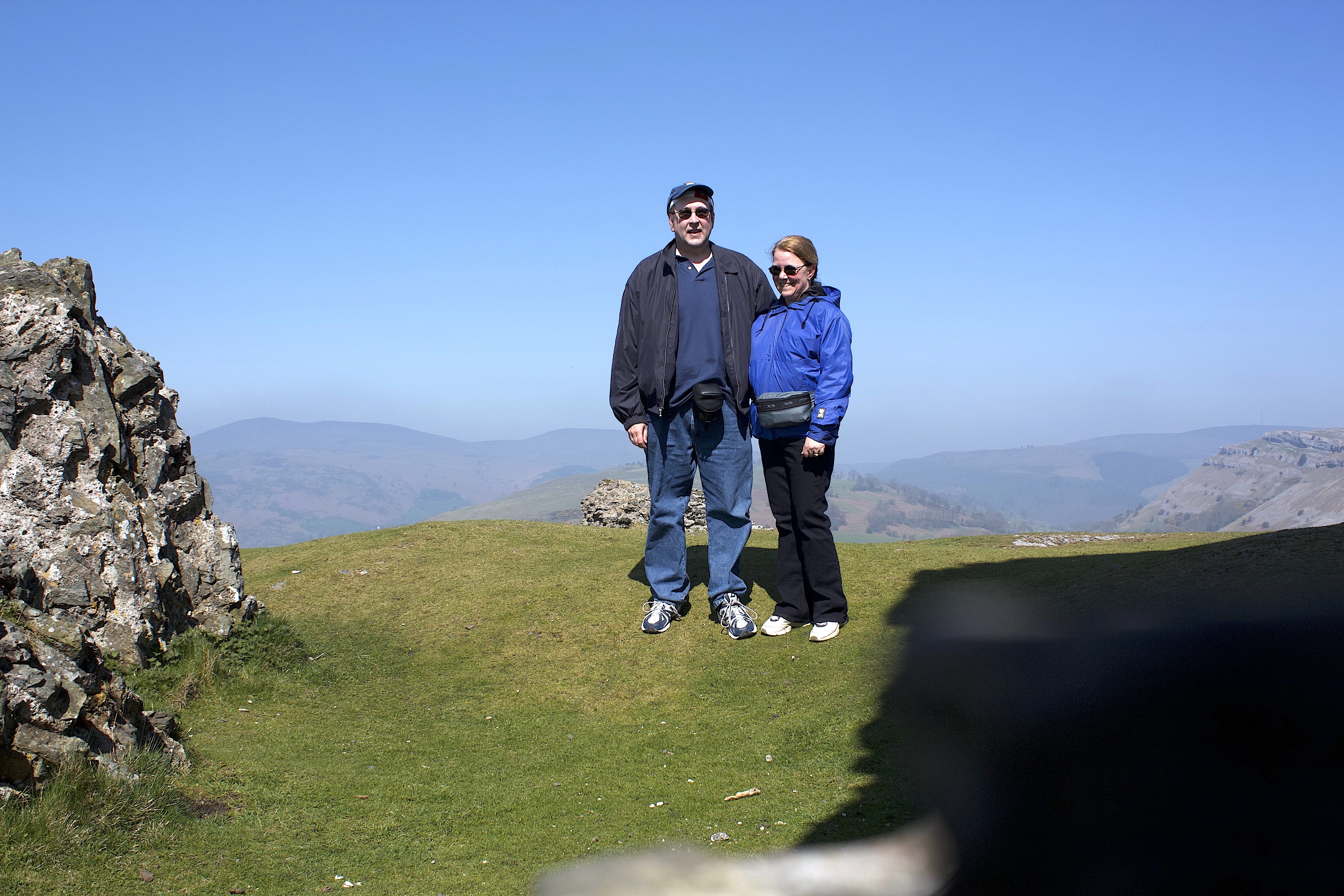
It wasn't too long before we located the public footpath to the castle close to a school. I believe part of the path was next to the school's athletic field. We passed a few houses and then came upon a style leading through fields of grazing sheep where the castle finally came into view. We had managed the easy part of the hike, and we were now confronted with a steep crisscrossed path beginning across a long field, winding its way to the summit of the castle. The ruins of the modest gatehouse are to the far left and are connected to a high stretch of curtain wall to the right. From here we entered into the large inner ward which is surrounded by various bits of the mostly-ruined castle. The ruins are romantic but slight, and you really need a guidebook to sort things out. The two most impressive things about Dinas Bran are the rock-cut ditch (which dates to the Iron-Age) that defend the sides of the castle not protected by the cliff, and the stunning views of the Dee Valley from the summit. Like Castell y Bere, the views are why most people visit Dinas Bran, and are so stunning that you might forget the castle altogether. I remembered from a previous visit that there was a tent pitched in the inner ward when I arrived, so it appears that people like to spend the night here too. There were already a few people at the summit when we arrived, including a couple with a friendly Border Collie, who insisted on playing a game of fetch the stick with my wife. We spent a lot of time at the summit simply admiring the views before climbing back down.
|
Below: Llangollen Canal Wharf and Castell Dinas Bran
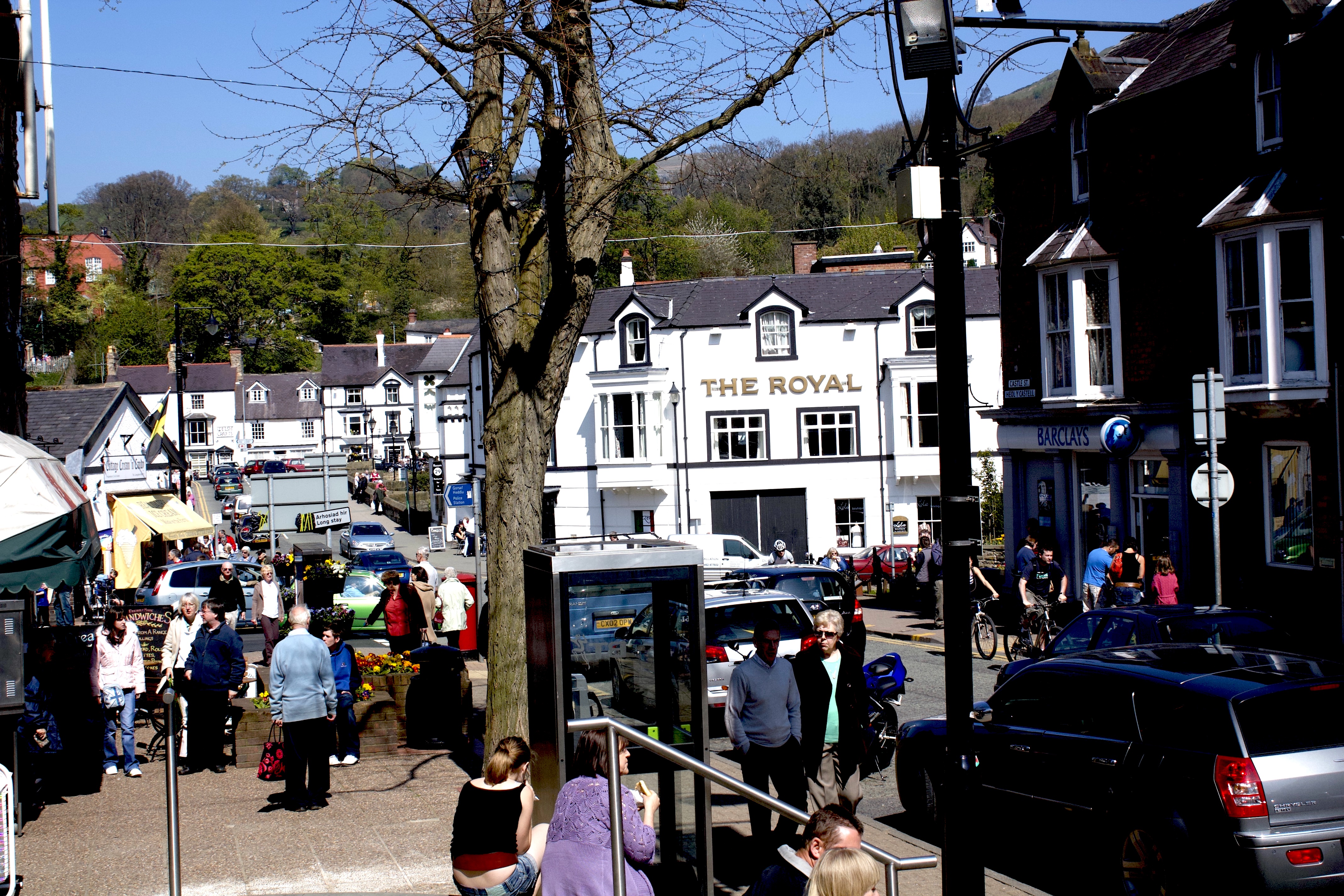
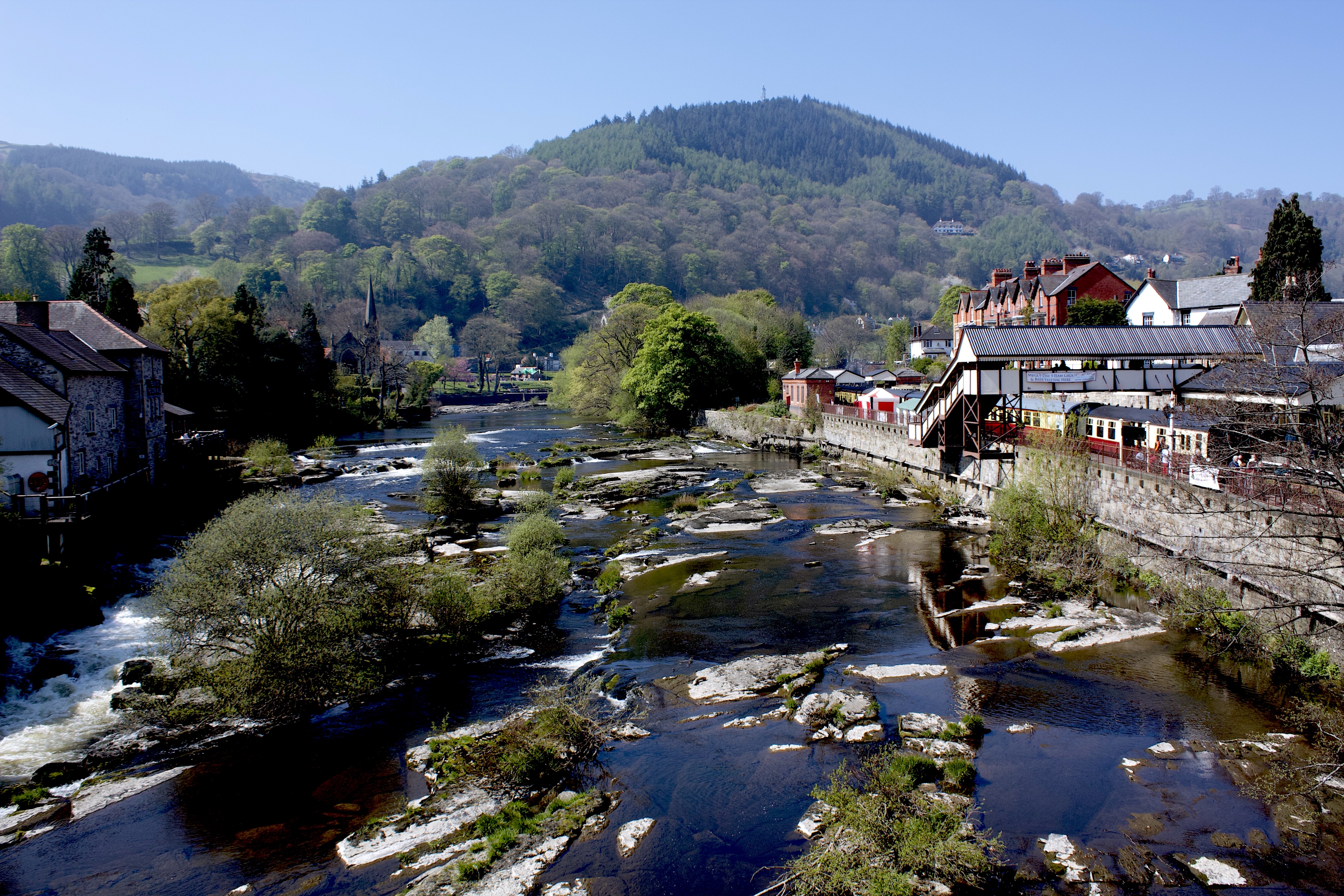
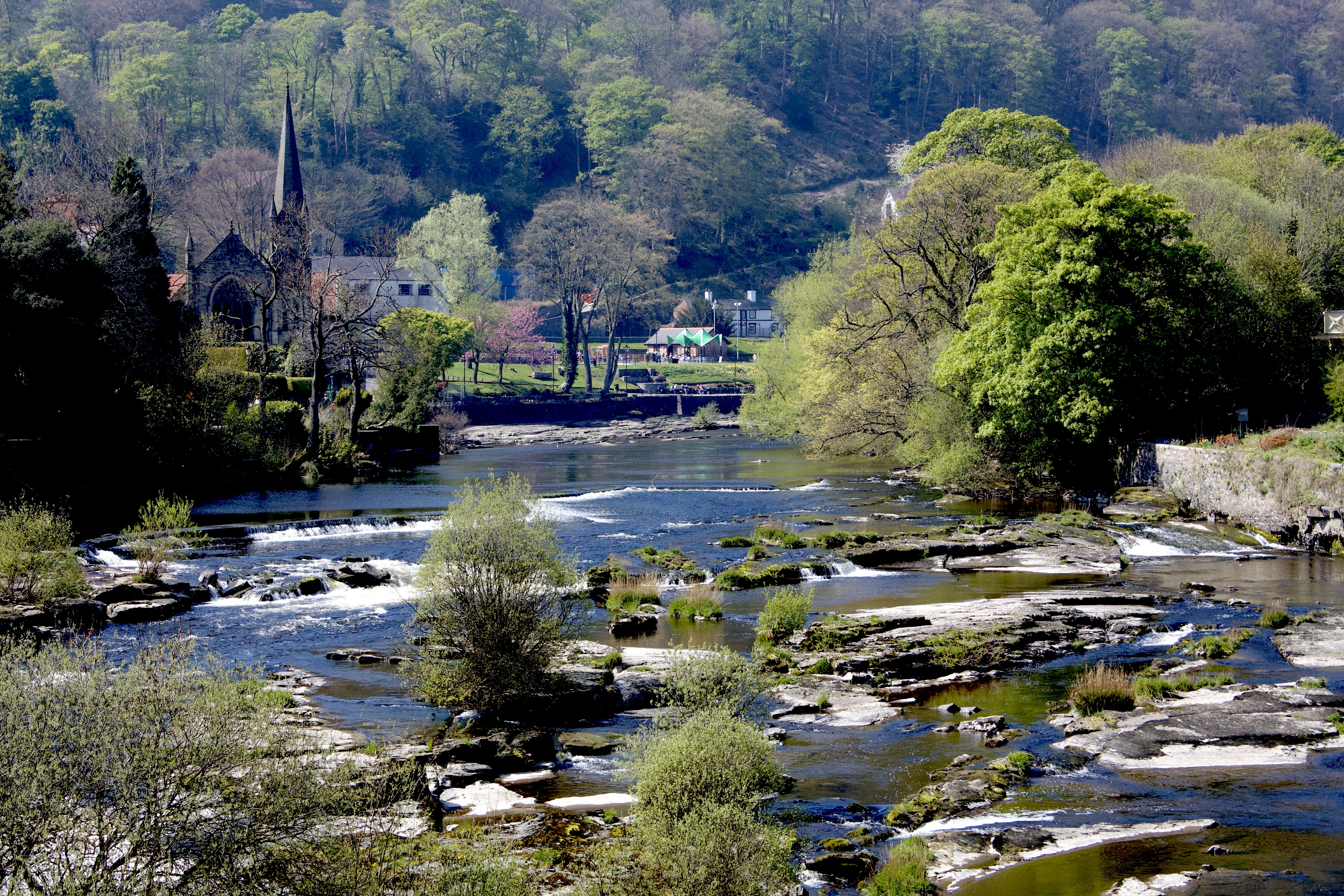
| We descended from the castle and spend time walking around Llangollen, taking in all the scenic views, especially views of the river from the bridge. We had lunch at Gales Hotel and Wine Bar, a place we had frequented before. Gales has good food, good wine, and good ale as well. What's not to like? After lunch we headed to our next destination, which was only a few miles down the A5. |
Llangollen: views of the town and river
|
|
Valle Crucis is a Cistercian abbey only about 4 miles from Llangollen, and is set in stunning countryside. The abbey was built in 1201 by Madog ap Gruffydd Maelor, Prince of Powys Fadog. Although the ruins of the abbey are not nearly as impressive as those found at Tintern, the countryside is more picturesque. We parked the the modest car park close to the entrance and paid our admission to the site. The first thing that struck me about the abbey was the beautiful west front with its rose window tracery still intact. The nave is large, with green grass, and the stumps of large pillars that once carried the weight of the roof, all now framed by the hills beyond. The most impressive survival here is the vaulted chapter house, a nearly-complete building with two floors. The chapter house holds a very fine collection of medieval memorial sculpture preserved in the upstairs primarily from the late 13th century. Some of these are magnificent, including the slab for Madog ap Gruffudd. His inscription reads "Here lies Madog son of Gruffudd called Fychan." Madog ap Gruffudd (d.1306) was the great-grandson of the founder of the abbey, and great-grandfather of Owain Glyndwr.
The site is also home to the only remaining monastic fishpond in Wales (yet another surprise). A bench located on the far side of the pond provides outstanding views of the rear of the abbey. We remained here for quite a while. I find that the history and beauty of Valle Crucis makes it one of those places that is difficult to leave. After lingering at the abbey and enjoying the beautiful countryside and evocative ruins, we returned to our hotel in Llanarmon, and enjoyed dinner at the Hand Hotel.
|
Below: beautiful Valle Crucis Abbey
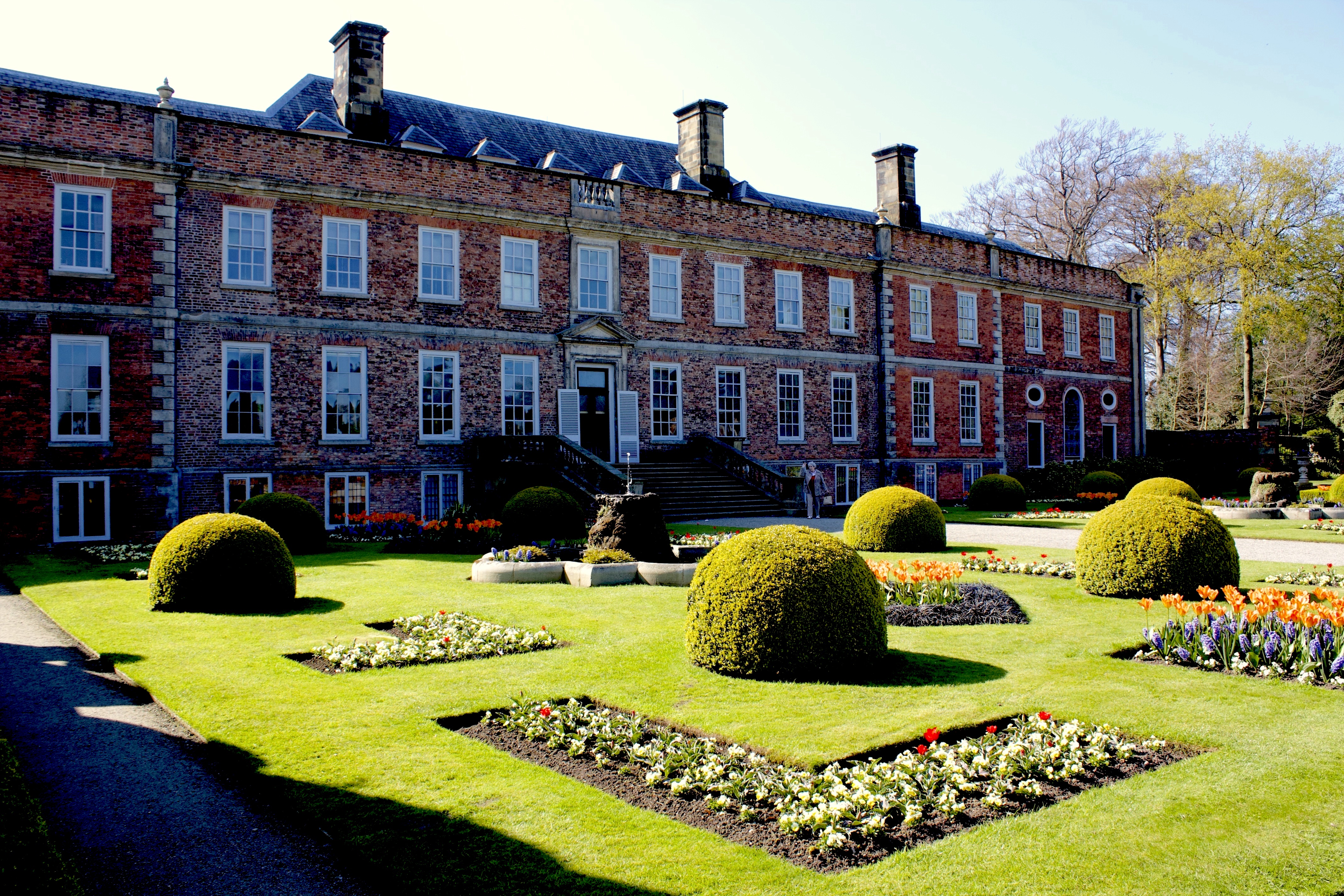
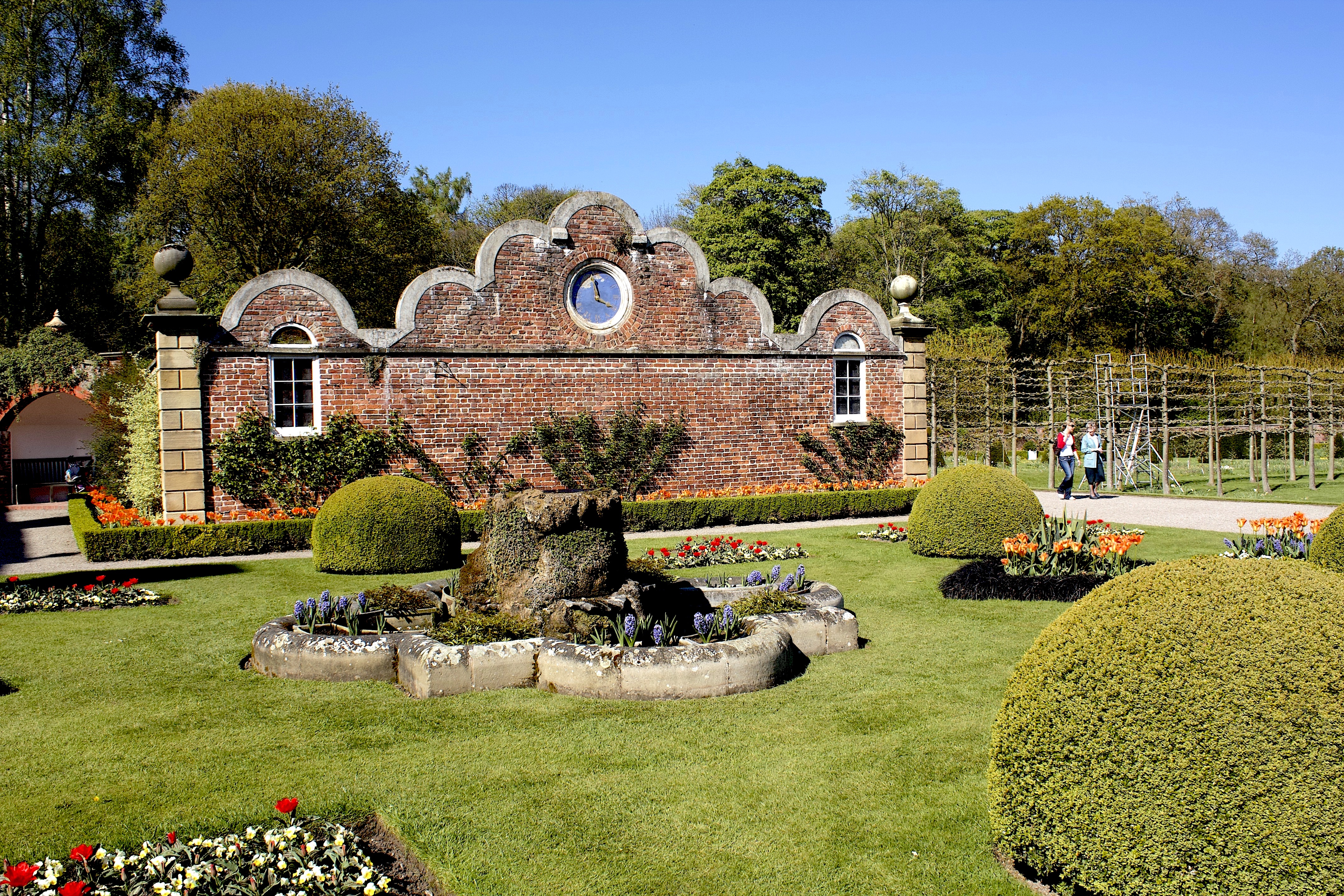
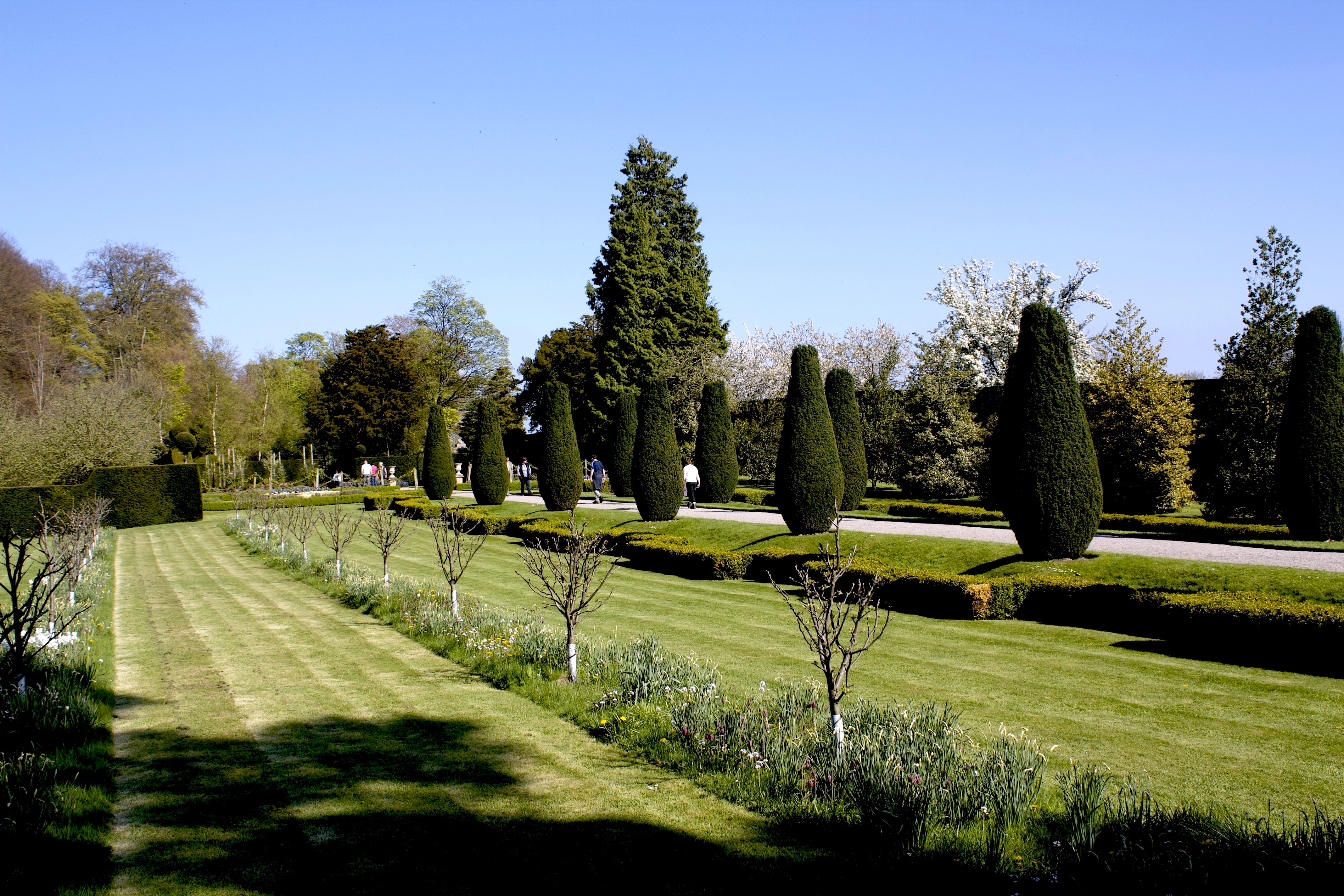
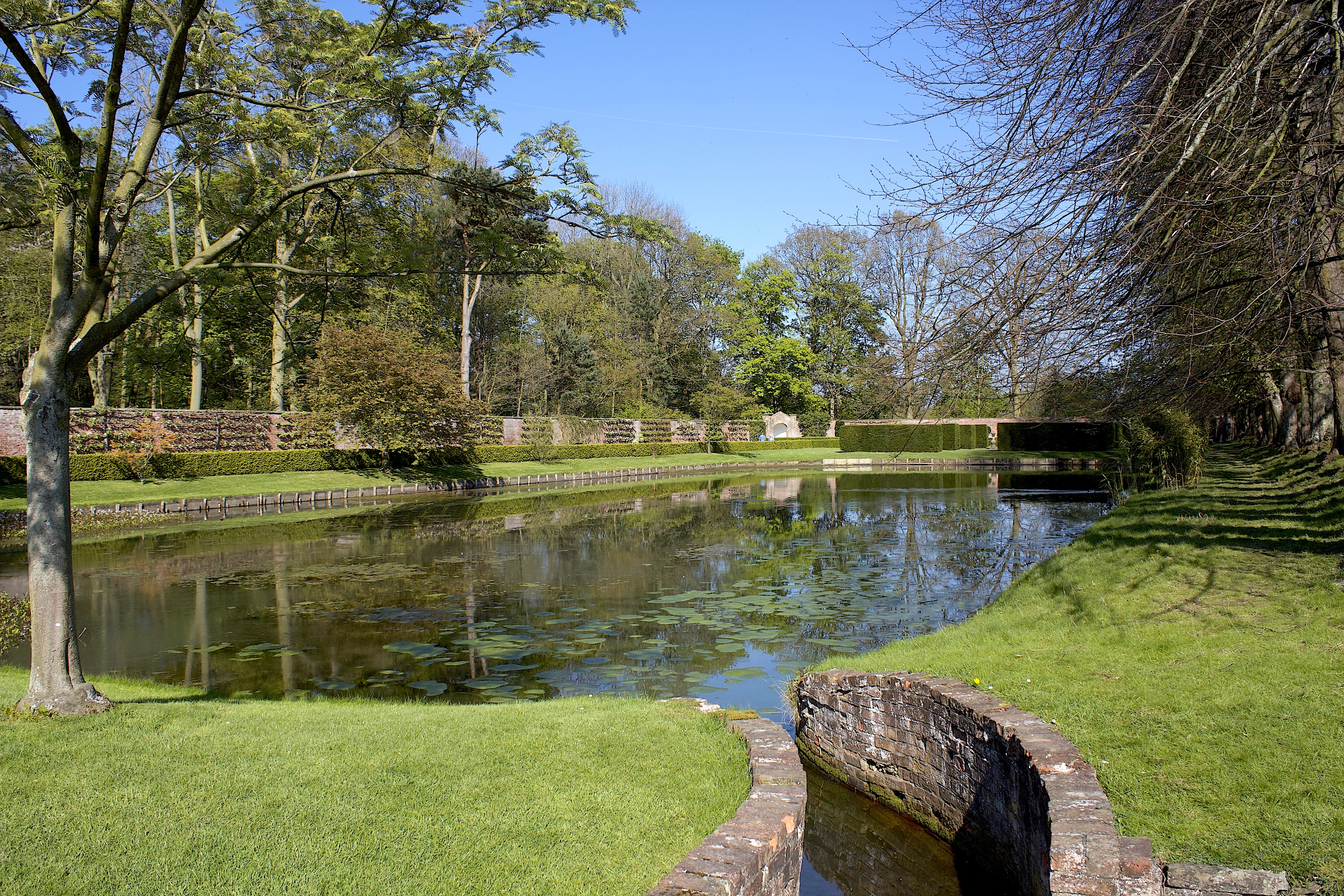
| We began the following day with a visit to Erddig, a Welsh country house and estate about 2 miles south of Wrexham. The original house was built on the escarpment above the Clywedog between 1684 and 1689 to the designs of Thomas Webb for Joshua Edisbury of Pentre Clawdd. The gardens and the surrounding park were laid out in the early to late 18th century. The estate is approximately 1,900 acres, and includes part of Wat's Dyke and the remains of a Norman motte-and-bailey castle, which I did not try to find. Erddig was inherited by Simon Yorke in 1733, and remained in the Yorke family until it was given to the National Trust in 1973. Erddig Hall is positioned as something like an Upstairs - Downstairs experience. The Yorke family had an unusual relationship with their servants, and commemorated them in a large and unique collection of portraits and poems. Part of our tour included the servants' quarters and estate workshops, designed to provide insight into how 18th to 20th century servants lived. There was certainly more emphasis here on the lives of servants and their relationship with the family, than we had seen on other tours. Following our house tour we explored the gardens and part of the parkland, which included a field of grazing sheep. The gardens were lovely although certainly no match for what we had seen at the likes of Powis and Chirk. Still, we enjoyed visiting Erddig. It was something new for us, and different enough to make the visit worthwhile. |
Below: the gardens at Erddig
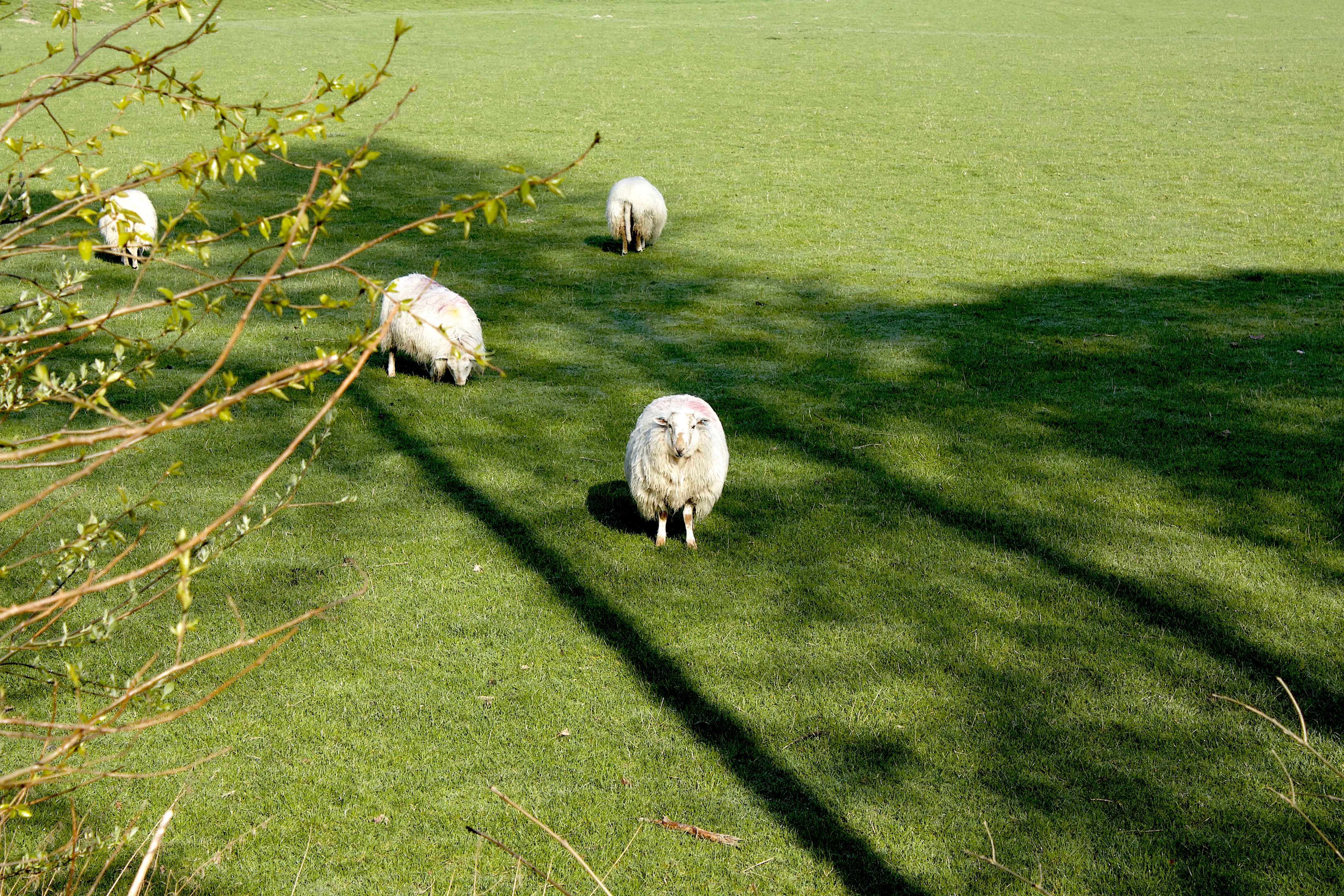
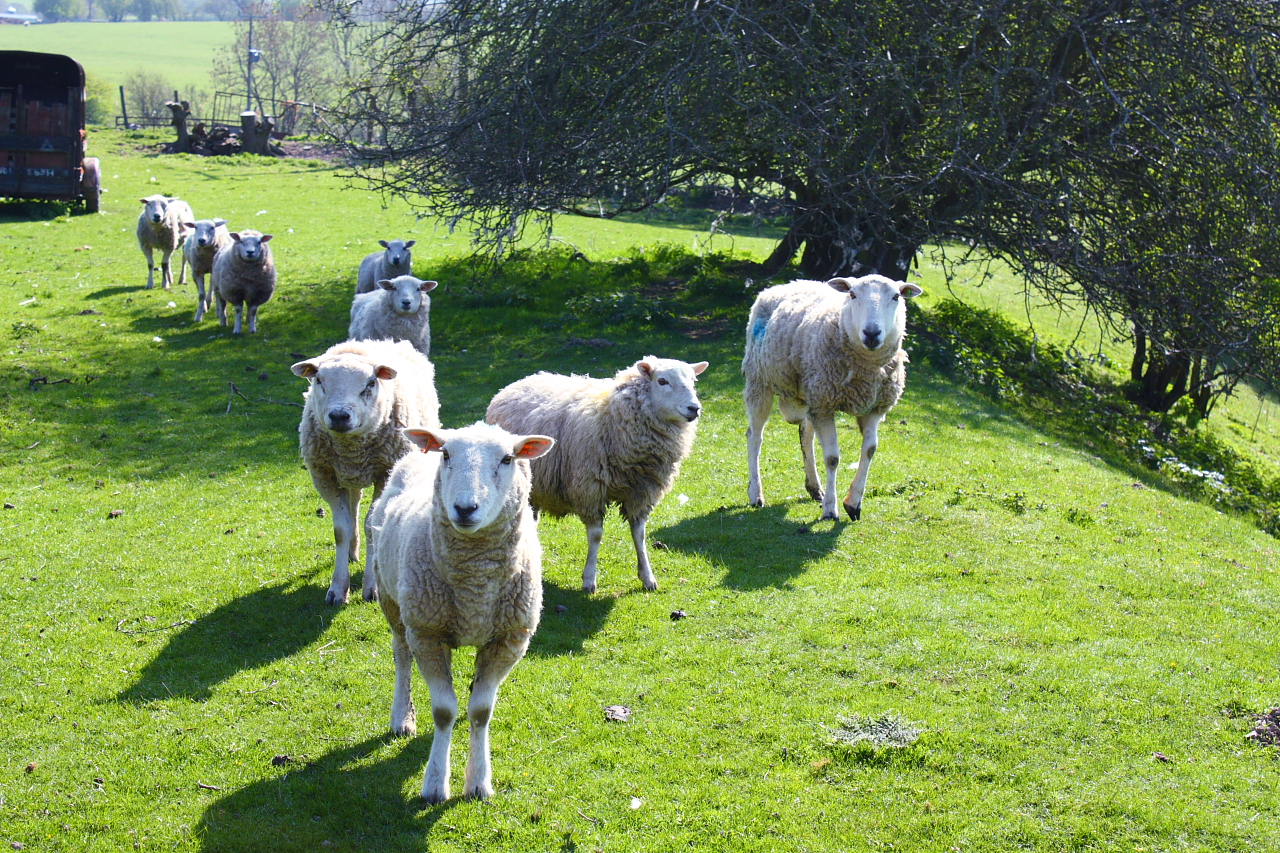
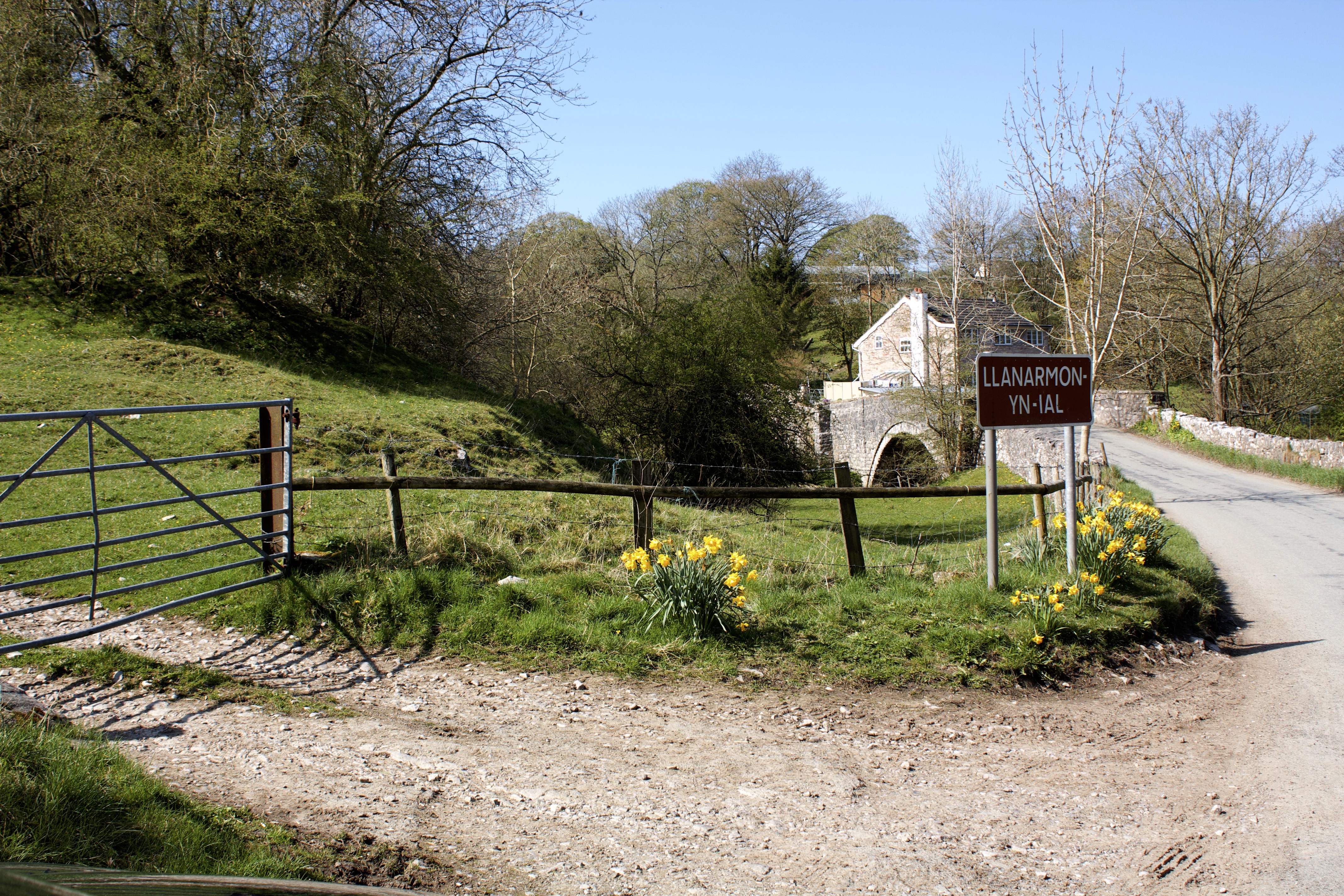
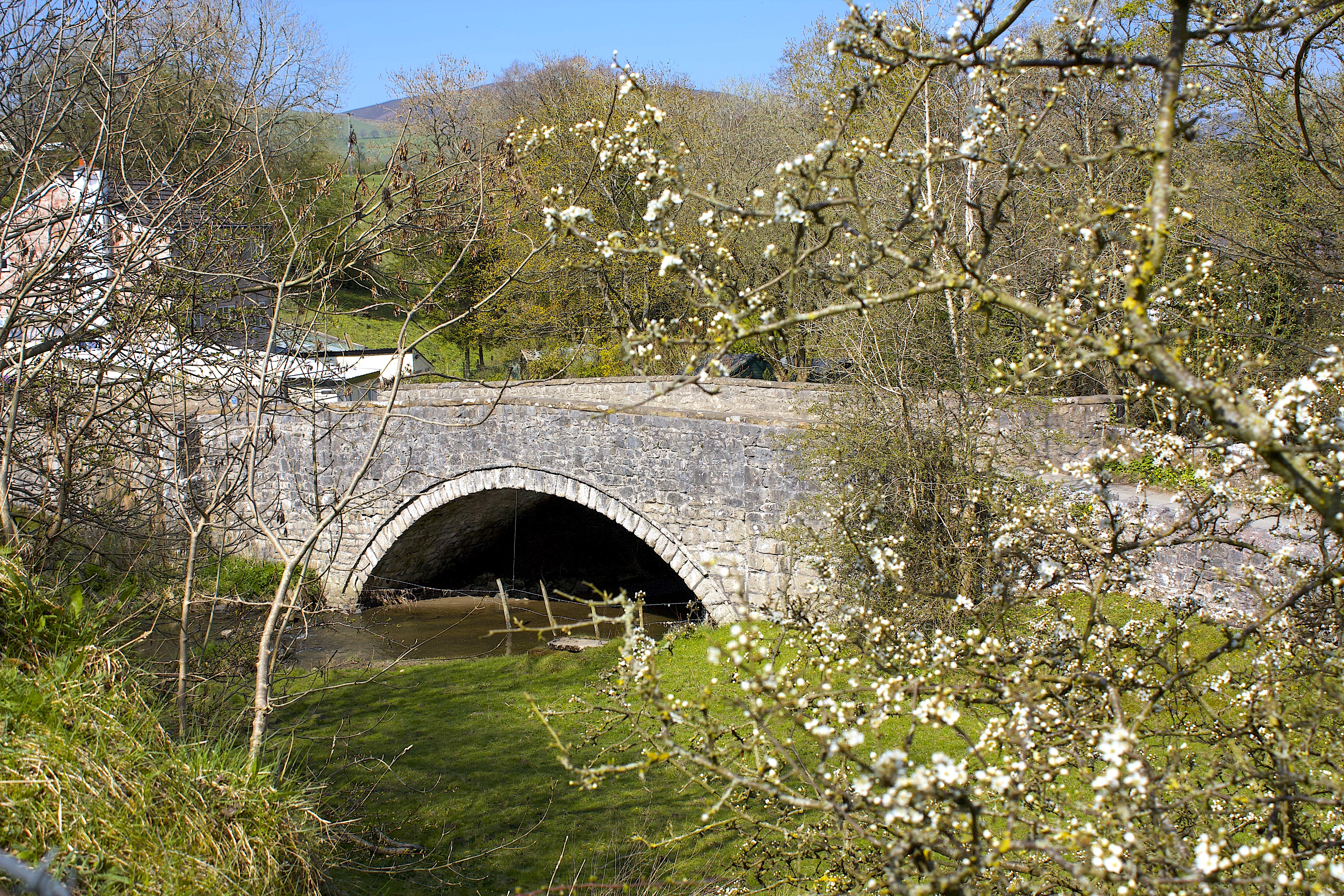
| Our next stop was a real treat for me. We would be investigating a lesser-known, remote motte-and-bailey castle with only earthwork remains. Tomen y Rhodwydd, built by Owain Gwynedd in 1149 in conjunction with his annexation of part of Powys, is a very fine motte and bailey castle, commanding wide views of the surrounding countryside. It lies in a farmer's field in the tiny village of Llanarmon-yn-Ial. It took us just a while to find the castle. We parked near a stone bridge in the village and found a farmer's gate leading to the site. As we approached, we interrupted a line of sheep making their way across the perimeter of the castle. They paused as we approached, looked a bit puzzled by our sudden appearance, but allowed us to pass. I had read about this castle prior to our visit, but I was surprised by the size of the ruins we explored. The motte is steep and still towers over the ditches that helped protect the castle. The bailey, which would have contained the castle's wooden buildings, is large, and seemed complete. We climbed to the top of the motte, which was wide and provided great views of the surrounding countryside. The farmland surrounding the castle was beautiful, so nice, in fact, that we decided to unpack our picnic and enjoy lunch here. (Not at the castle, but back close to the car.) If you're ever in the area and you'd like to experience a castle that is still impressive without surviving masonry remains, I highly recommend Tomen y Rhodwydd. |
Below: Tomen y Rhodwydd, the motte, the bailey, the sheep, and the bridge
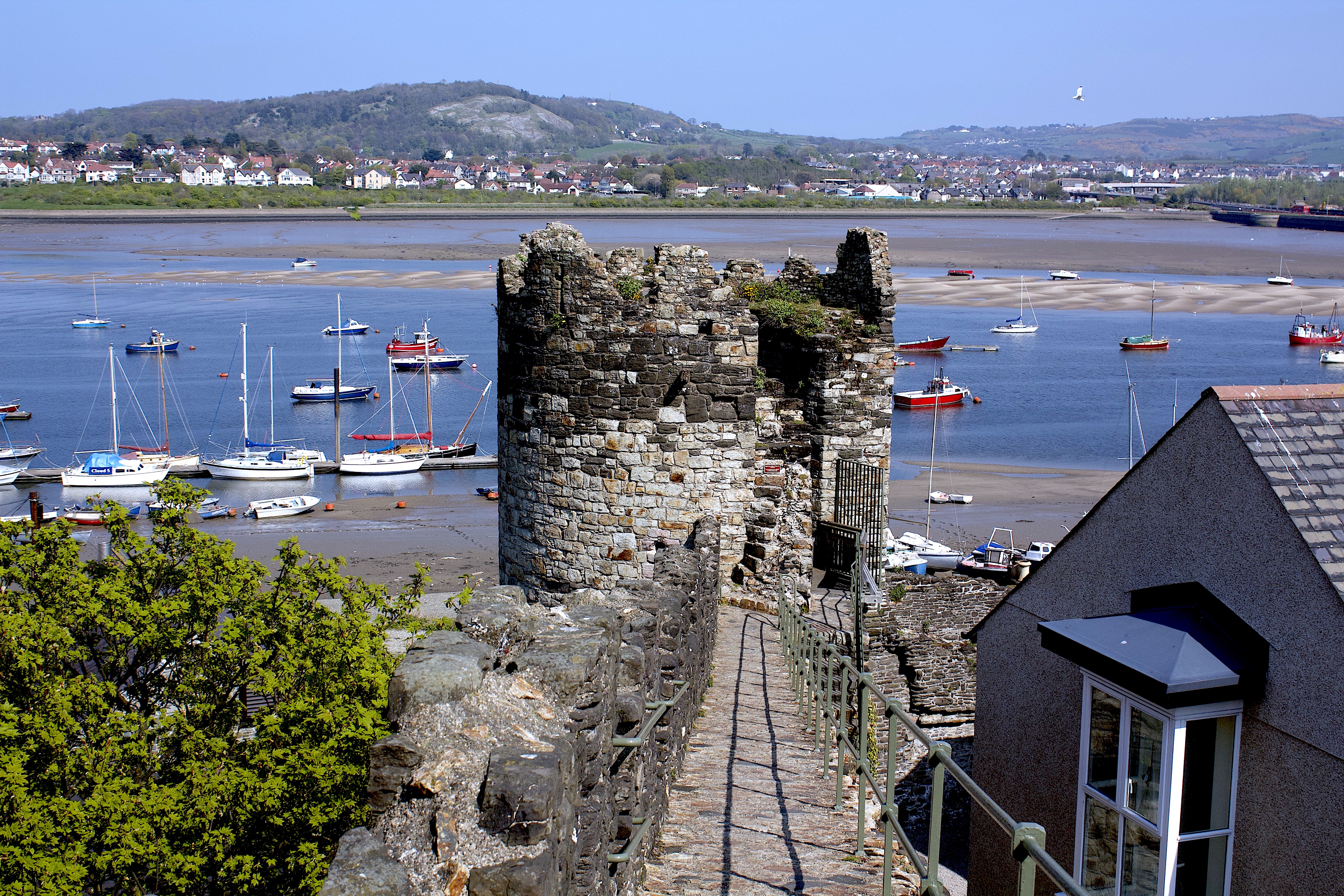
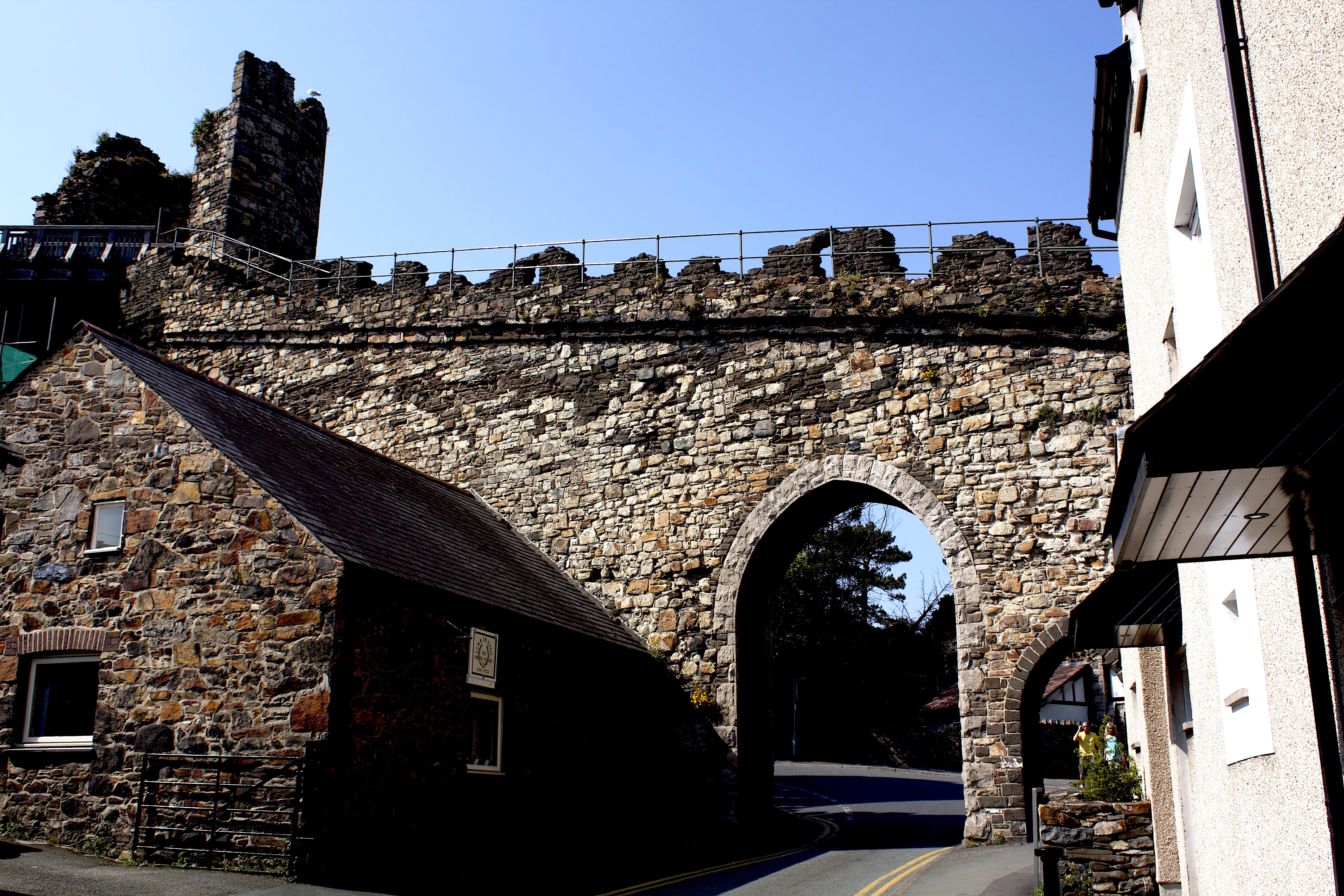
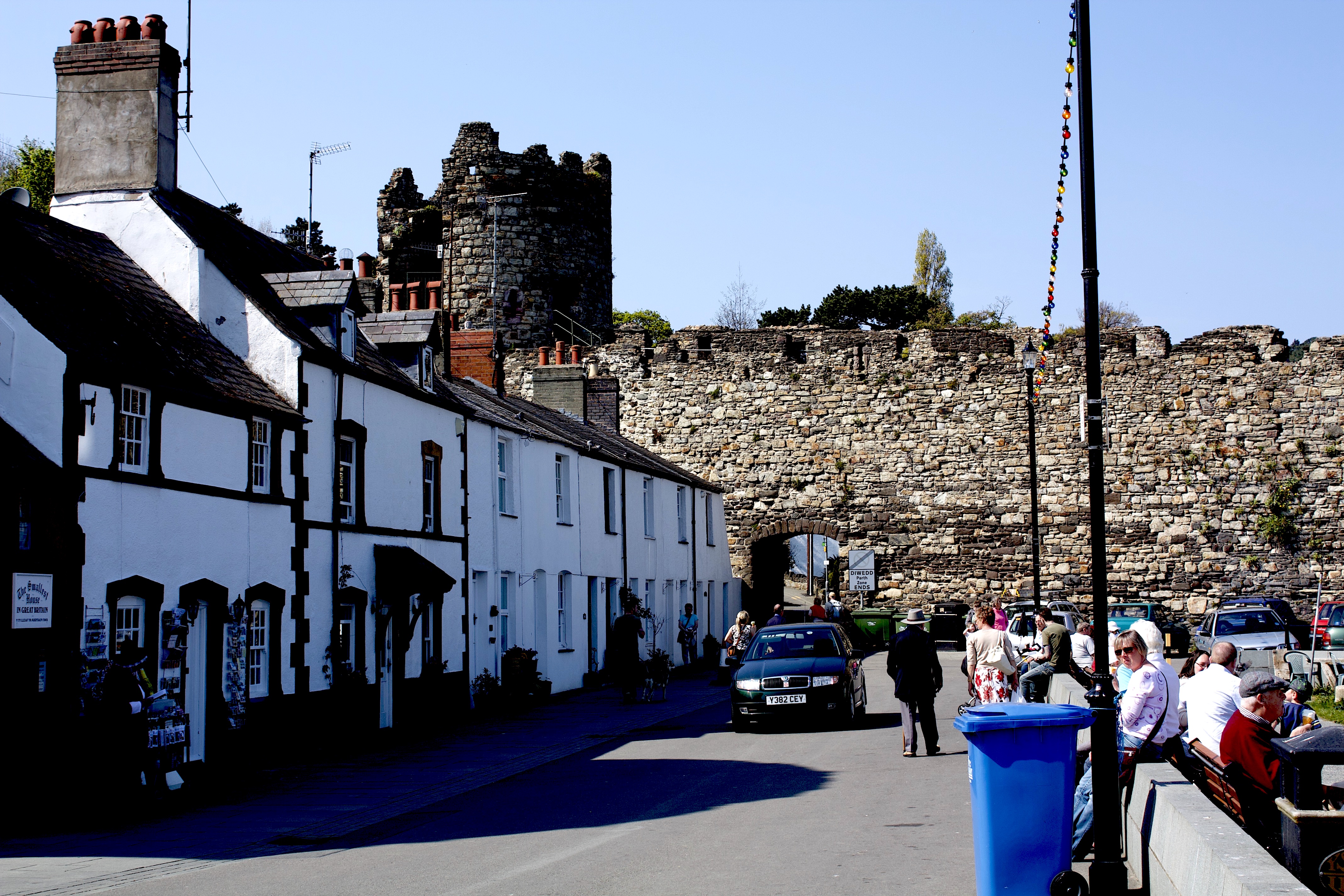
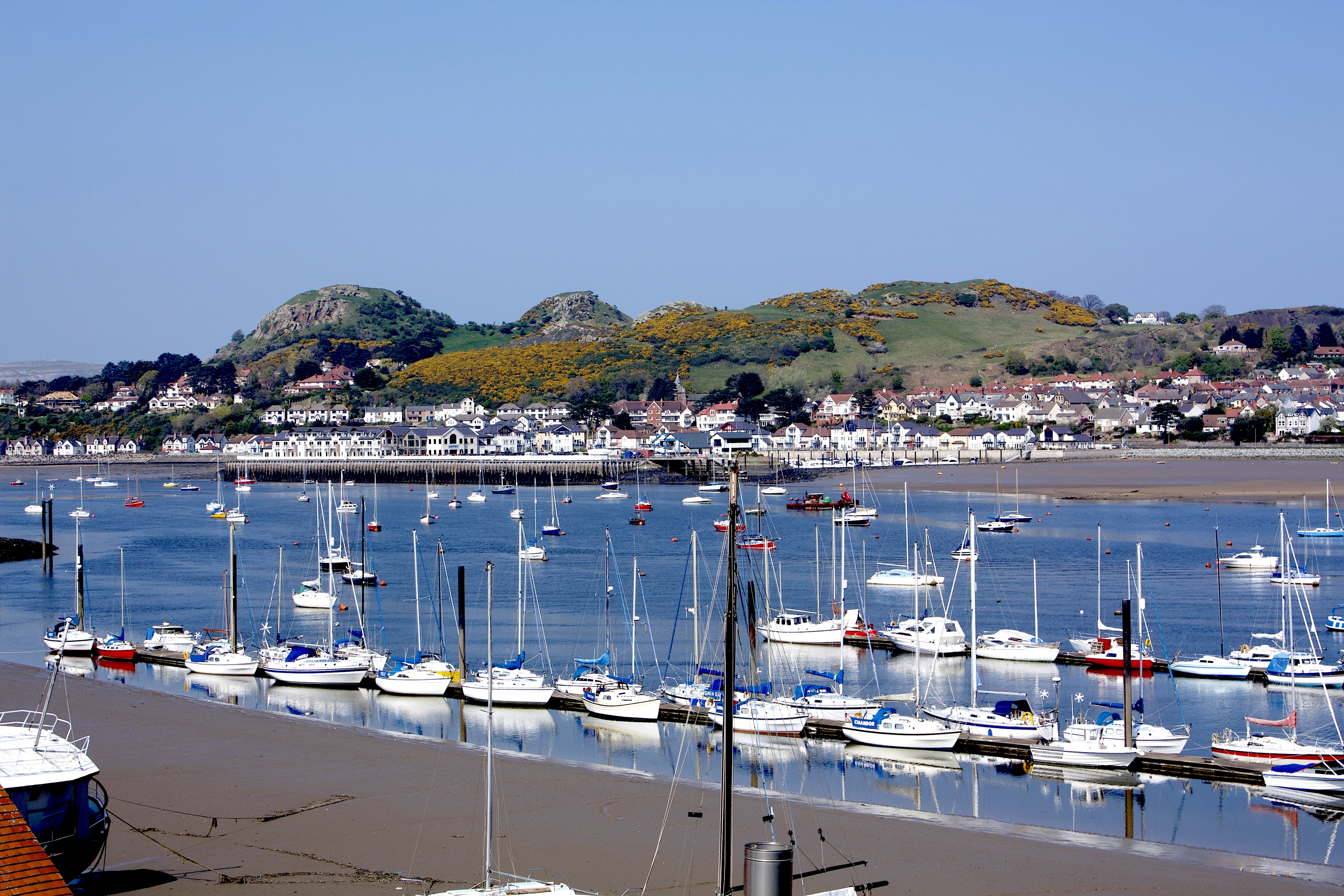
| Our final stop of this year's holiday was the town of Conwy. As had been the case with our second visit to Criccieth the previous week, we were here to simply enjoy the town, not tour the castle. One of the better ways to survey Conwy is to walk the nearly complete set of town walls that encircle the town. From the medieval walls you can view the town, the castle, and enjoy views of the surrounding hills. We snapped a few last photos of the castle, then did some shopping, and enjoyed our usual Fish and Chips down at the Quay. It was a sunny, clear day, and there were lots of boats tied up in the bay. It was also easy to spot the twin hills of Deganwy Castle just across the water. It was a beautiful way to end our trip. |
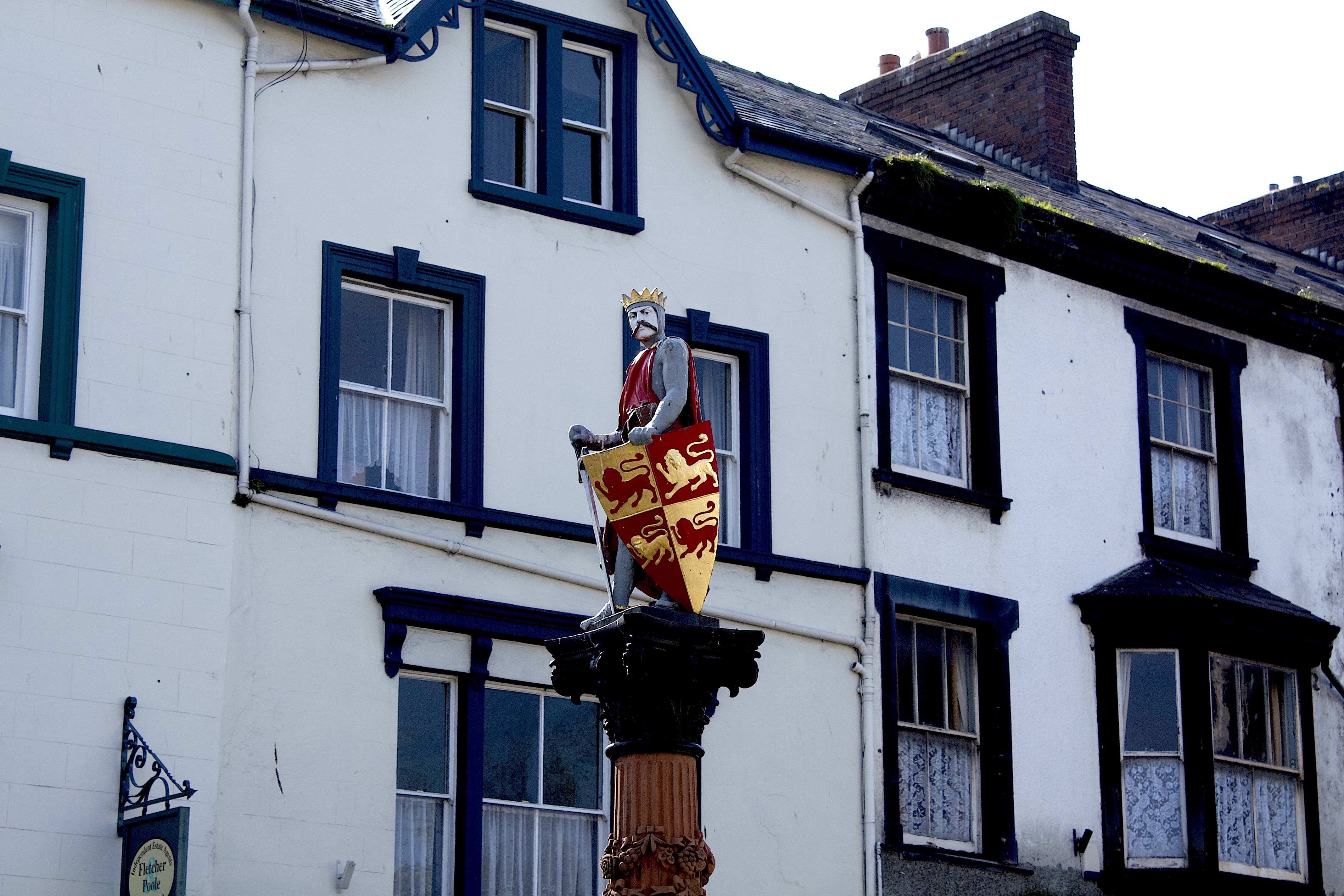
Conwy Castle and town. Bottom row: the twin hills of Deganwy across the bay, and the town's statue of Llywelyn ap Iorwerth
| Although we got off to a bit of a rocky start, we enjoyed another great trip to Wales. As was the case with our visit in 2004, we slowed down, didn't visit nearly as many sites, and took more time to relax. We stayed fairly close to our accommodations and found plenty to do and see. In an odd way, I think our accommodations may have been the highlight of this trip. Portmeirion, Llangoed Hall, and the West Arms Hotel, all offered different types of accommodations, but were all located in areas of great beauty with lots interesting sites nearby to explore. My favorite activity was visiting Llangollen and making yet another hike to the summit of Castell Dinas Bran. Like a couple of other places in Wales, there's something about the views from the summit of the castle that are soul-cleansing. We hope to be able to return some day. |
Part III: North Central Wales
 Return to the main Travelogue page Return to the main Travelogue page
|