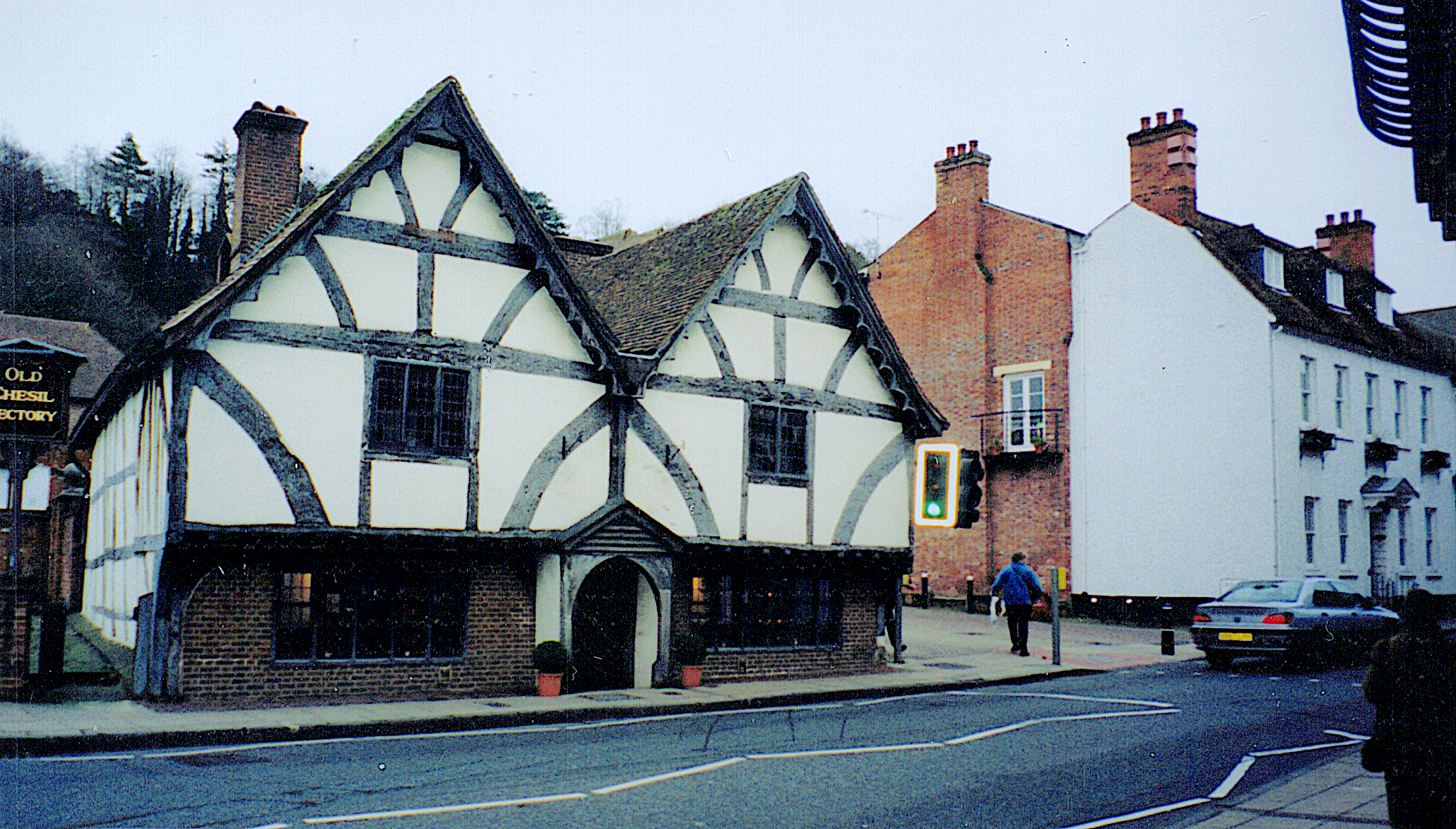
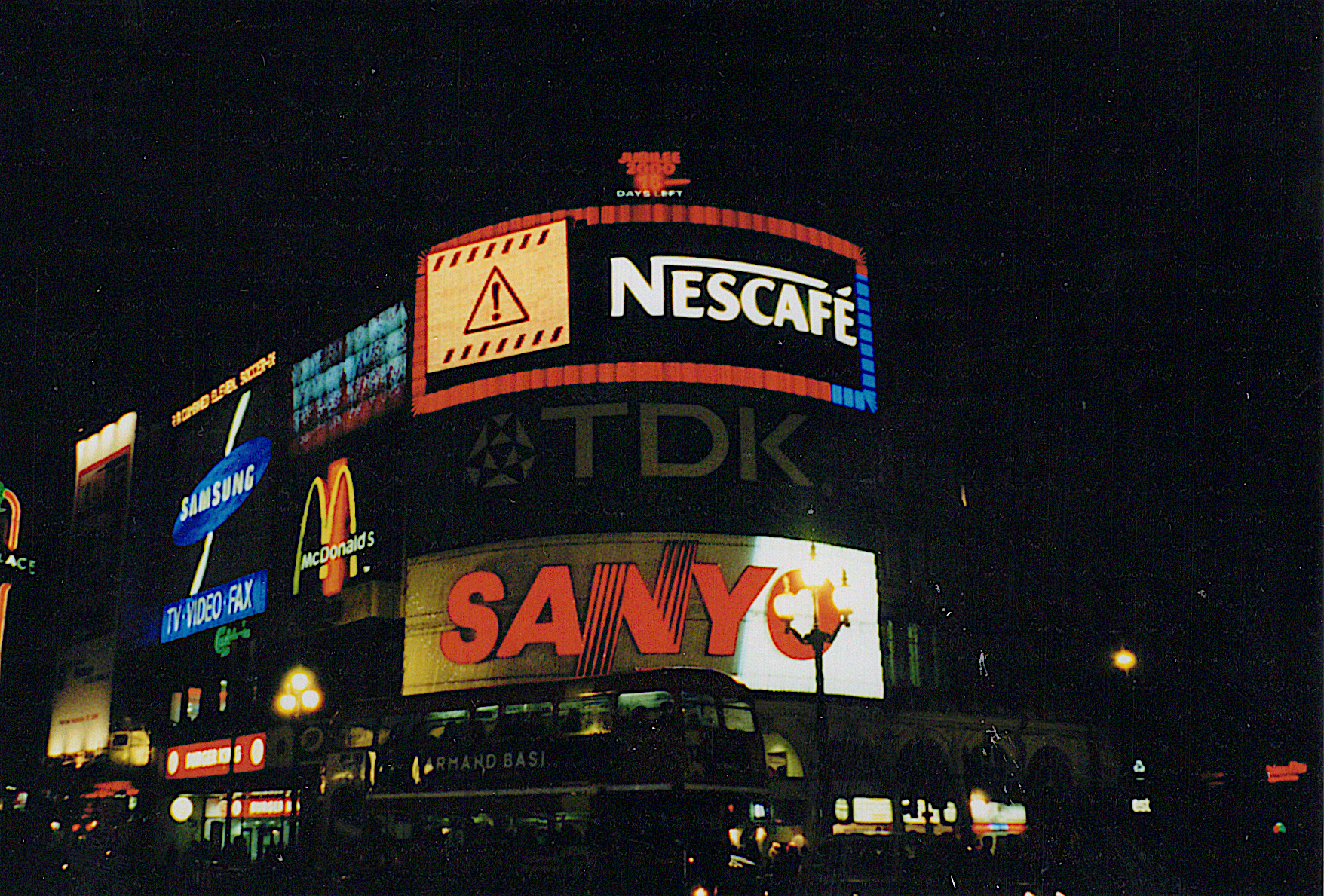
England 1999: Ten days in Arundel/West Sussex and London just before Christmas. London was busy preparing for Millenium (Y2K) celebrations. We loved seeing how Christmas is celebrated in England!
Places Visited:
Part I: West Sussex, Arundel→ Amberley Castle Hotel → Arundel → King's Arm Pub → Winchester → Winchester Cathedral → Lewes
Harvey's Brewery → Lewes Castle & Battle → Part II: London → The Stafford Hotel → Windsor Castle → Temple Church → Globe Theater Tour
Harrods → Westminster Abbey → St Paul's Cathedral → The British Museum → The Museum of London Plays → Tess of The D'Urbervilles → Quartet
Complete Works of William Shakespeare (abridged) → Chicago

Part I: West Sussex, Arundel
Amberley Castle Hotel
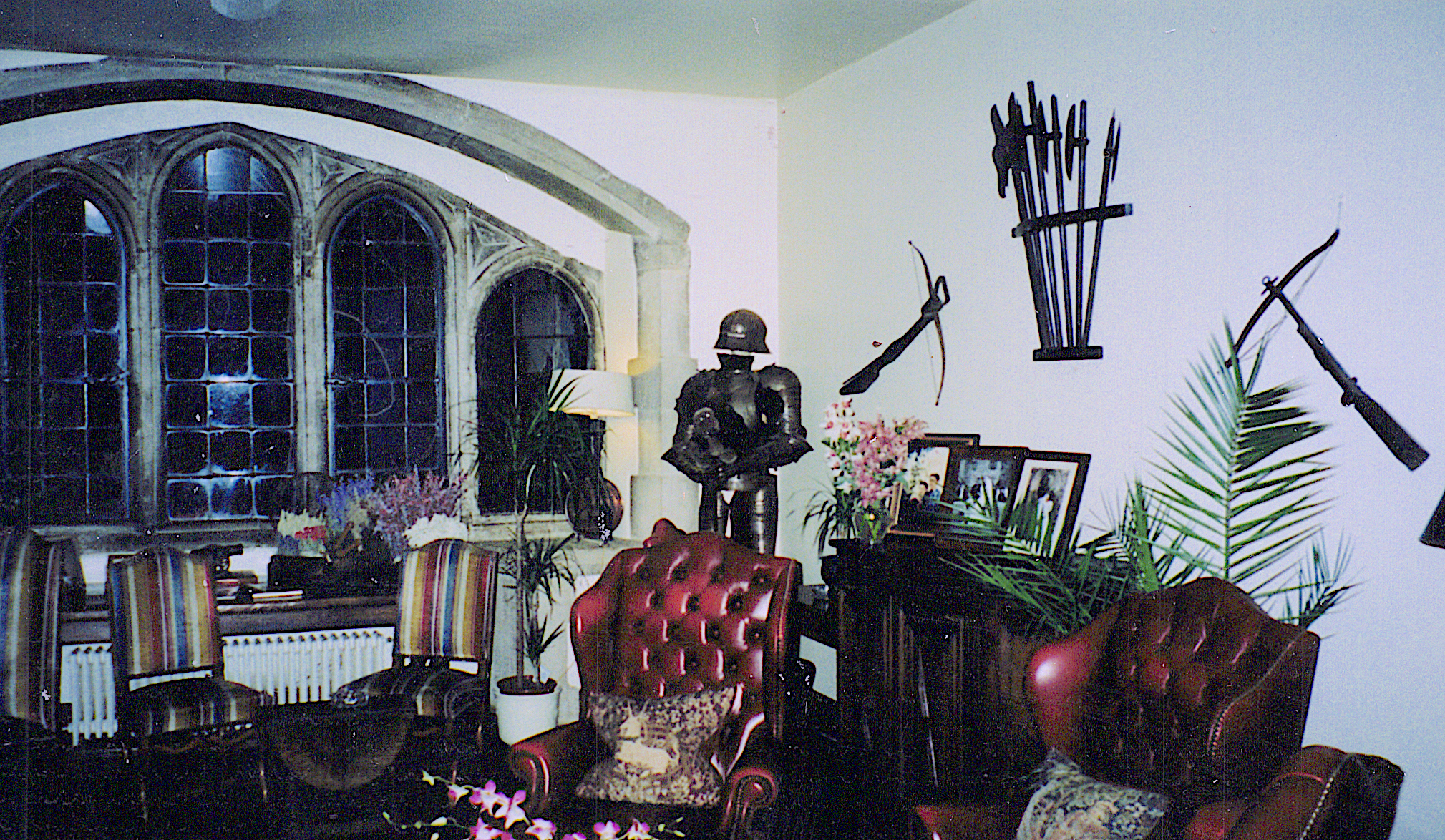
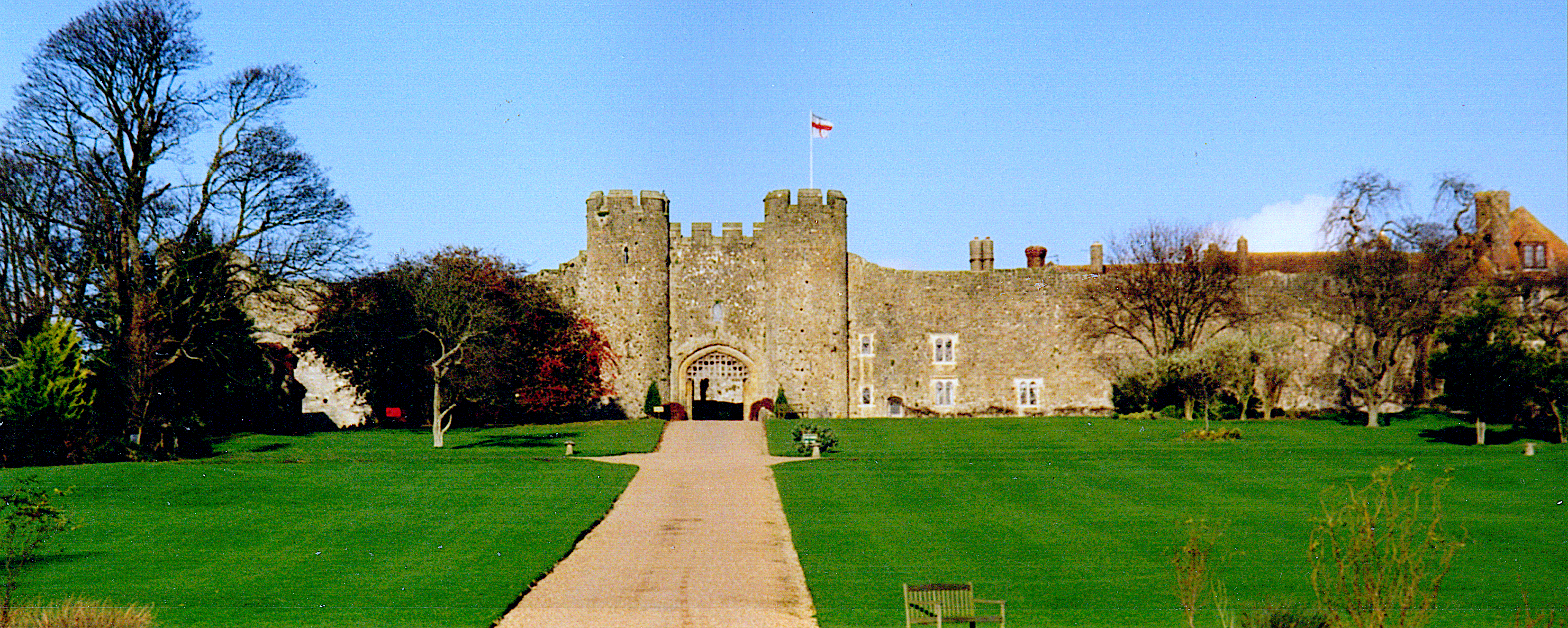
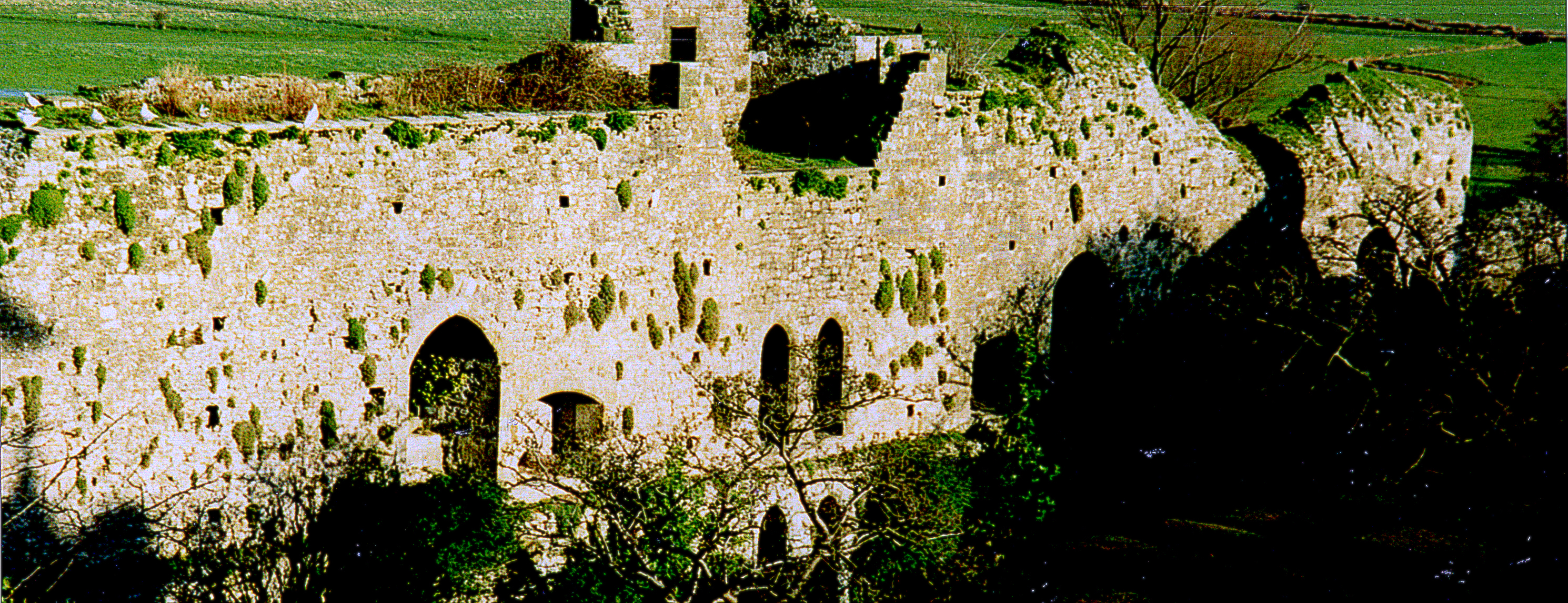
Below: the front of the castle and view of interior curtain wall.
 |
 |
|
For the first part of our holiday we had booked a room for three nights at the Amberley Castle Hotel near Arundel. The castle was erected as a 12th-century manor house and fortified in 1377, giving it a rhomboid shaped stonework enclosure with high curtain walls, internal towers in each corner, a hall and a gateway. It was used as a fortress by the bishops of Chichester. The walls, gateway and two of the towers remain as a Grade I listed building. The hotel website describes the castle further:
| "Privately owned, this magnificent 900-year-old castle is enclosed by a 60-foot-high curtain wall and portcullis that remains open, behind which you will discover an enchanting hotel offering the highest standards of food and service. Bedrooms are resplendent with the luxurious facilities you would expect from a country house hotel. The land where Amberley Castle stands was gifted to Bishop Wilfrid in 683 AD by Caedwalla, King of Wessex and the castle’s current buildings owe their origins to a timber-framed hunting lodge built in 1103 by Bishop Luffa. The following 400 years saw this lodge transformed into a fortified manor house complete with crenelations, battlements and a portcullis under the supervision of a number of resident bishops." |
Our accommodations were in the "Bramber" room located on the top floor of the Tower House Mews, with views on to the 17th-Century Manor House and flowerbeds. The room was a half-timber, Tudor-style accommodation that was comfortable and private. On one morning we awoke to find the castle's black cat perched outside our 2nd story window looking in. Wonder what he wanted? We spent lots of time exploring the castle, grounds, gardens, lake, and a working farm located next to the castle. We enjoyed breakfast and dinner in the castle dining room. The castle does a lot of event catering, and there was a wedding party there during our stay.
|
Top Row (R) & 2nd Row: our room was located in the Tower House Mews. Top Row (L): Looks like Santa is having some trouble getting down the chimney!
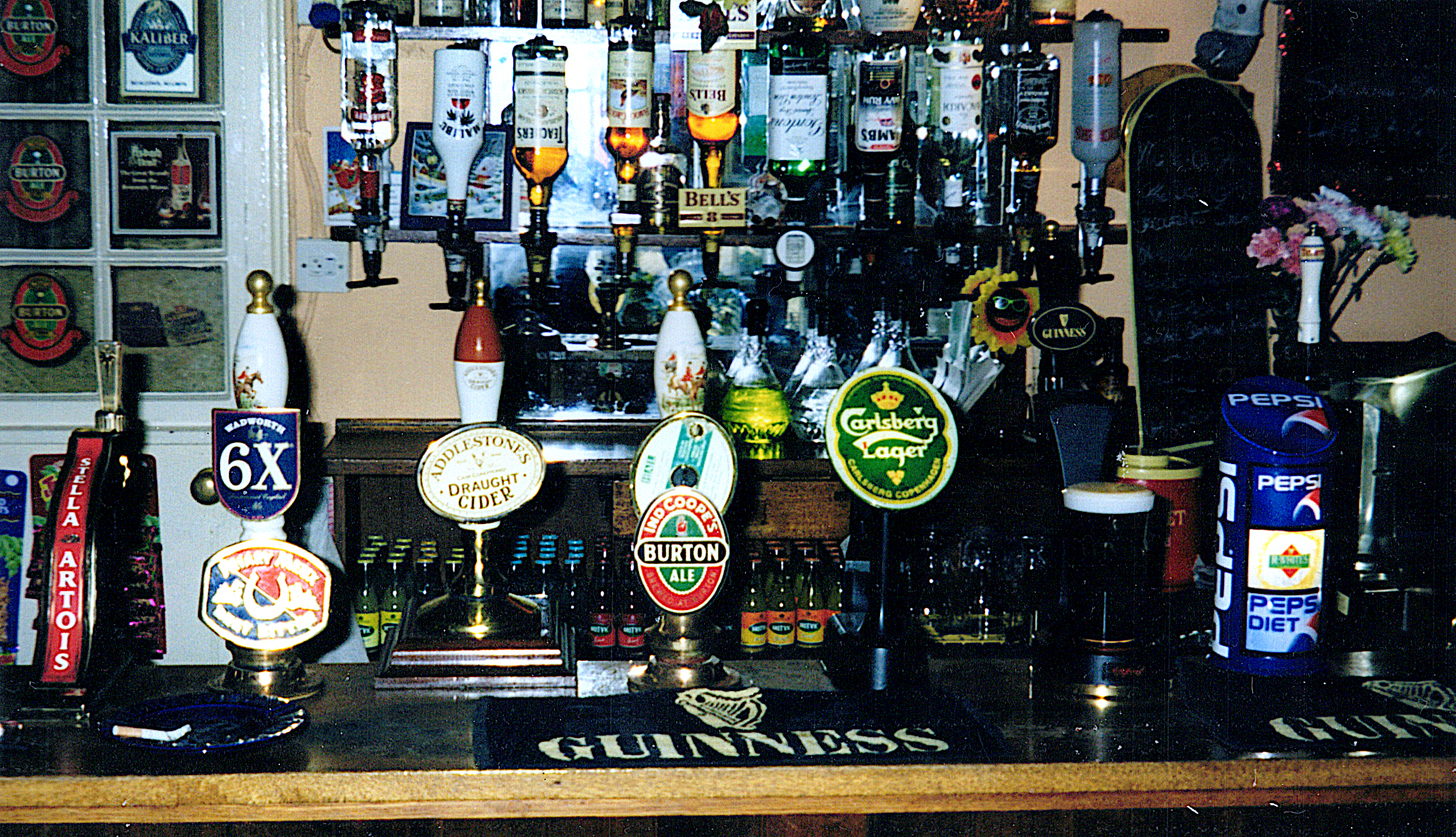
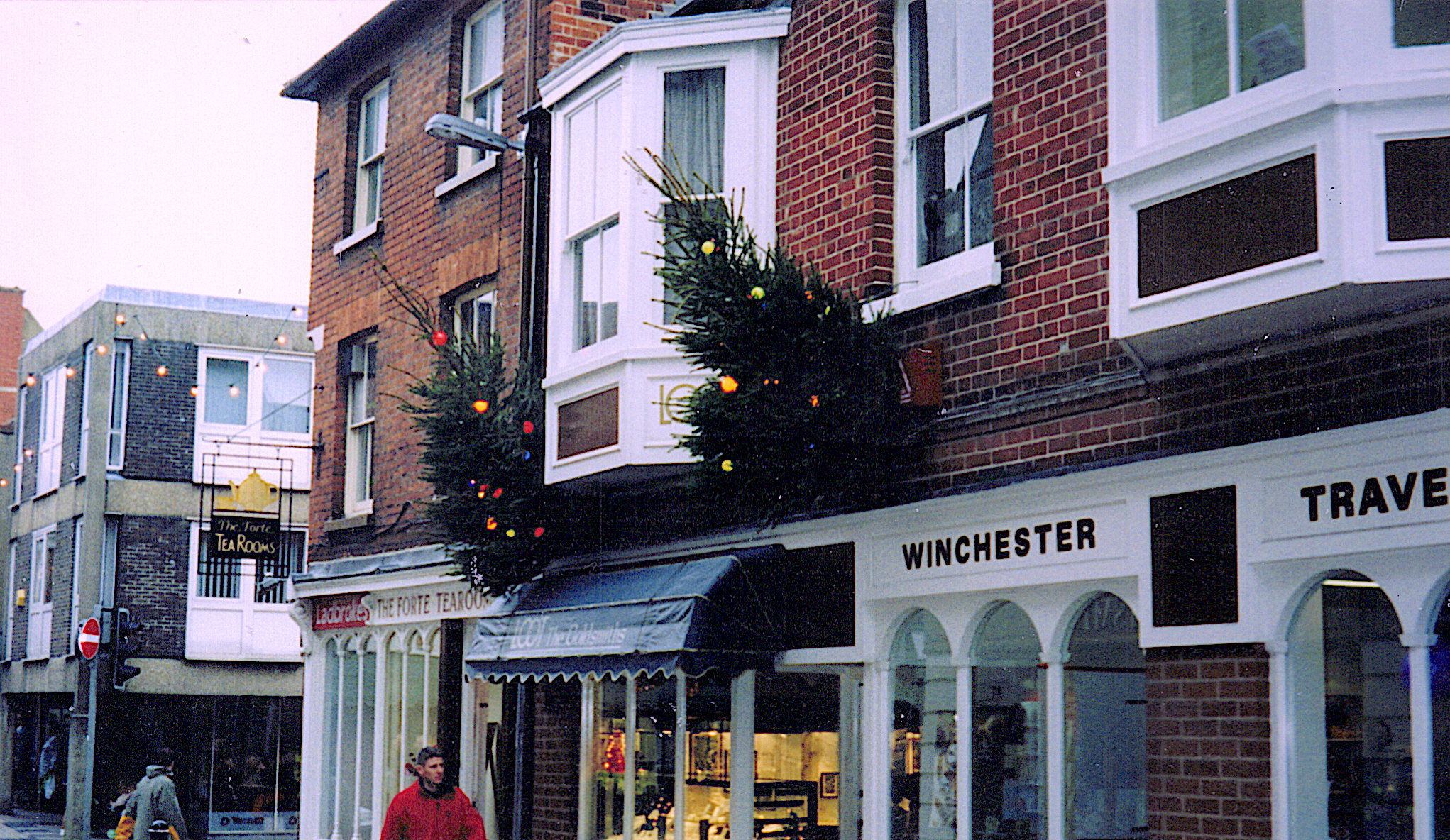
| We spent three nights at Amberley Castle, enough time to explore the nearby town of Arundel and take two all-day trips, one to Winchester and one to Lewes. We spent time walking the streets of Arundel, and enjoyed pints of ale and and dinner one night at the King's Arms pub, which served local ale from the Arundel Brewery. The town was decorated with festive lights, wreaths and greenery on many of the buildings, and there were small to medium-size Christmas Trees suspended from the 2nd floor of several of the shops (the 1st floor in Britain). We saw this in Arundel, Winchester, Lewes, and London. It was the first of several instances of differences in celebrating Christmas between Britain and the U.S., I liked it! |
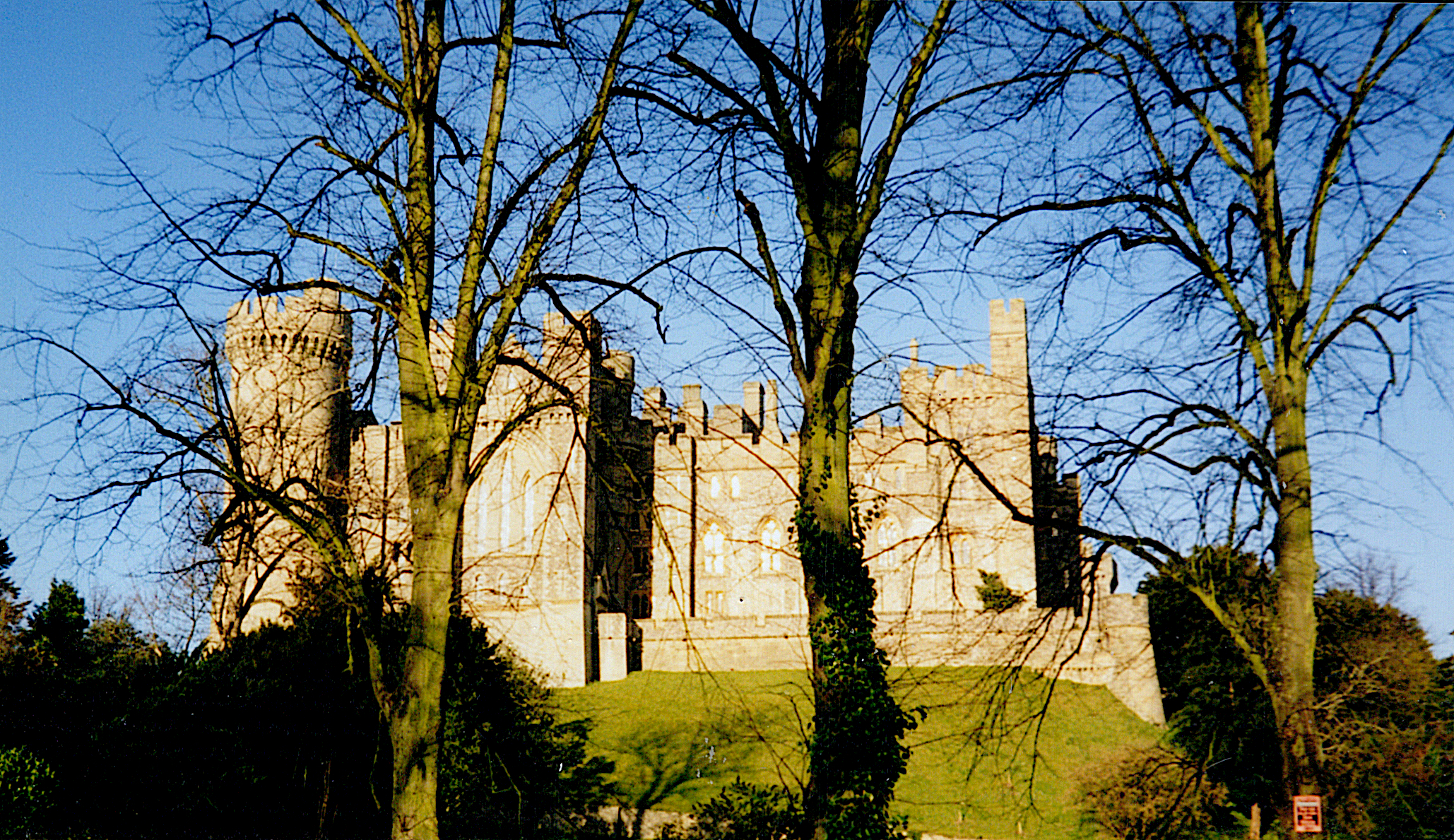
| As we drove around Arundel we kept noticing that the very impressive Arundel Castle seemed to be looming over us much of the time. Unfortunately the castle was closed at the time of our visit, so I could only snap photos from a distance. |
Winchester, Hampshire
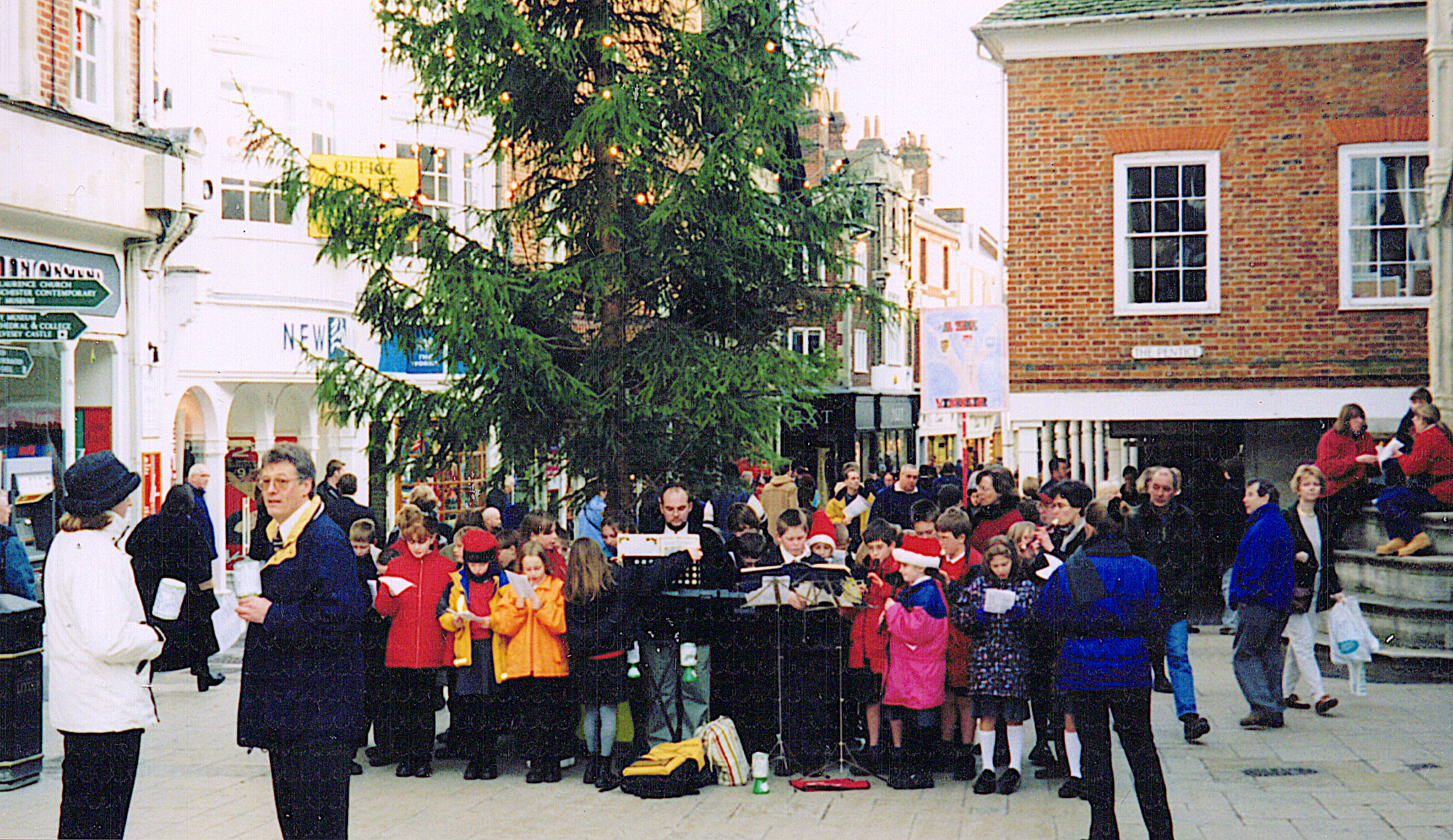
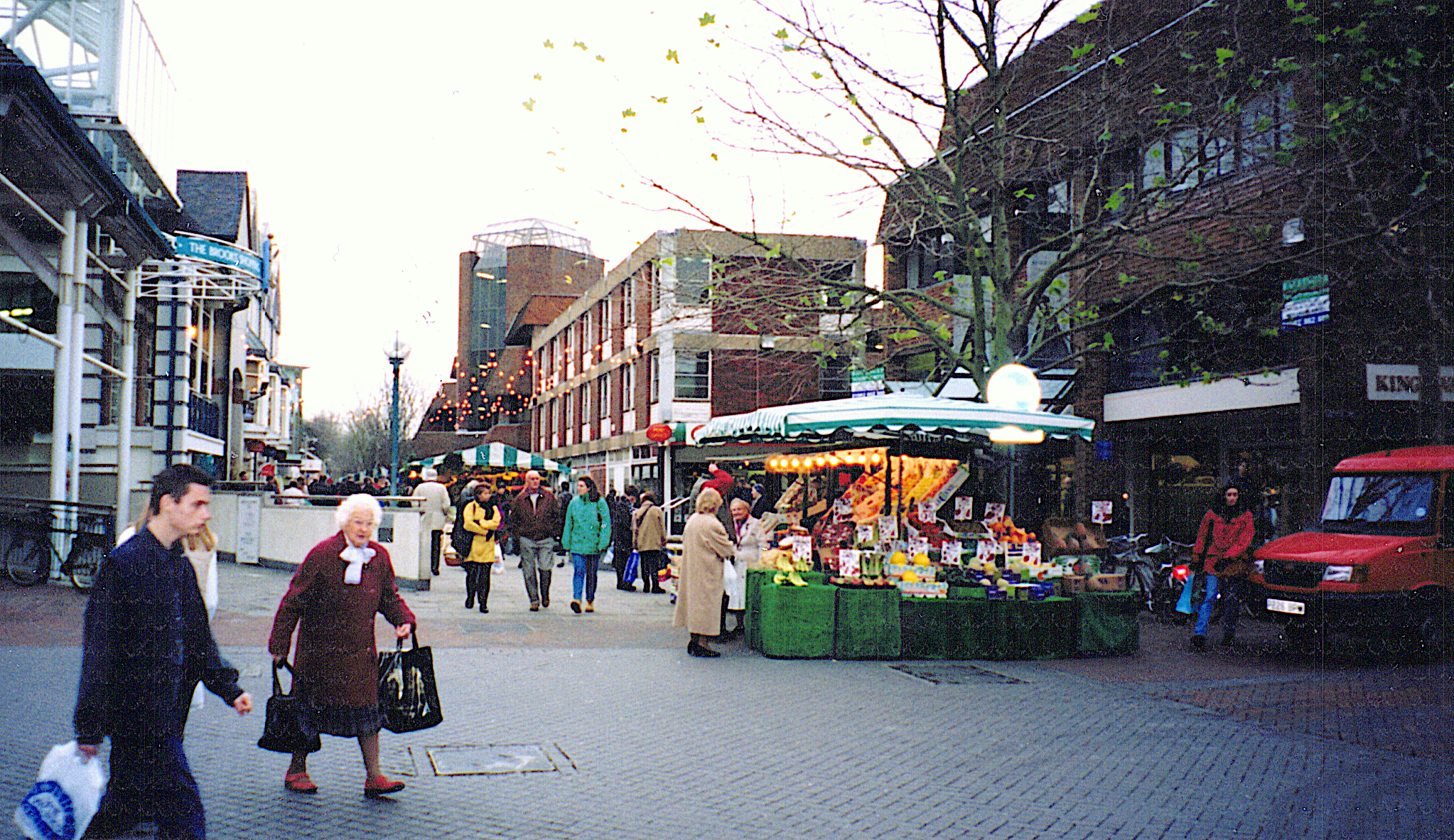
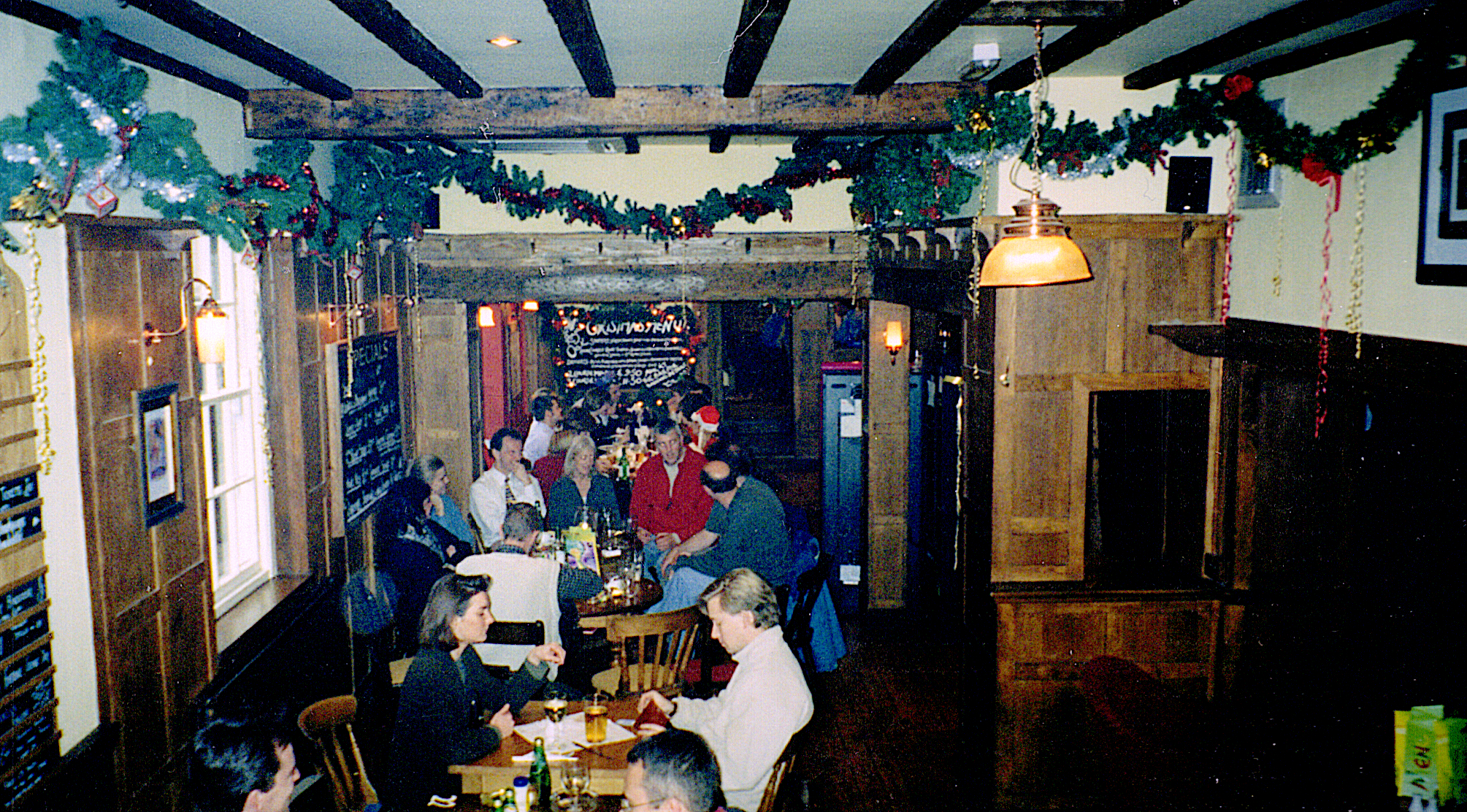
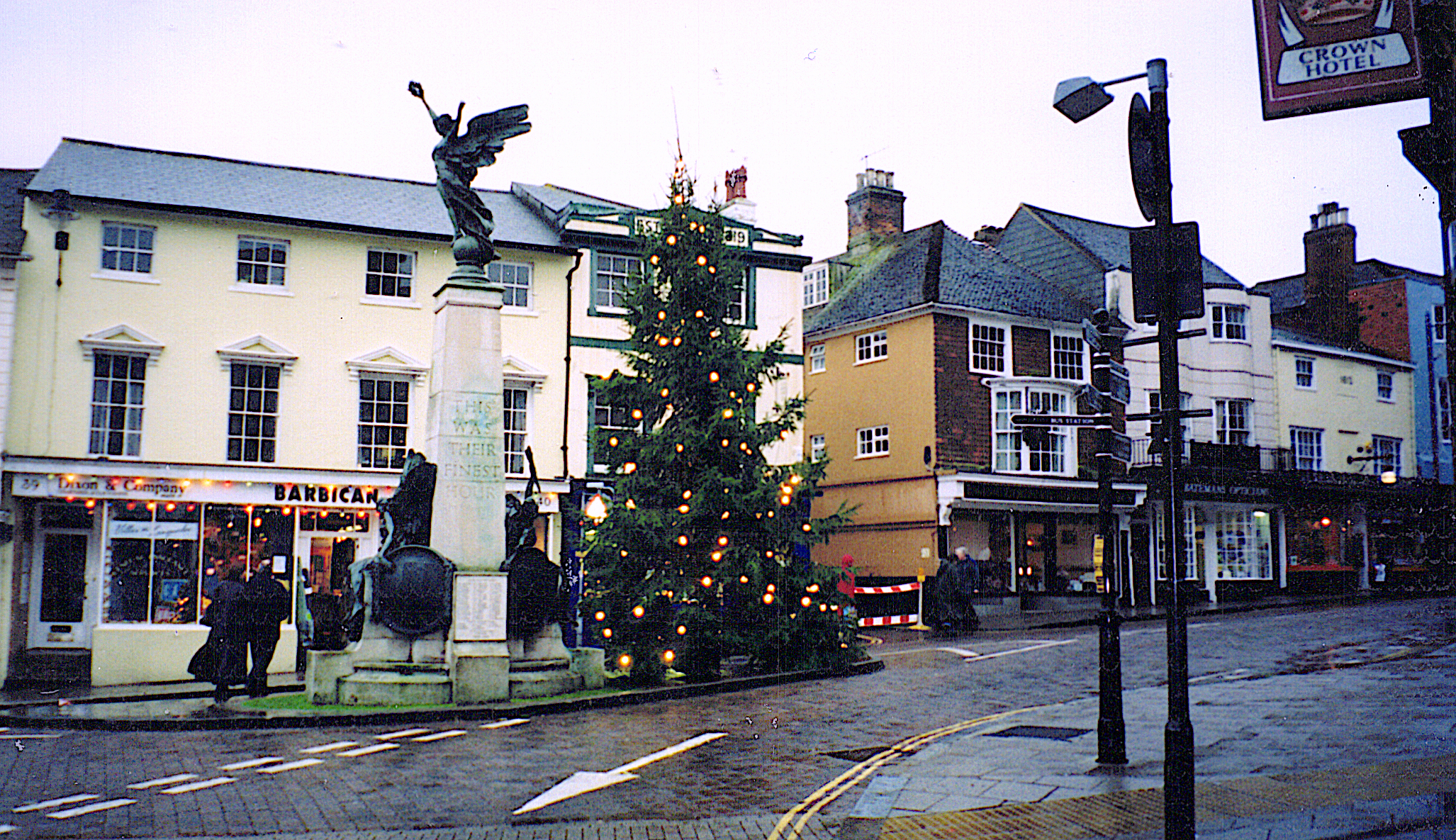
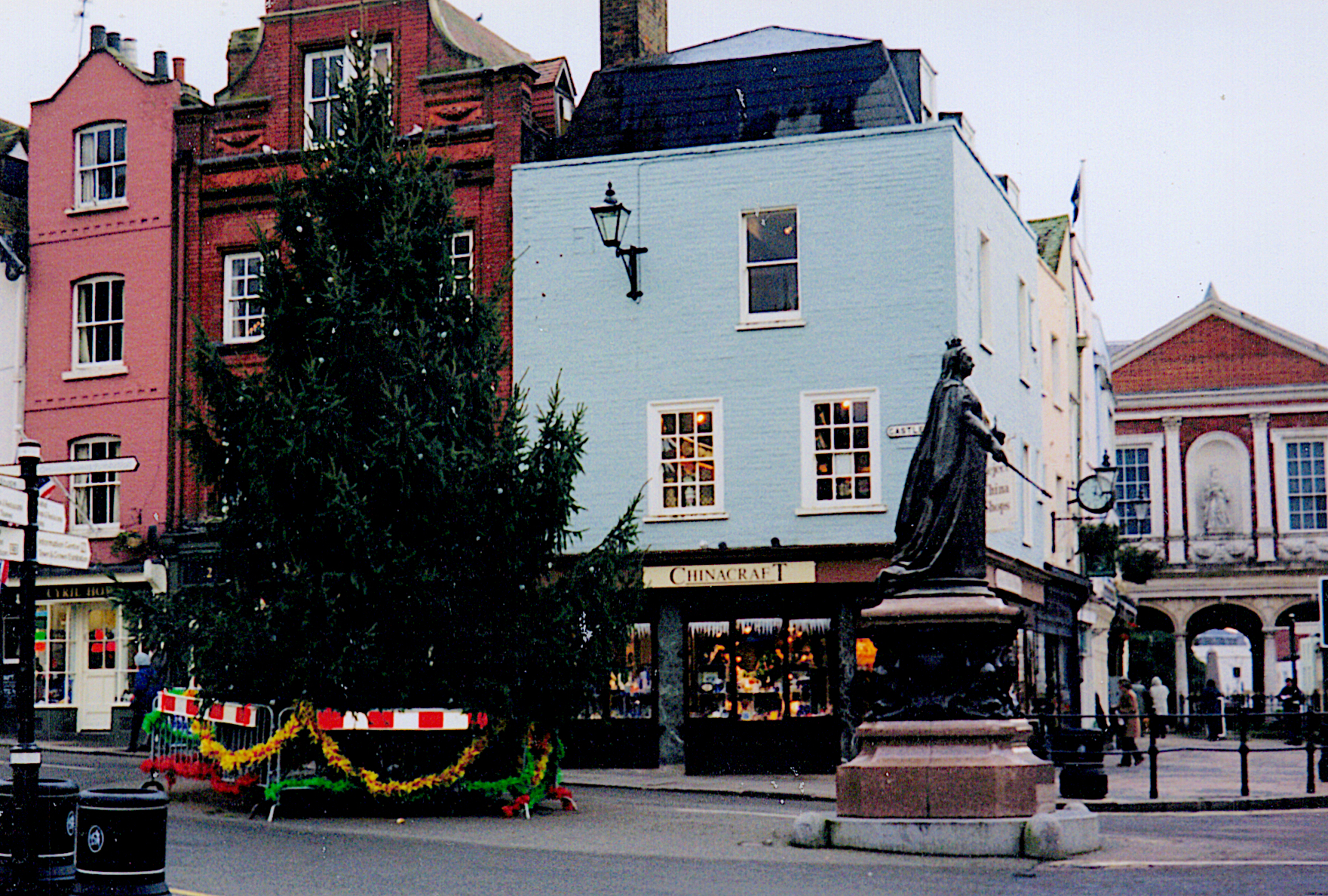
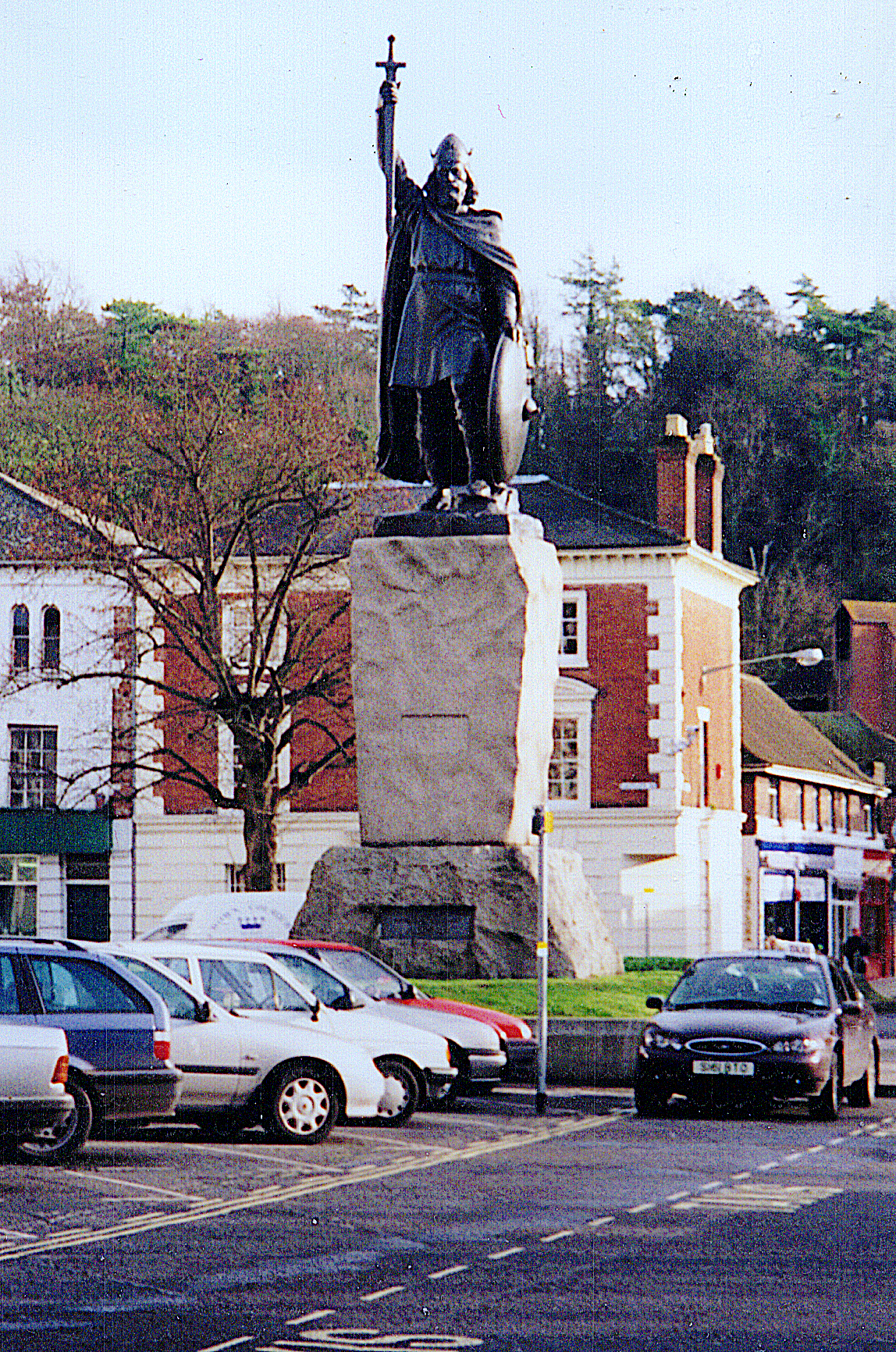
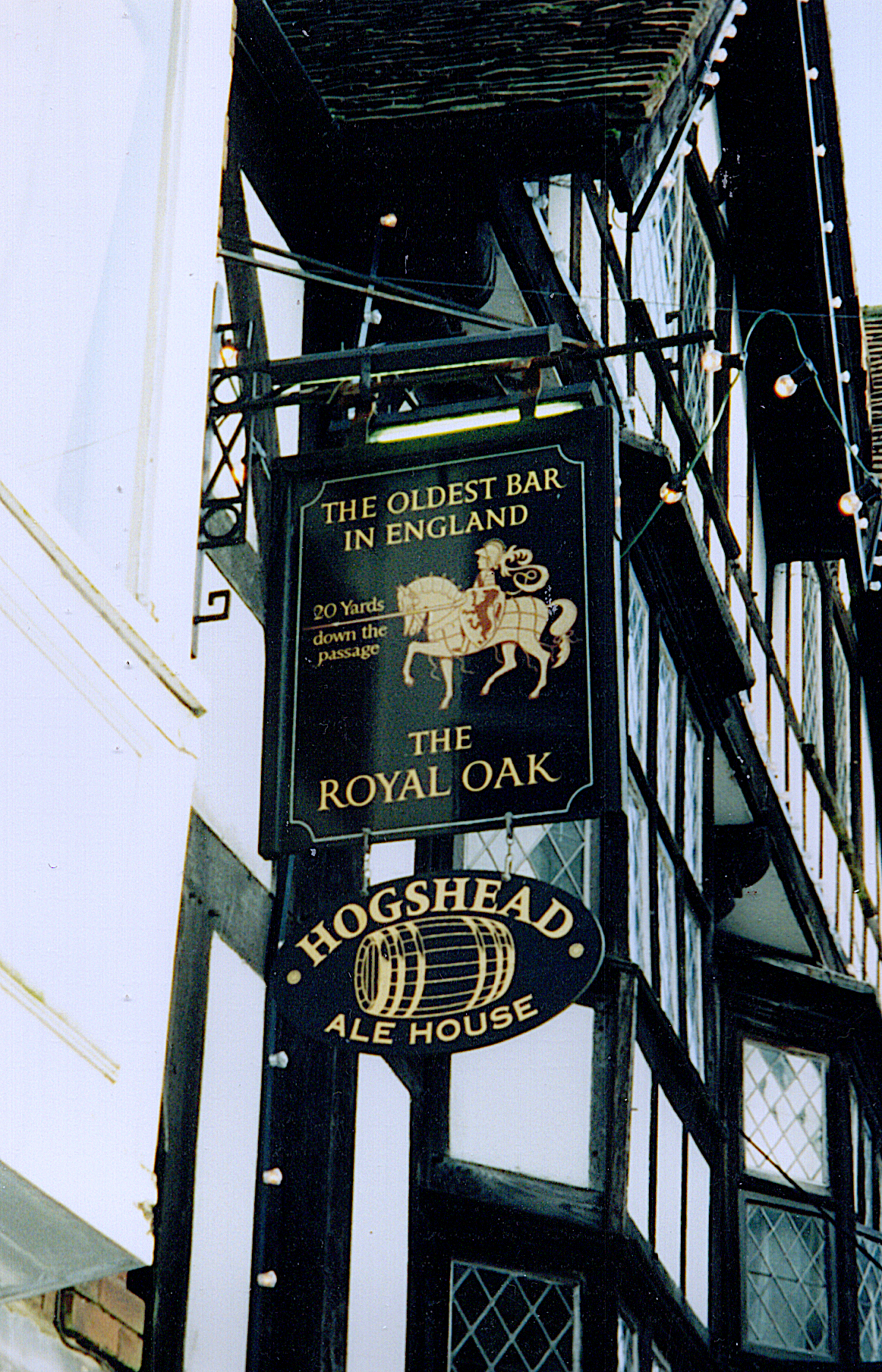
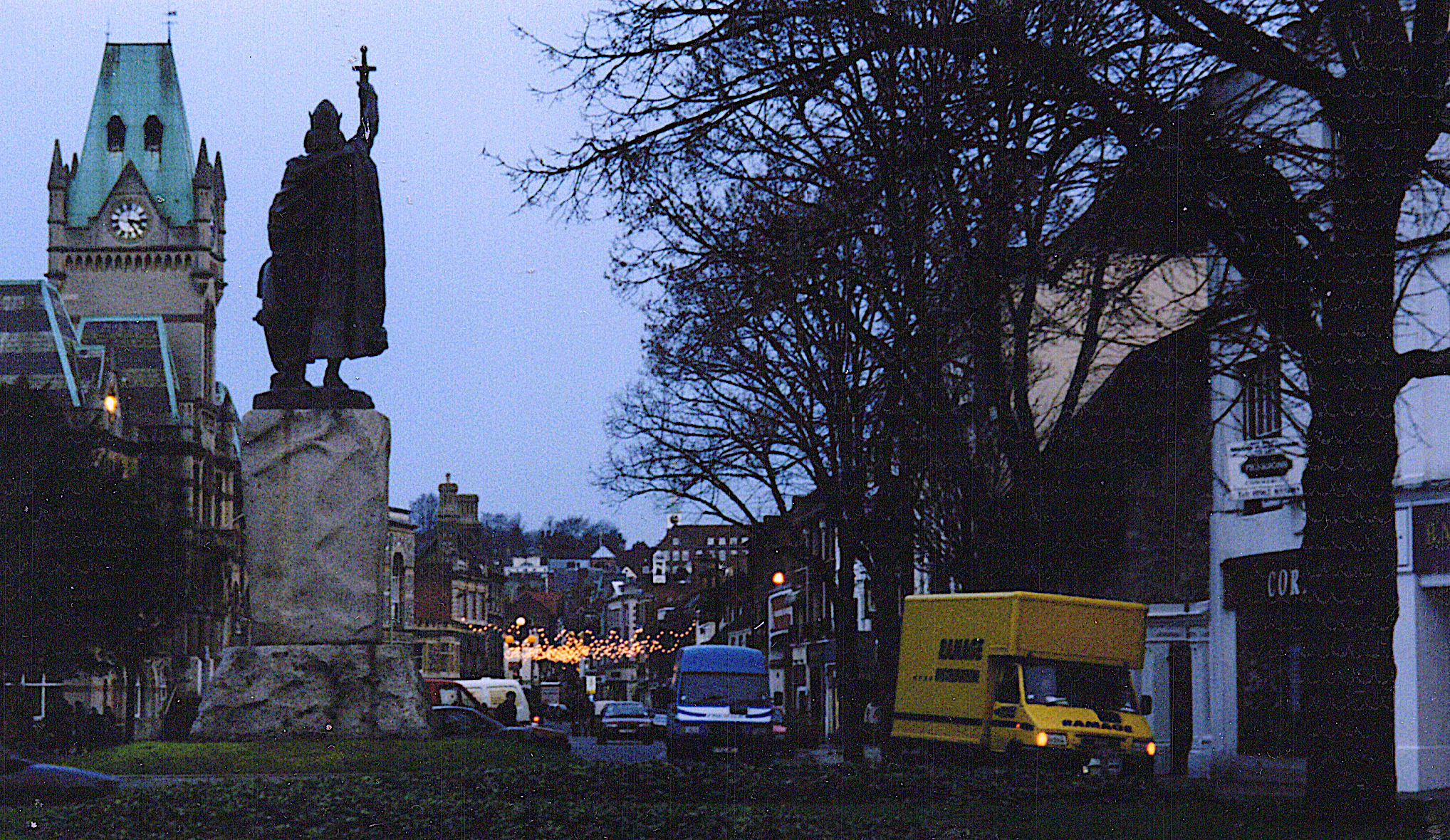
| The following day was spent in the historic city of Winchester. The area around Winchester has been inhabited since prehistoric times. After the Roman conquest of Britain, the settlement served as the capital, and at the beginning of the third century, Winchester was given protective stone walls. In 648, King Cenwalh of Wessex erected the Church of St Peter and St Paul, later known as the Old Minster. The present city dates from reconstruction in the late 9th century, when King Alfred the Great obliterated the Roman street plan in favor of a new grid in order to provide better defense against the Vikings. A statue of King Alfred, facing the city with raised sword is a well-known landmark. The city's major historic site is Winchester Cathedral. We arrived mid-morning and the streets were bustling with Christmas activities and shoppers. We saw lots of Christmas decorations; a large Christmas tree in the town square, lights strung across streets, and those very nice 2nd-floor decorated trees. There was even a children's choir singing carols in front of a large Christmas tree. We checked out some of the shops and enjoyed a pub lunch and a pint to two (Greene & King I think), at the Royal Oak. After lunch we visited the cathedral. |
 |
 |
Winchester Cathedral
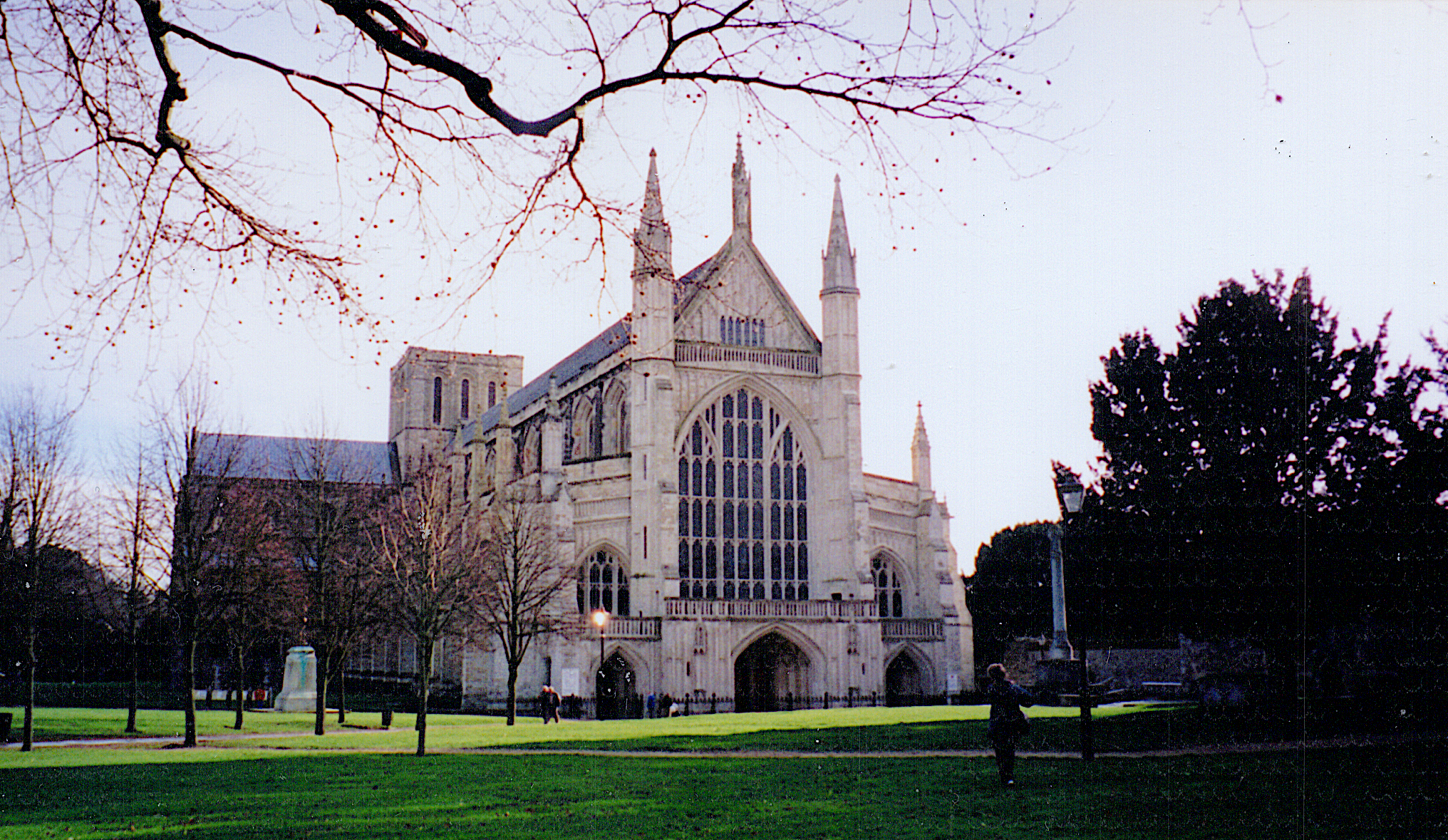
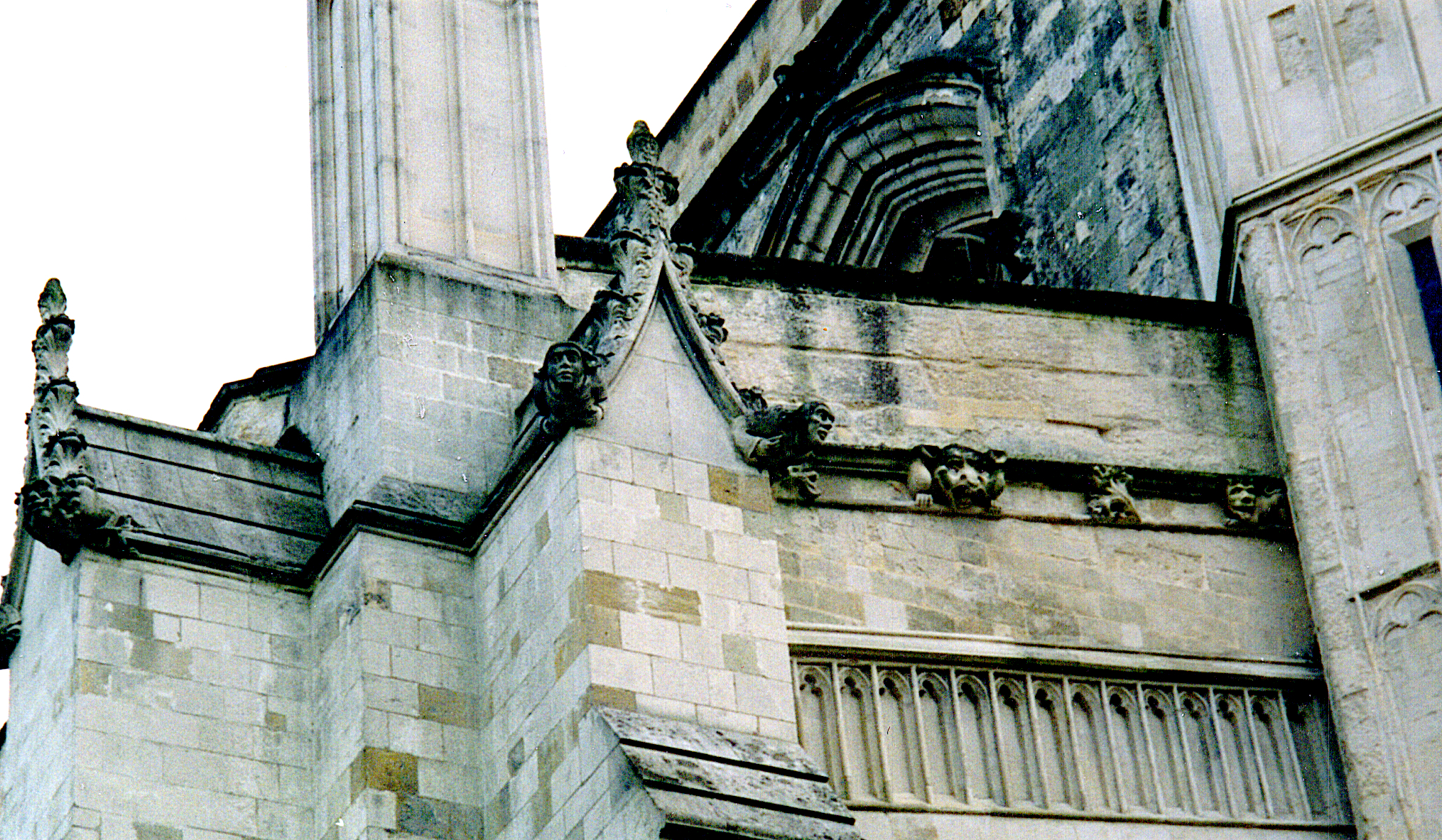
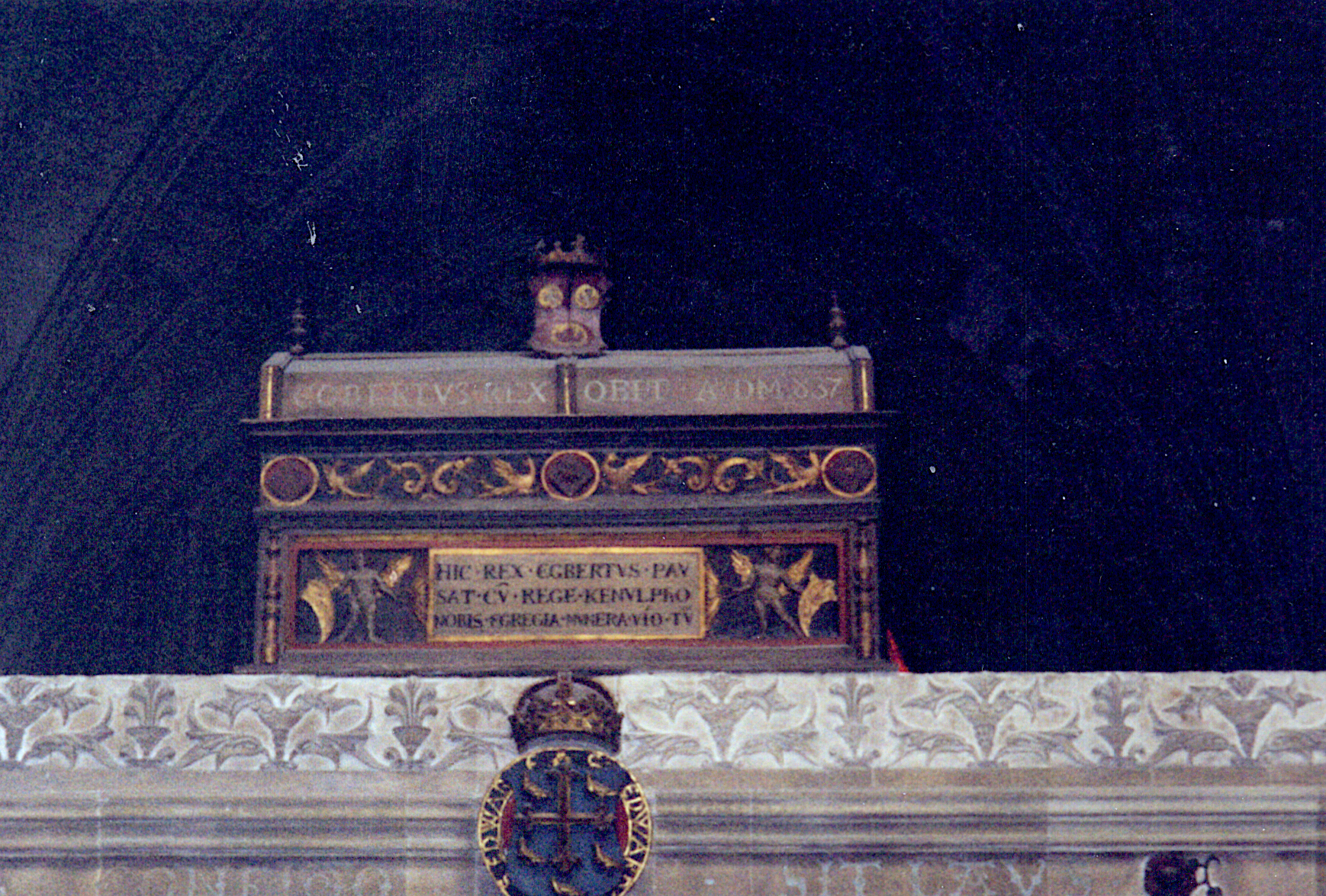
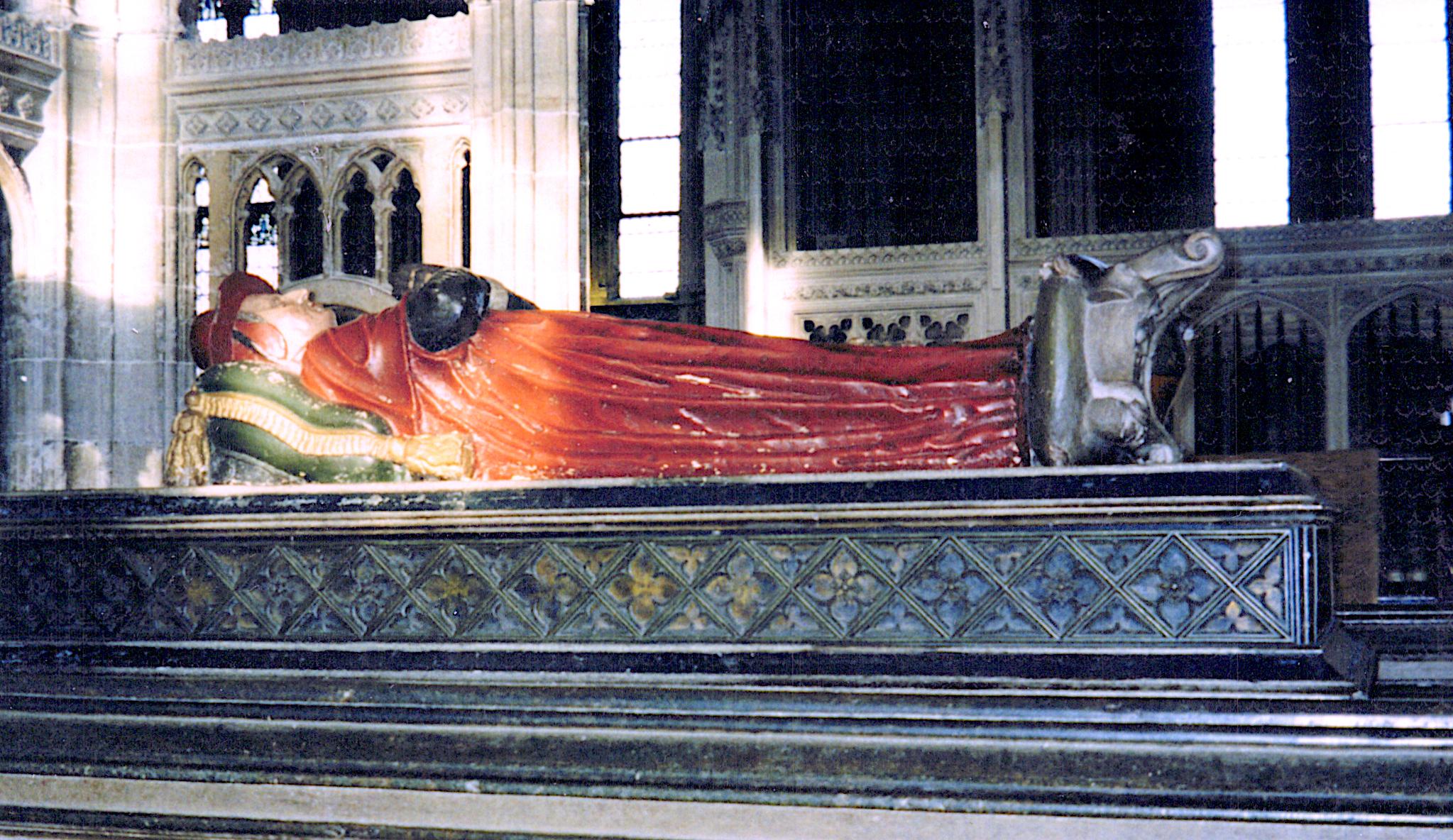
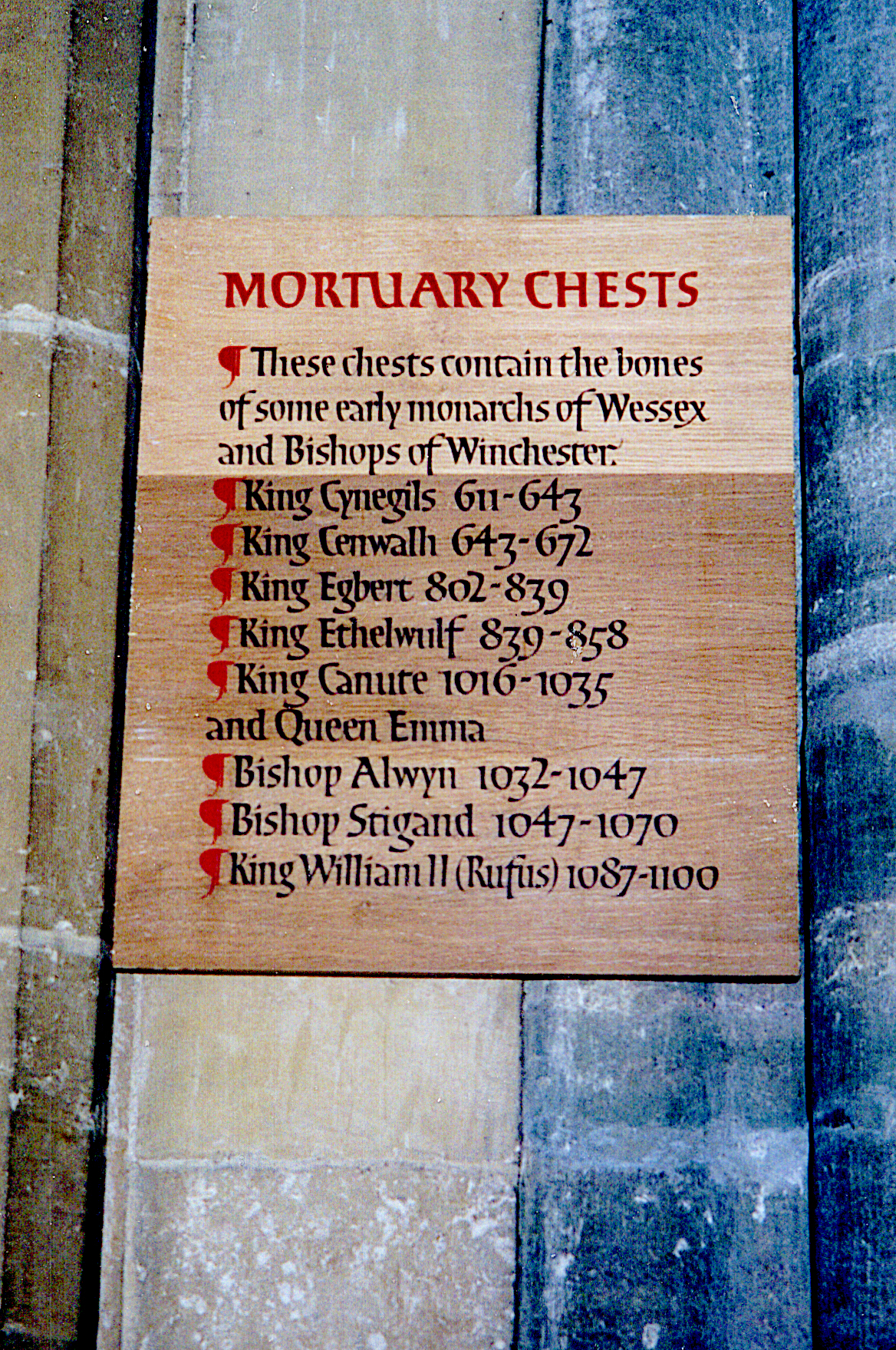
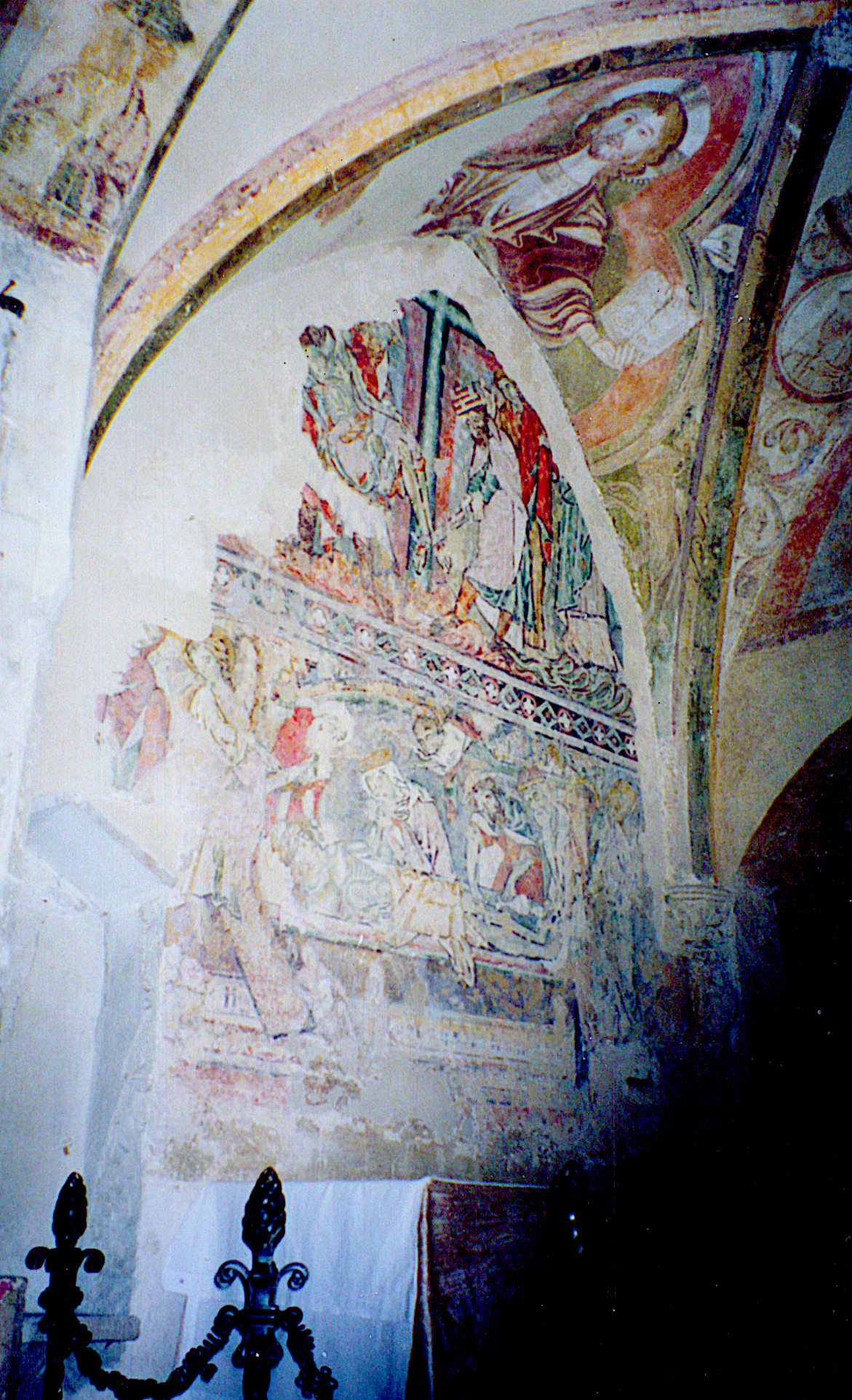
| Winchester Cathedral was built from 1079 to 1532 and is dedicated most notably to St Swithun of Winchester. When William the Conqueror invaded England in 1066, he began to install his own bishops in place of the Anglo-Saxon bishops. The cathedral also has a large number of Saxon mortuary chests, including those of Alfred the Great, King Cenwalth, King Egbert, King Ethelwulf, King Canute and his wife Queen Emma, and King William Rufus. Because of our previous trips to Britain, I was very interested in Anglo-Saxon history, so Winchester was the place to be. During the Anglo-Saxon period, (eventually, anyway) it was Winchester, not London, that was the important royal city. Seeing the mortuary chests of so many of the significant figures in the history of Anglo-Saxon Britain was special. I knew that at some point the bones contained in the chests had been co-mingled, but I didn't care. This was Saxon royalty. Also impressive was the finely-carved tomb of Cardinal Beaufort. Beaufort was the son of John of Gaunt and his third wife Catherine Swynford. My wife and I had been studying the Beaufort and Neville families for several years so it was nice to see Henry's final resting place. Winchester was one of those cities we didn't want to leave, and there was no reason to. It was an easy drive back to Amberley Castle, so after visiting the cathedral we found another pub and stayed until the evening. We wanted to see the city and its Christmas decorations at night. |
 |
 |
 |
Lewes, East Sussex
|
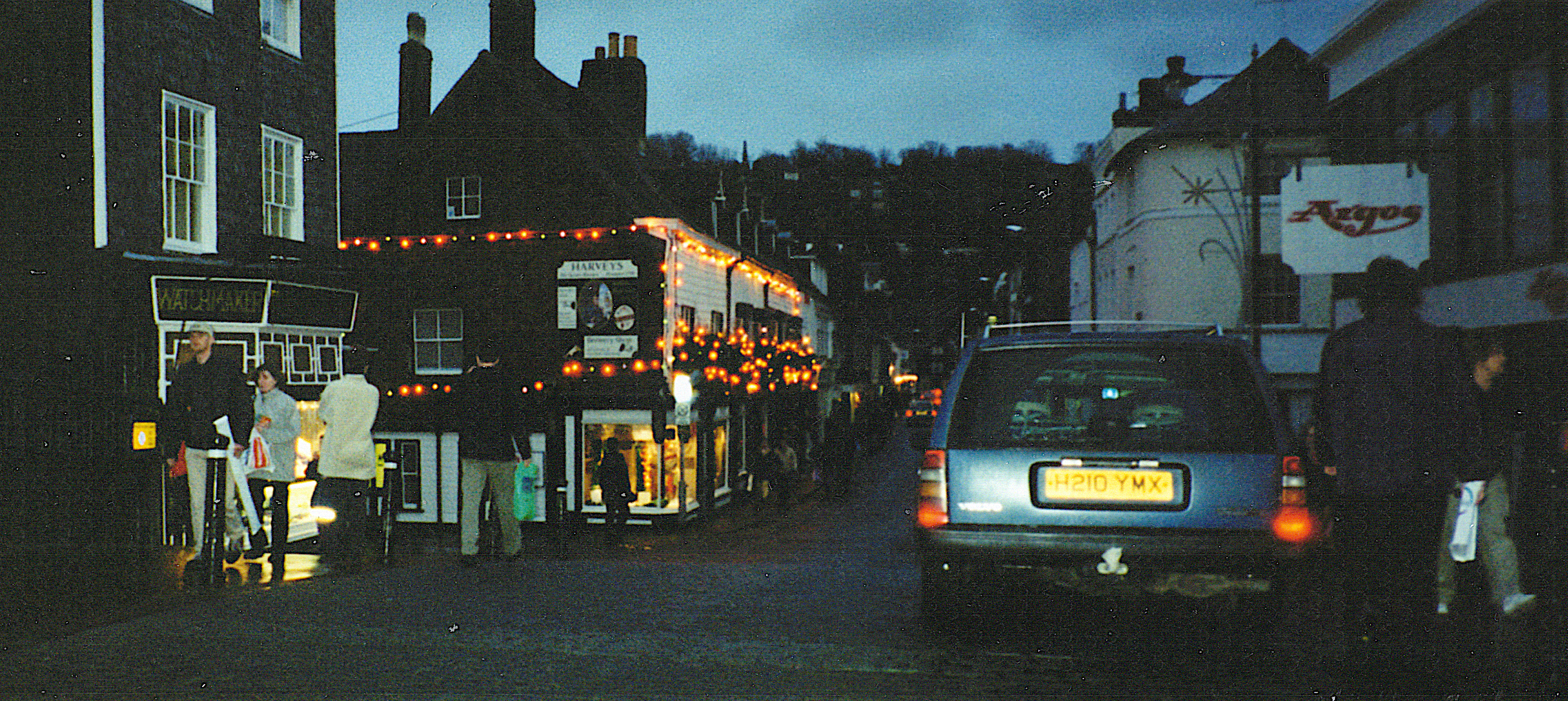
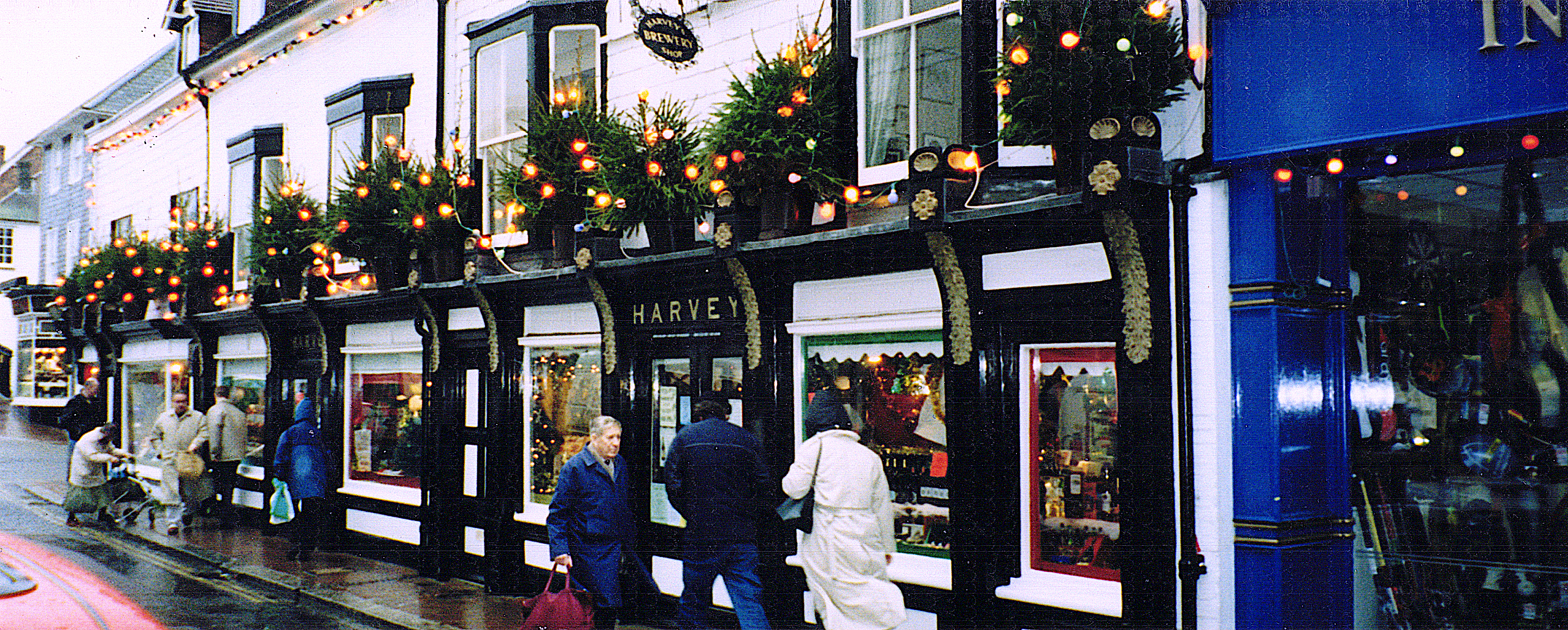
We spent most of the following day in Lewes, East Sussex. Lewes is a traditional market town and was the site of the Battle of Lewes in 1264. We were here to learn more about this important battle, and to have lunch and sample the beer at the Harvey Brewery located in the town. I had the opportunity to sample one of their ales back home and now I was ready for a full tasting. Like the previous day the weather was overcast with occasional rain. The town was festive with Christmas decorations and there were plenty of shops busy with people doing their Christmas shopping. We walked around the town, visited a few of the shops, and then headed towards the brewery for lunch. Harvey’s Brewery is the oldest independent brewery in Sussex. They are family owned, and the brewery has been in the custodianship of John Harvey’s descendants since 1790. Best of all, they offer beer tastings/samplings and are also a full service pub. I really enjoyed their seasonal barleywine ale, a strong ale traditionally brewed arounf Christmastime. Following lunch we purchased a couple of items in the gift shop before heading for Lewes Castle to learn more about the battle.
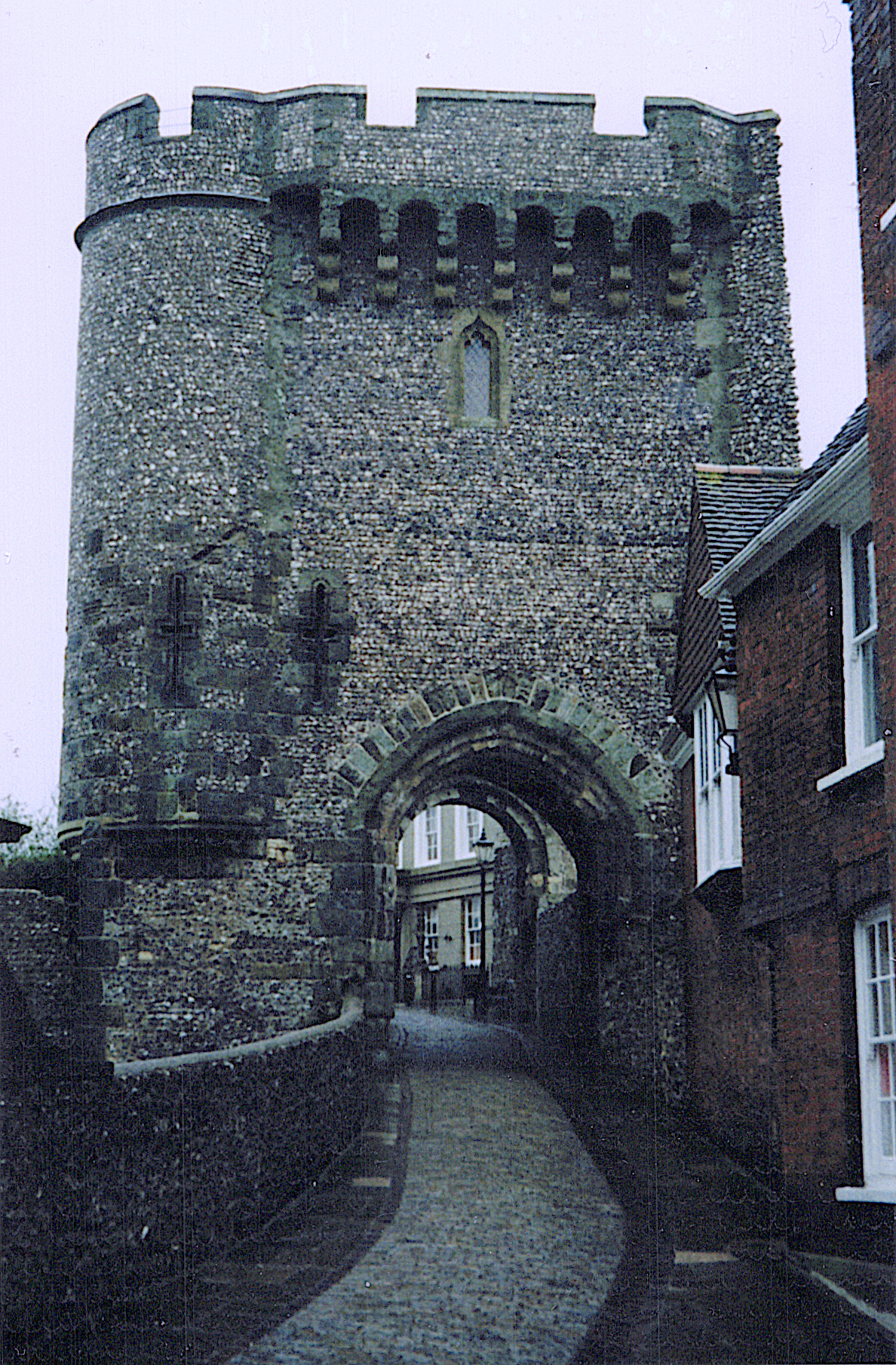
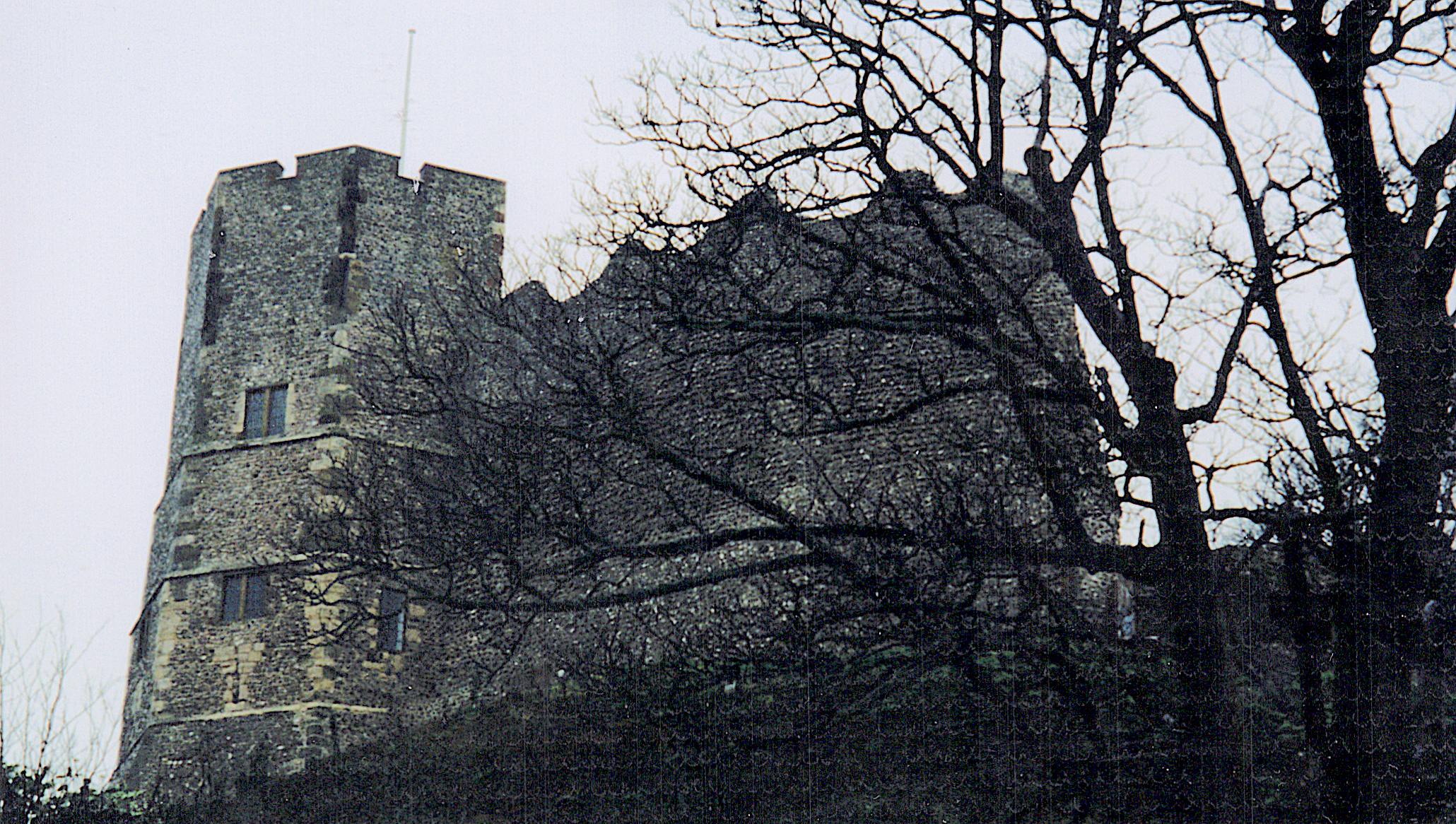
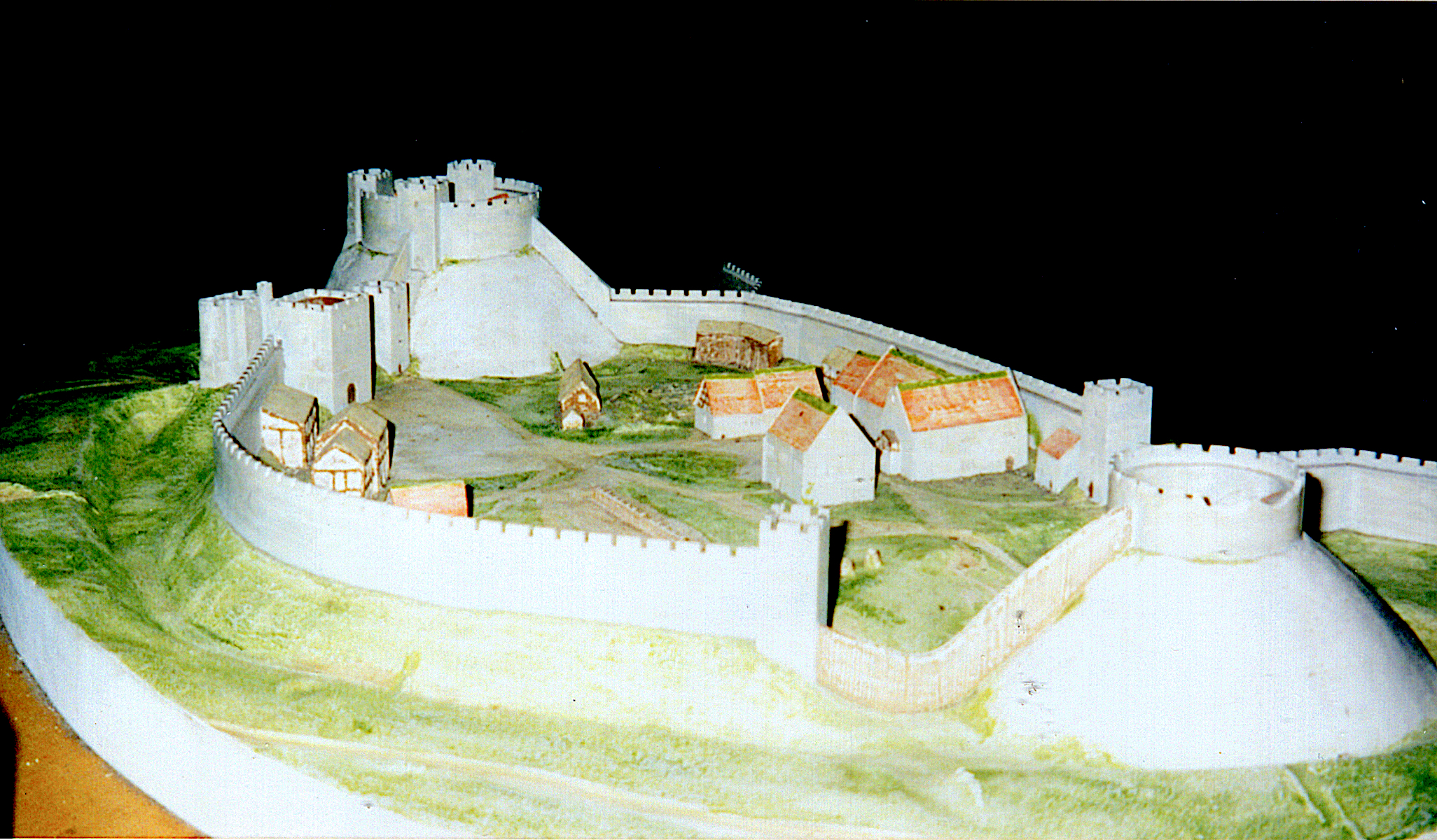
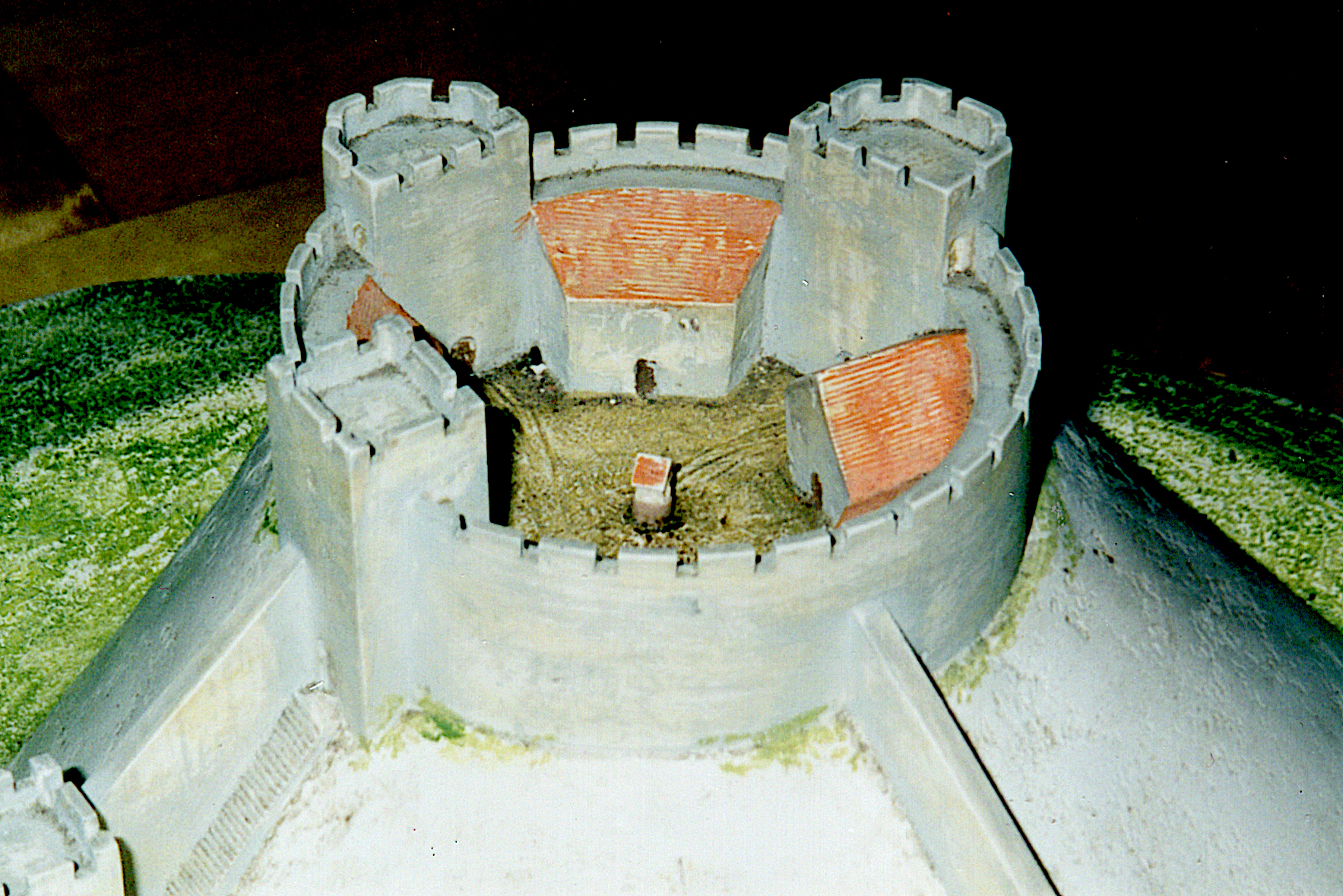
The first motte castle at Lewes was completed shortly after the Norman Conquest of England in 1066 and the second motte, known as the Keep, was completed in the late 11th century. Towers were added to one of the shell keeps in the 13th century and a barbican gate was added in the 14th century. The castle played an important role during a pivotal moment in British history. It was here that the Battle of Lewes took place in 1264. On one side was King Henry III and his son Edward, the future King Edward I. Opposing the king was an army of rebel barons (the Baron's Revolt) led by Simon de Montfort, and Marcher Lord Gilbert de Clare. King Henry's army was defeated and Henry was nearly killed. Edward made a critical error during the battle that contributed to his father's loss. He surrendered to de Montfort and was later held at Kenilworth Castle. It was the only time Edward was defeated in battle. Edward I would go on to become, arguable, one of England's greatest warrior kings. He built an iron ring of Castles in north Wales, which resulted in the total subjugation of the Welsh people, so I definitely have mixed feelings about the guy. I definitely wanted to visit the site where Edward experienced his humiliating defeat. Another bucket-list item completed. As far as the castle is concerned, the Barbican still stands tall and impressive, but much of the rest of the castle has collapsed or been slighted. We did stand on the castle ramparts to view the field where much of the battle unfolded.
After visiting the castle we spent more time walking through the town and shopping. As was the case in Winchester, we found a pub and grabbed a bite to eat and a couple of pints, waiting for the evening so we could see Lewes lit by its Christmas decorations.
|
 |
Lewes Castle
Part II: London
|
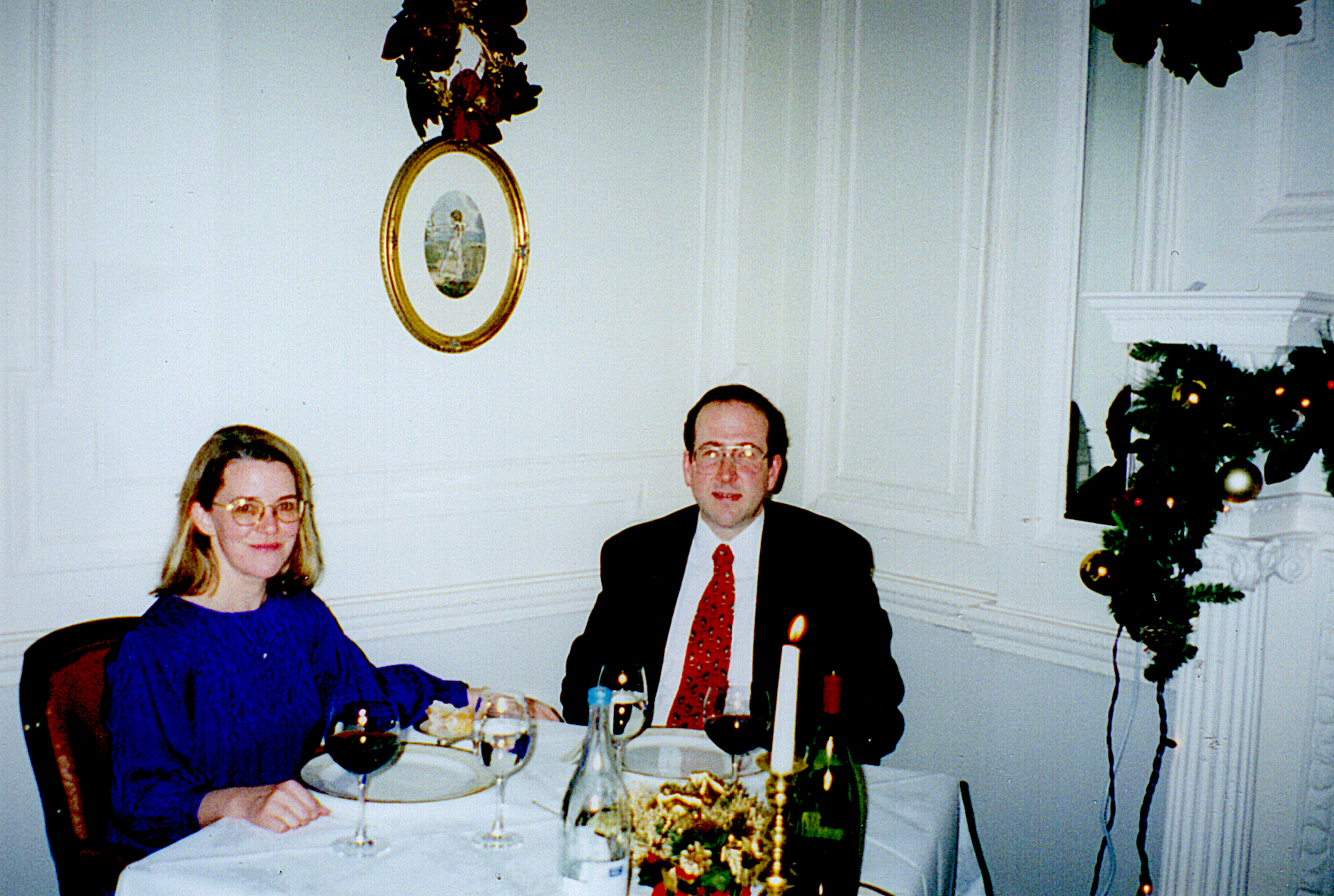
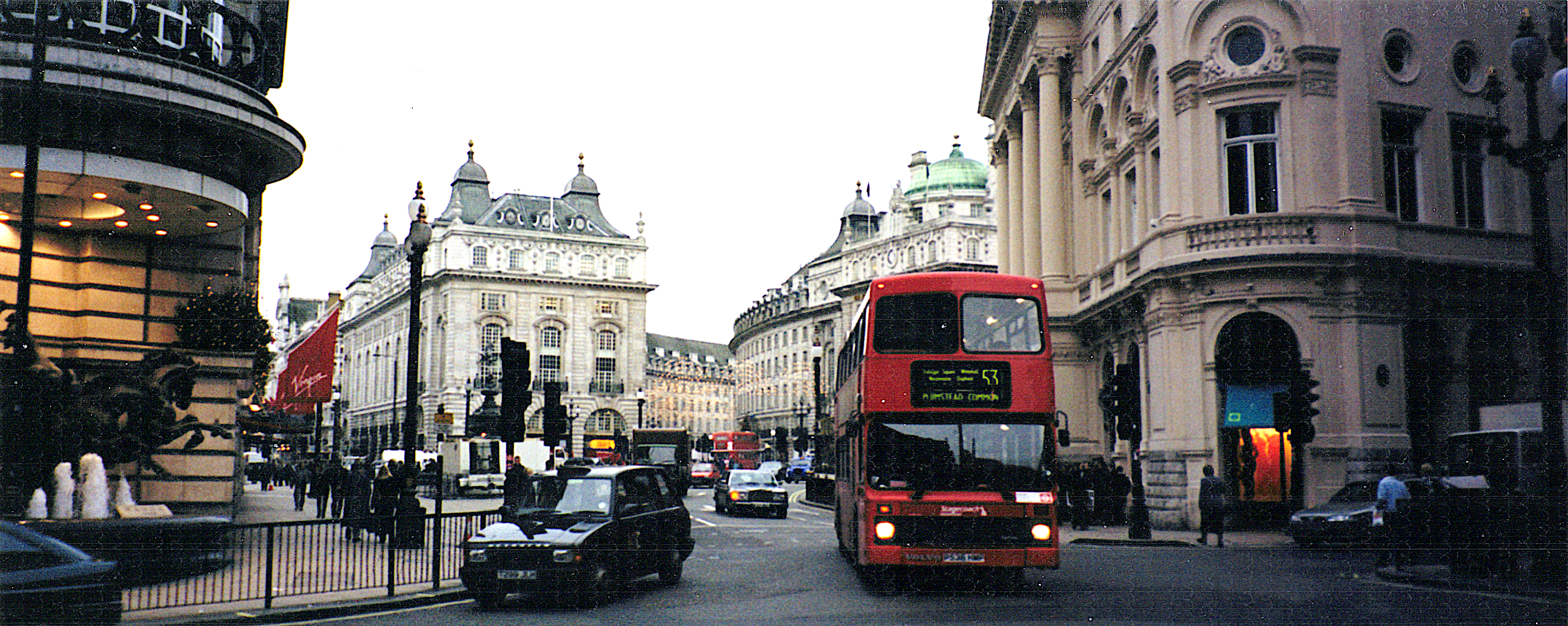
After three nights at Amberley Castle, we spent a week in London at the Stafford Hotel in St James. We had a nice room in the Carriage House outside the main hotel, with easy access to the Green Park Tube station. We spent time in the hotel bar, enjoyed a night of fine dining in the restaurant, and sampled the hotel's afternoon High Tea. We did some shopping in St James too. Lots of nice shops, but they were a bit on the expensive side. We visited Fortnum & Mason, which was like a mini Harrods, where we purchased food items for the room. London was very busy for a couple of reasons. It about a week before Christmas, and the preparations for the Millennium Celebration were entering their final stages. London was all decked out with lights, decorations, Christmas trees and greenery. The shops were beautifully decorated in both St. James and on Regent Street.
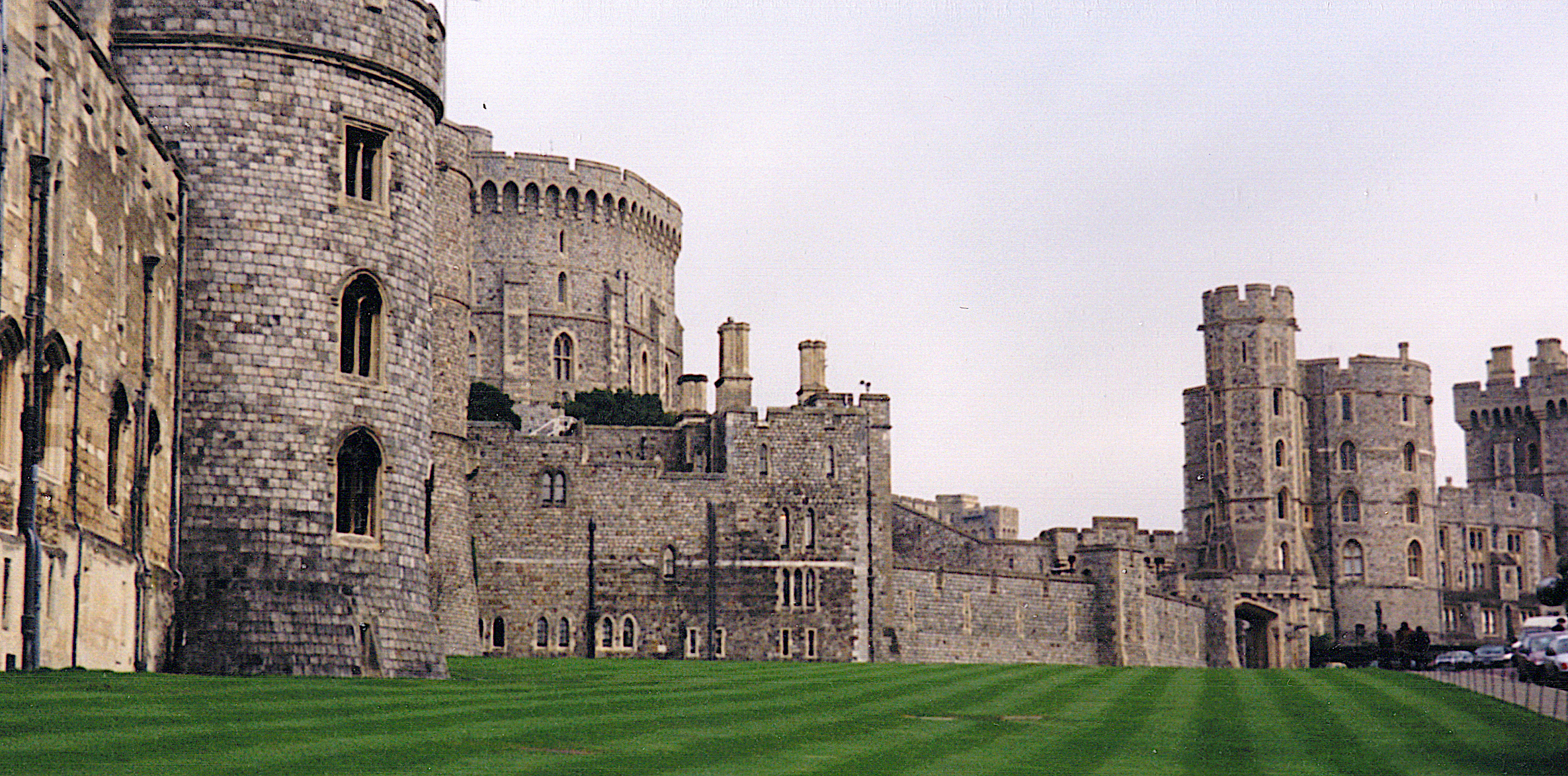
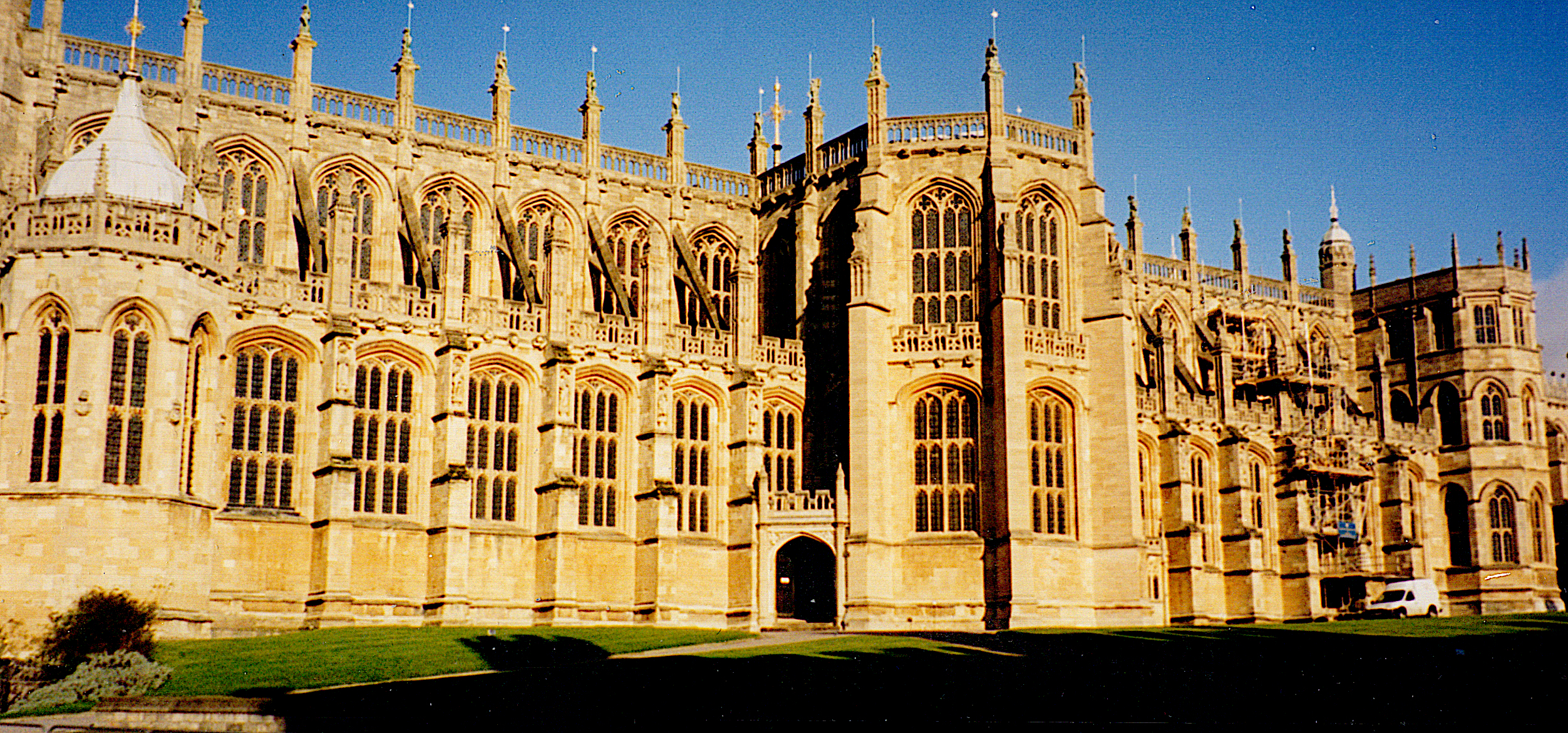
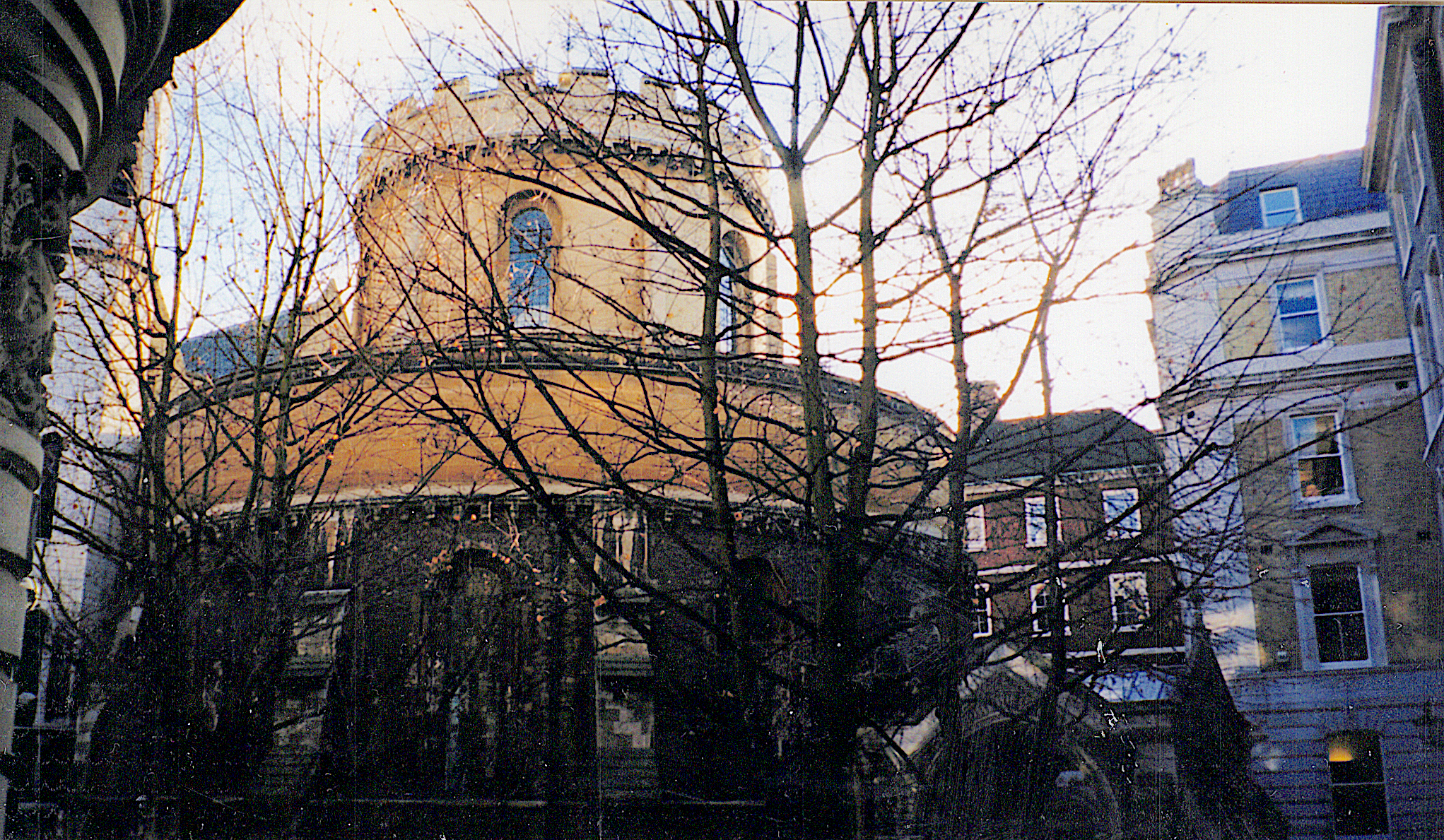
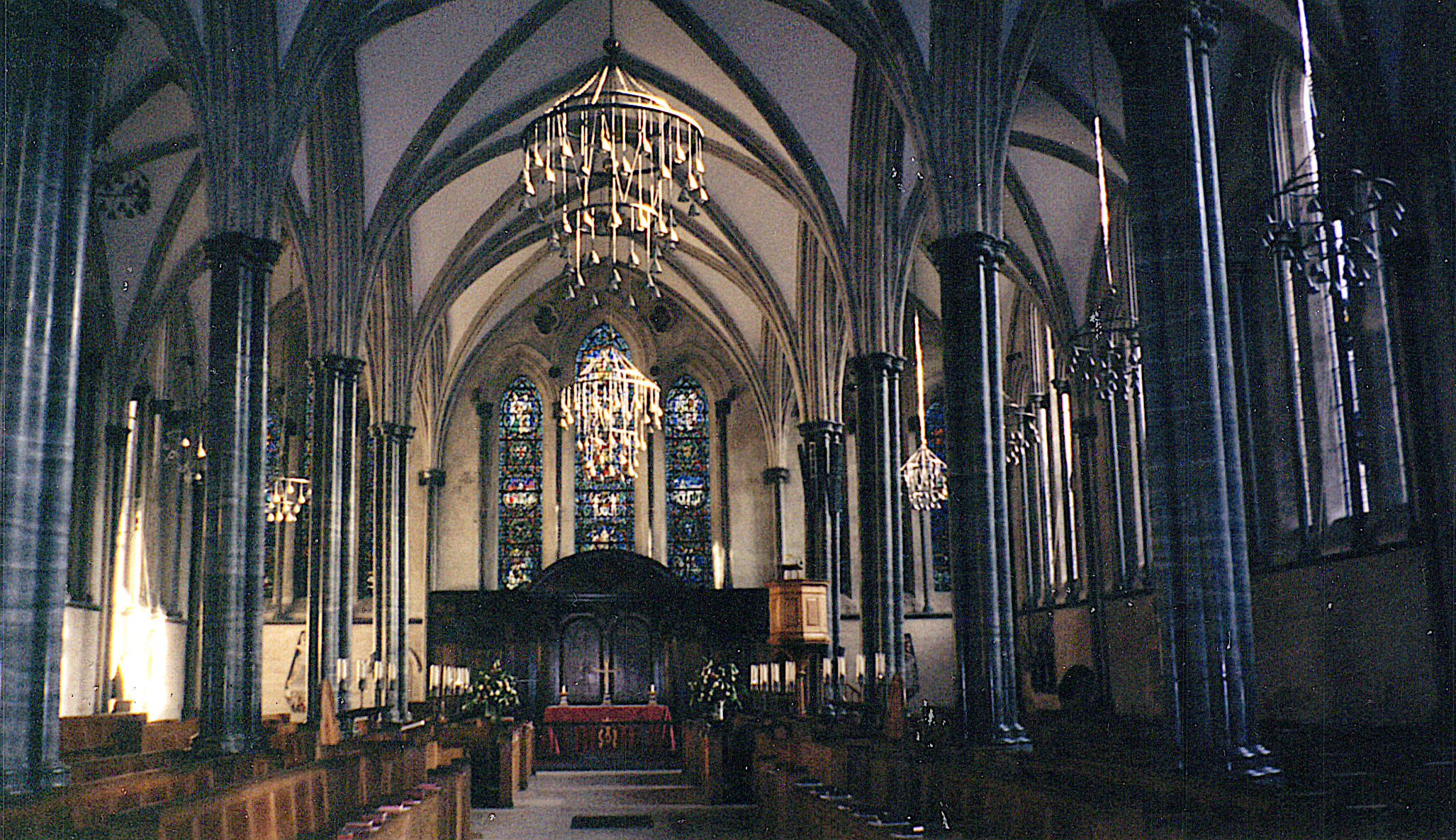
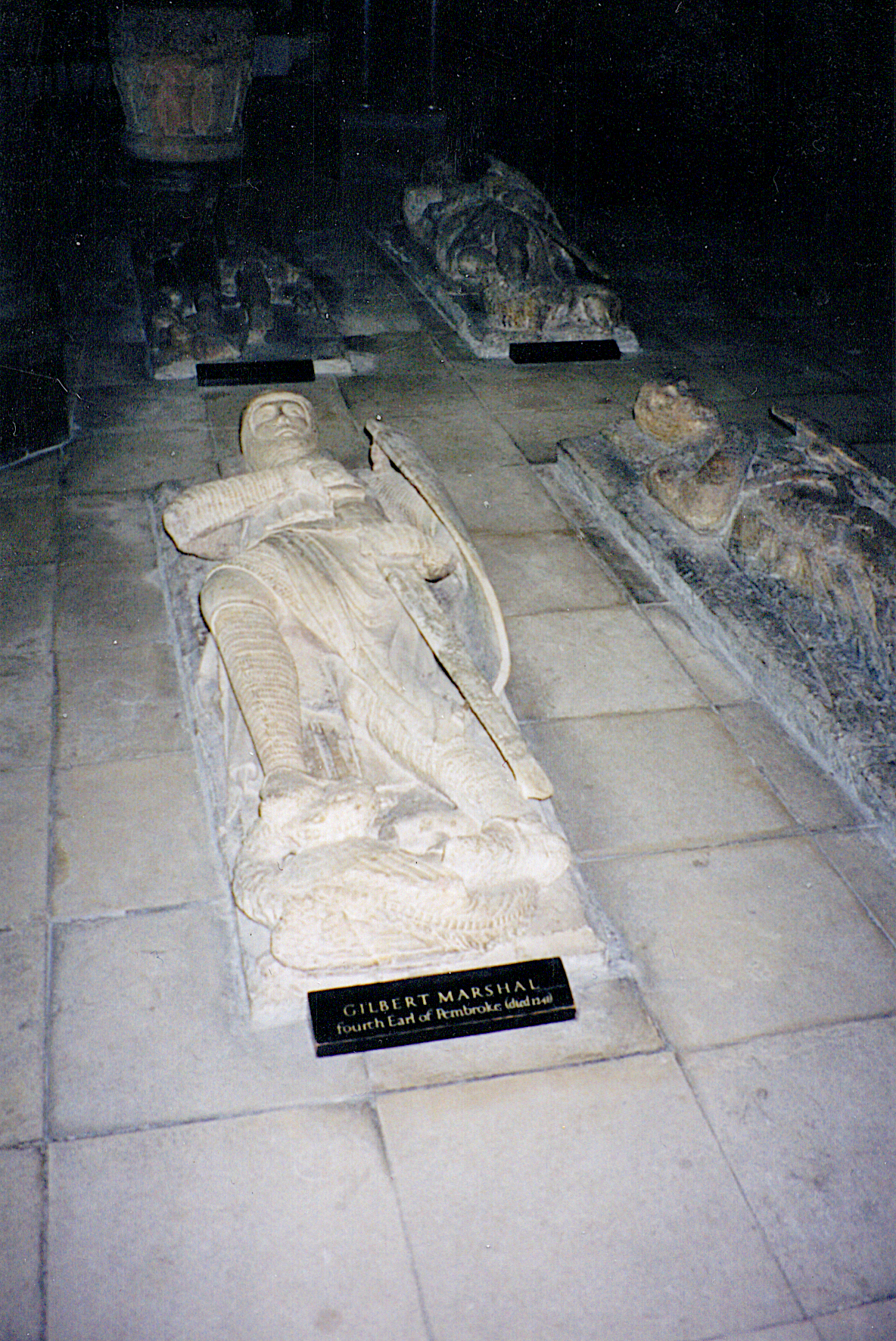
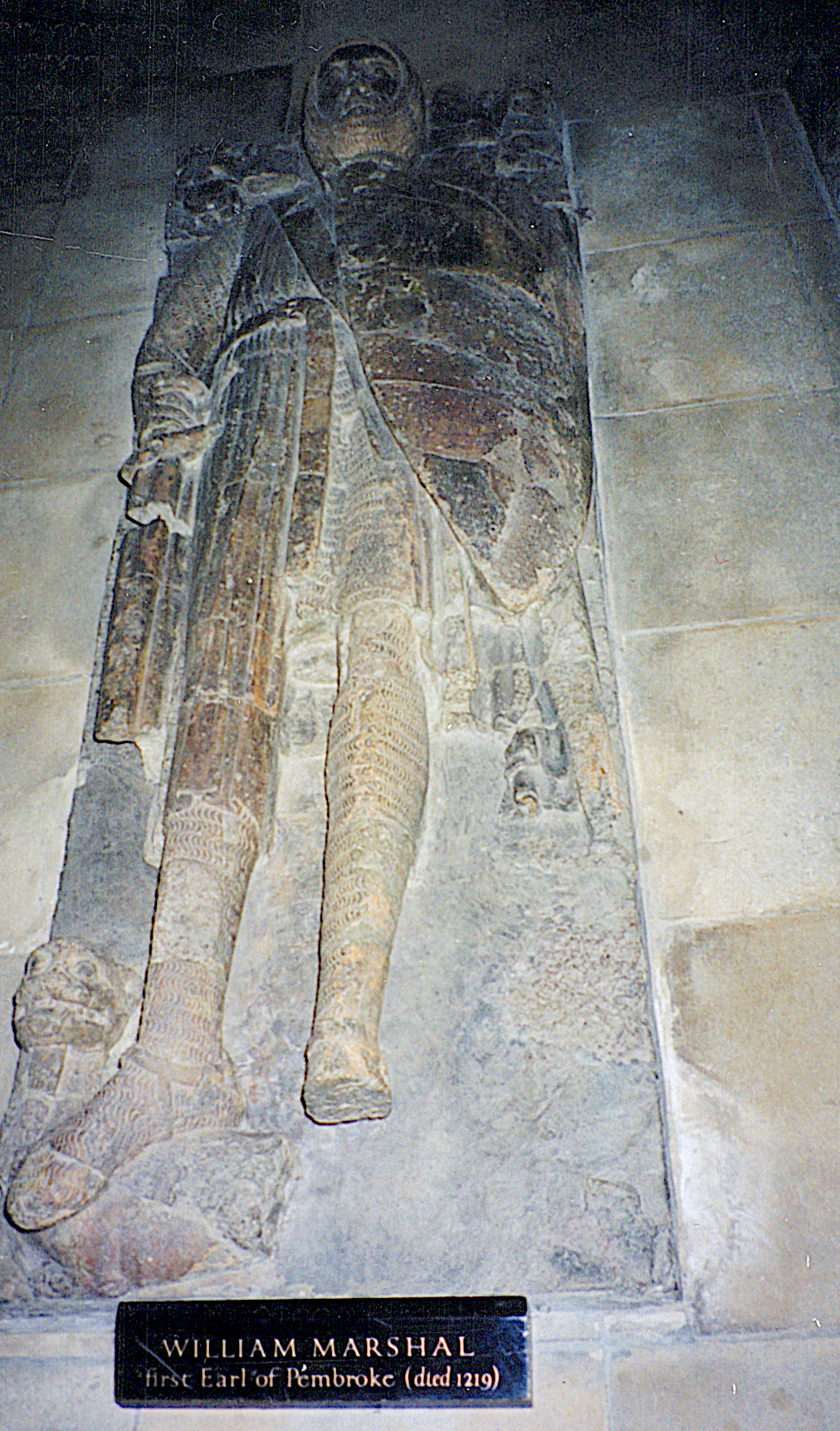
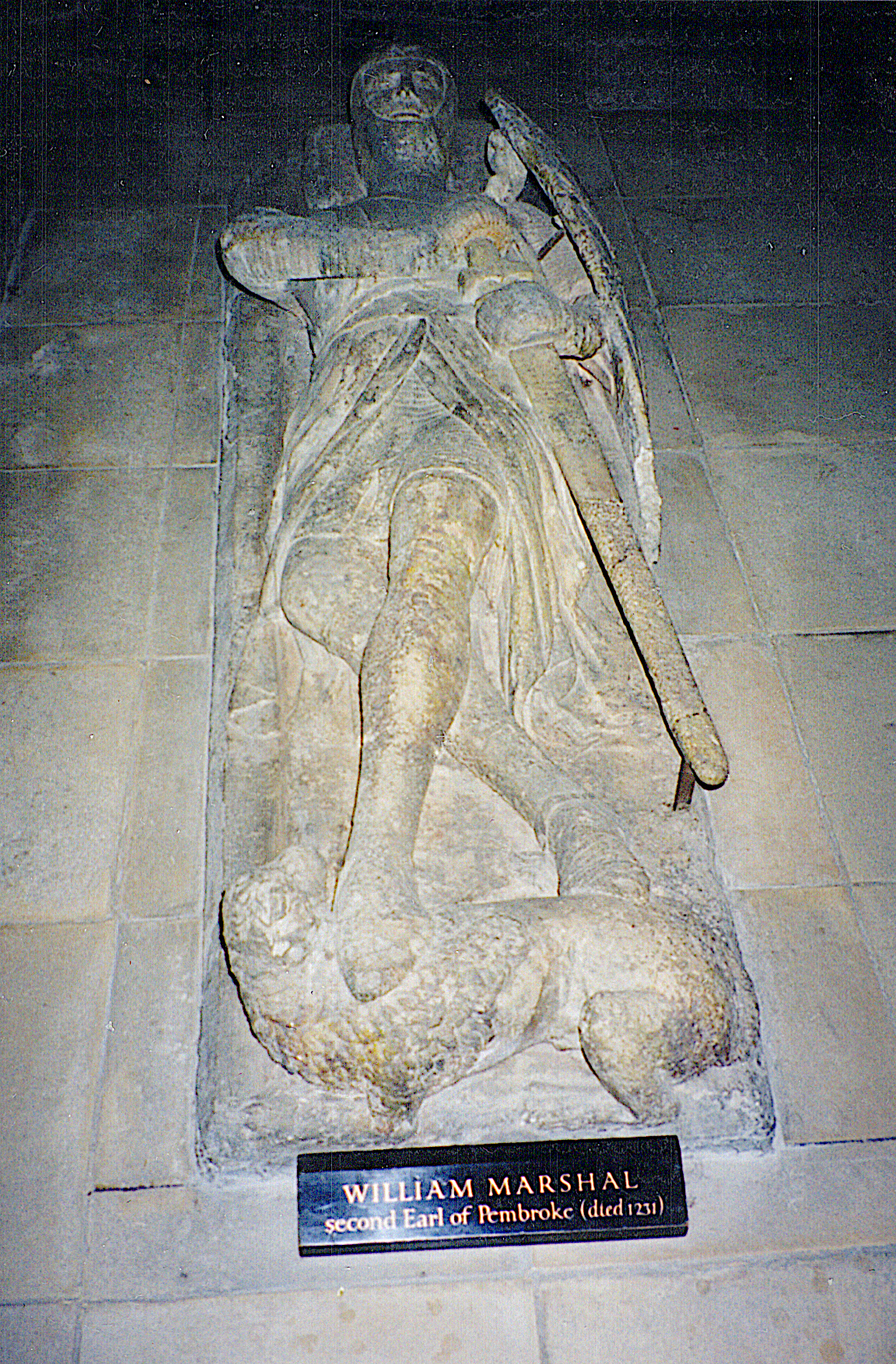
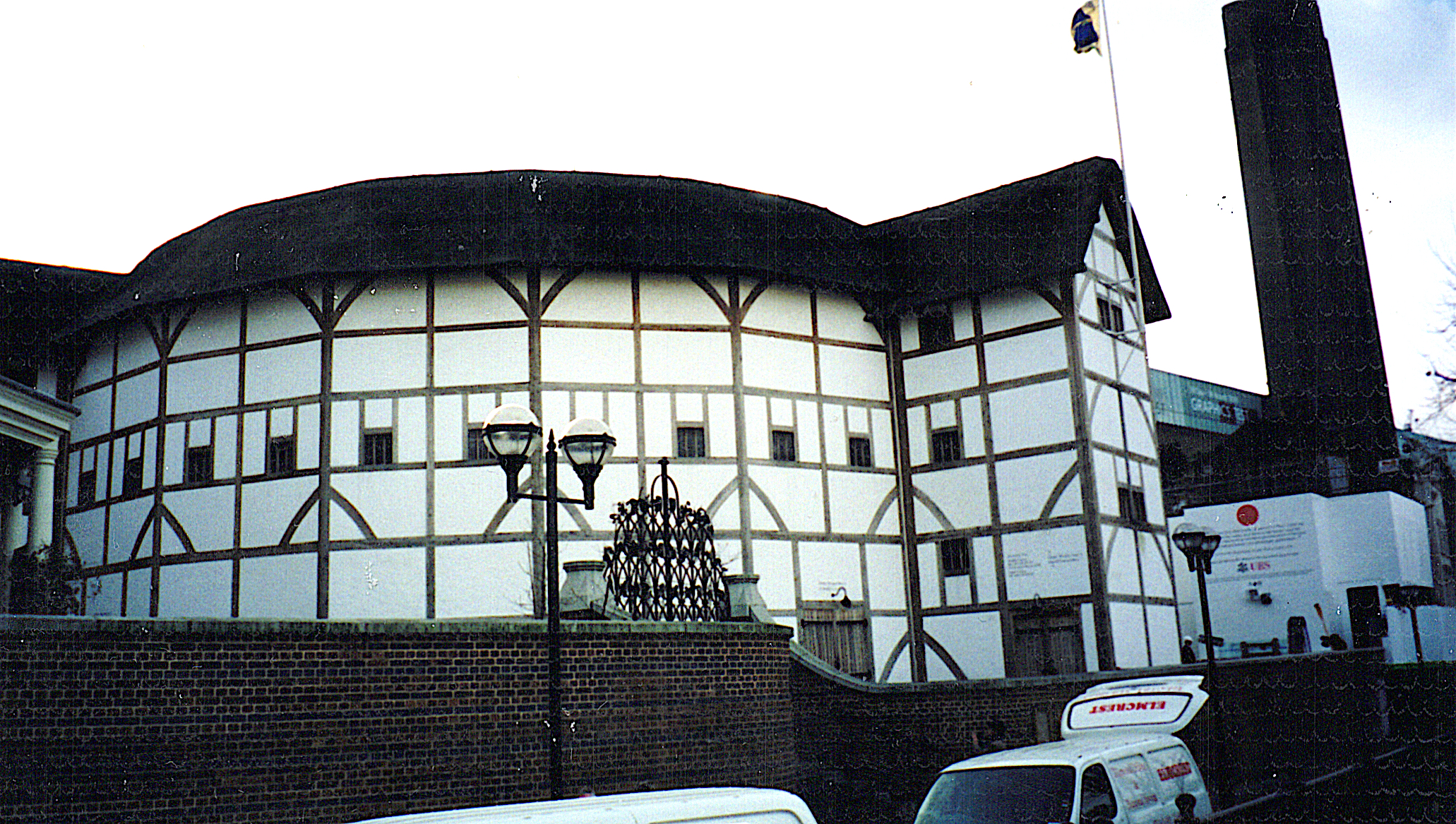
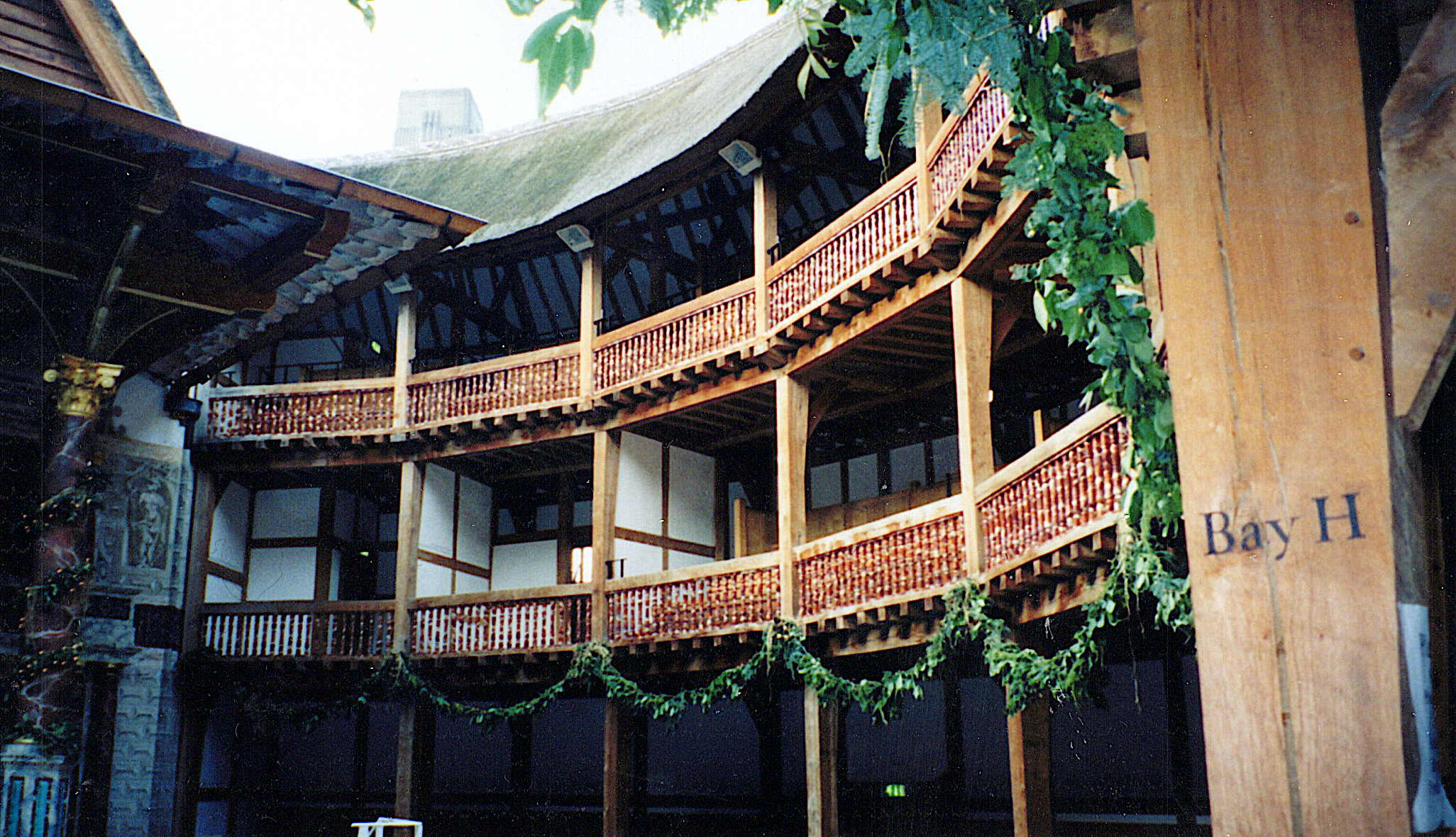
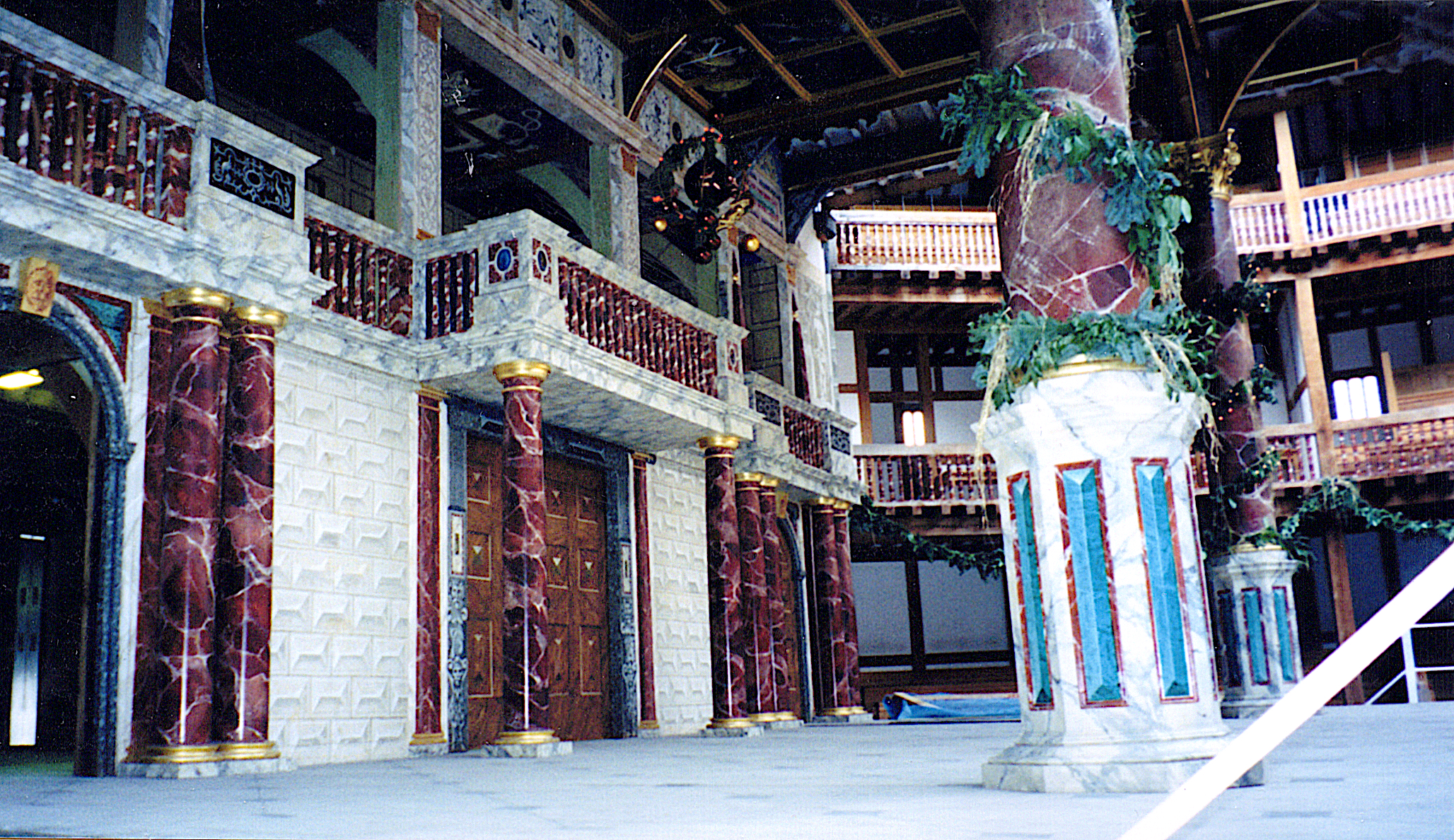
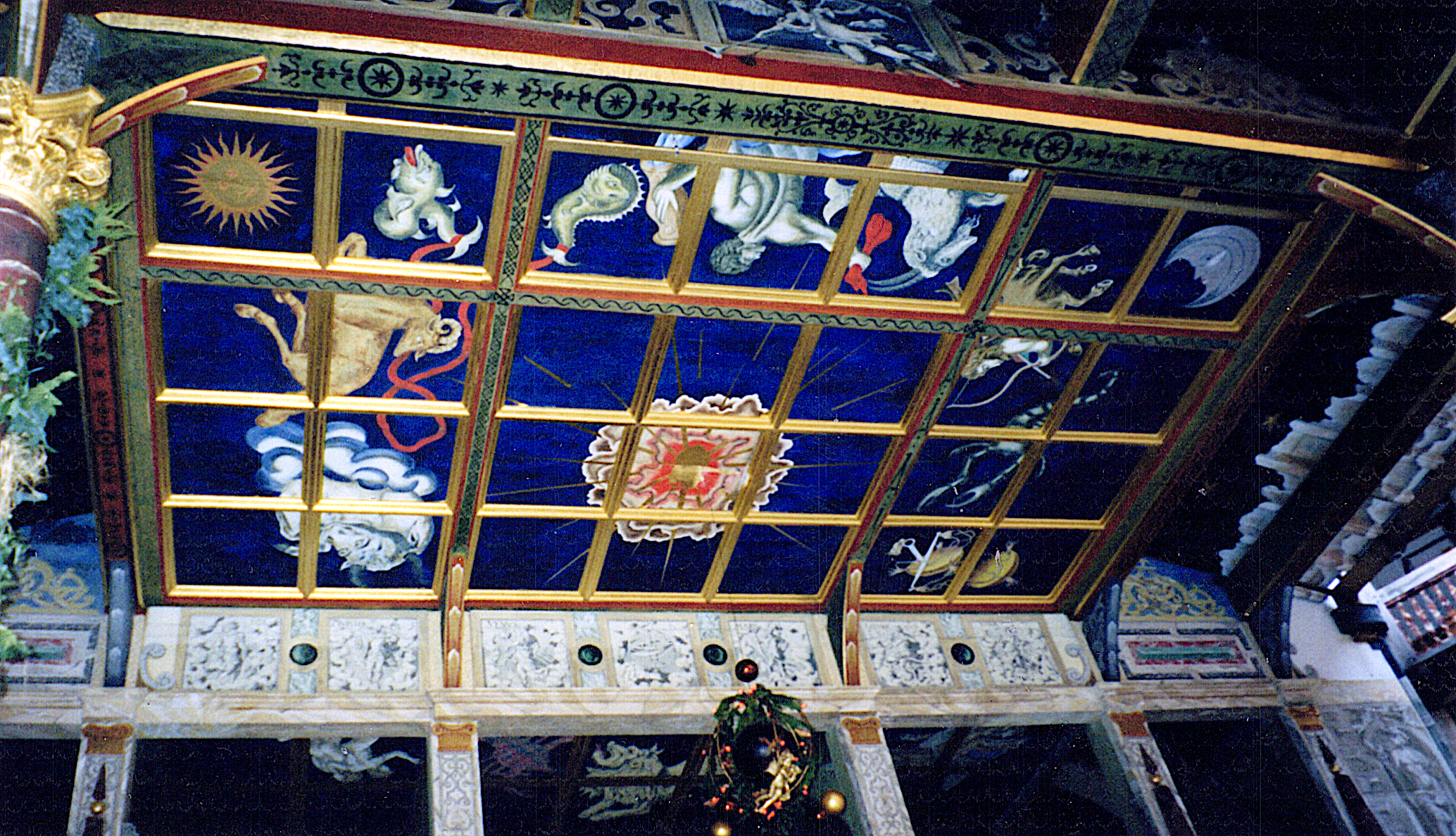
We took the train to visit Windsor Castle, which was unfortunately closed, although some of the grounds and St George's Chapel were open. We had lunch at a pub in the town afterwards. We took a tour of the reconstructed Globe Theatre in Southwark, and had lunch at the OXO restaurant afterwards. They were not performing plays at the Globe this early in the year but we enjoyed the tour. We revisited Westminster Abbey, where we always find something new. I like visiting the tombs of all the English monarchs and their families. We also visited St Paul's Cathedral and Temple Church to view the tomb effigies of the famous Crusader and Marcher Lord, William Marshal. We returned to the British Museum and The Museum of London. After visiting the latter, we enjoyed lunch and a pint at the nearby Lord Raglan Pub. On another night we attended a church concert where a local choir performed traditional carols.
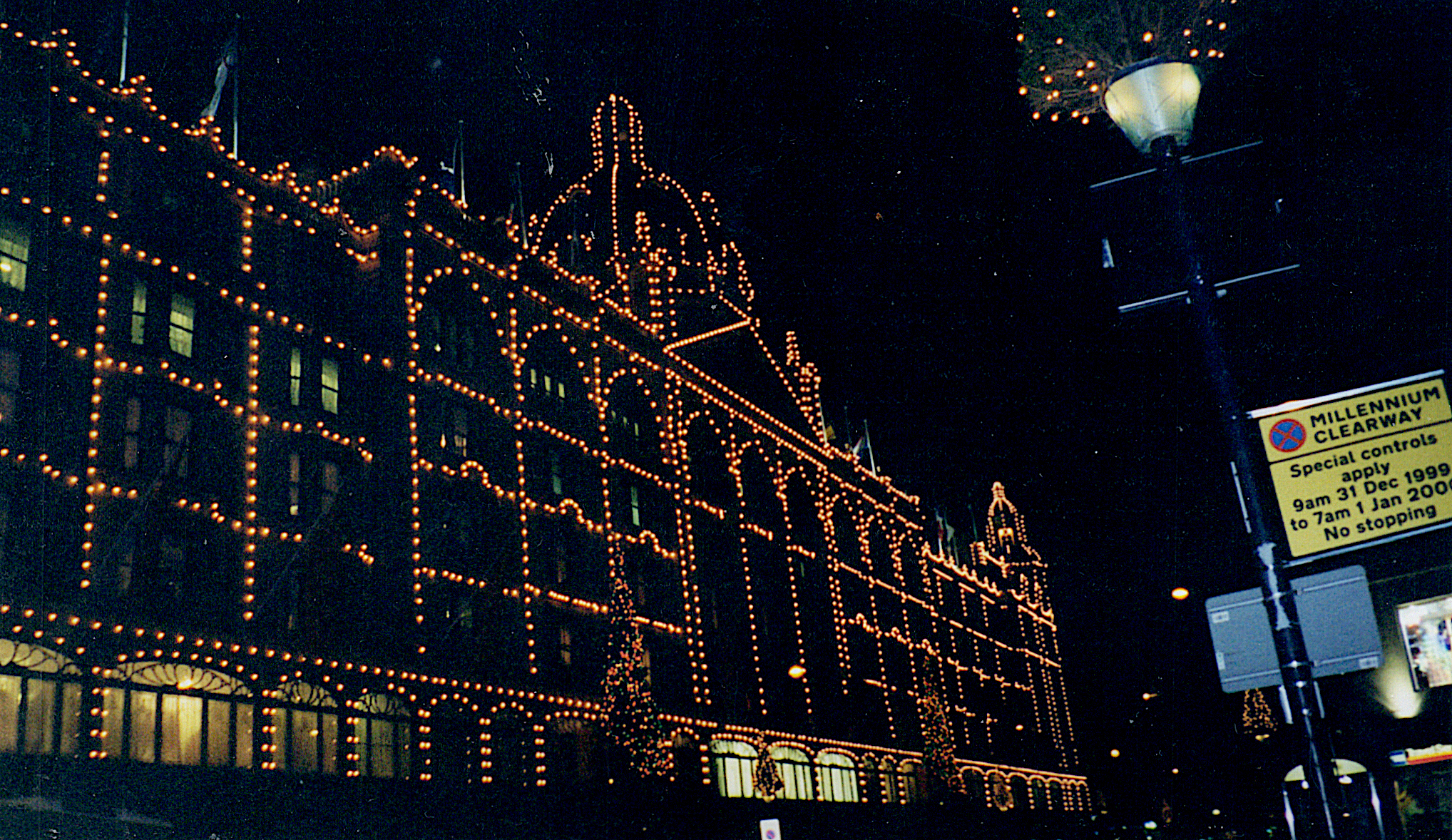
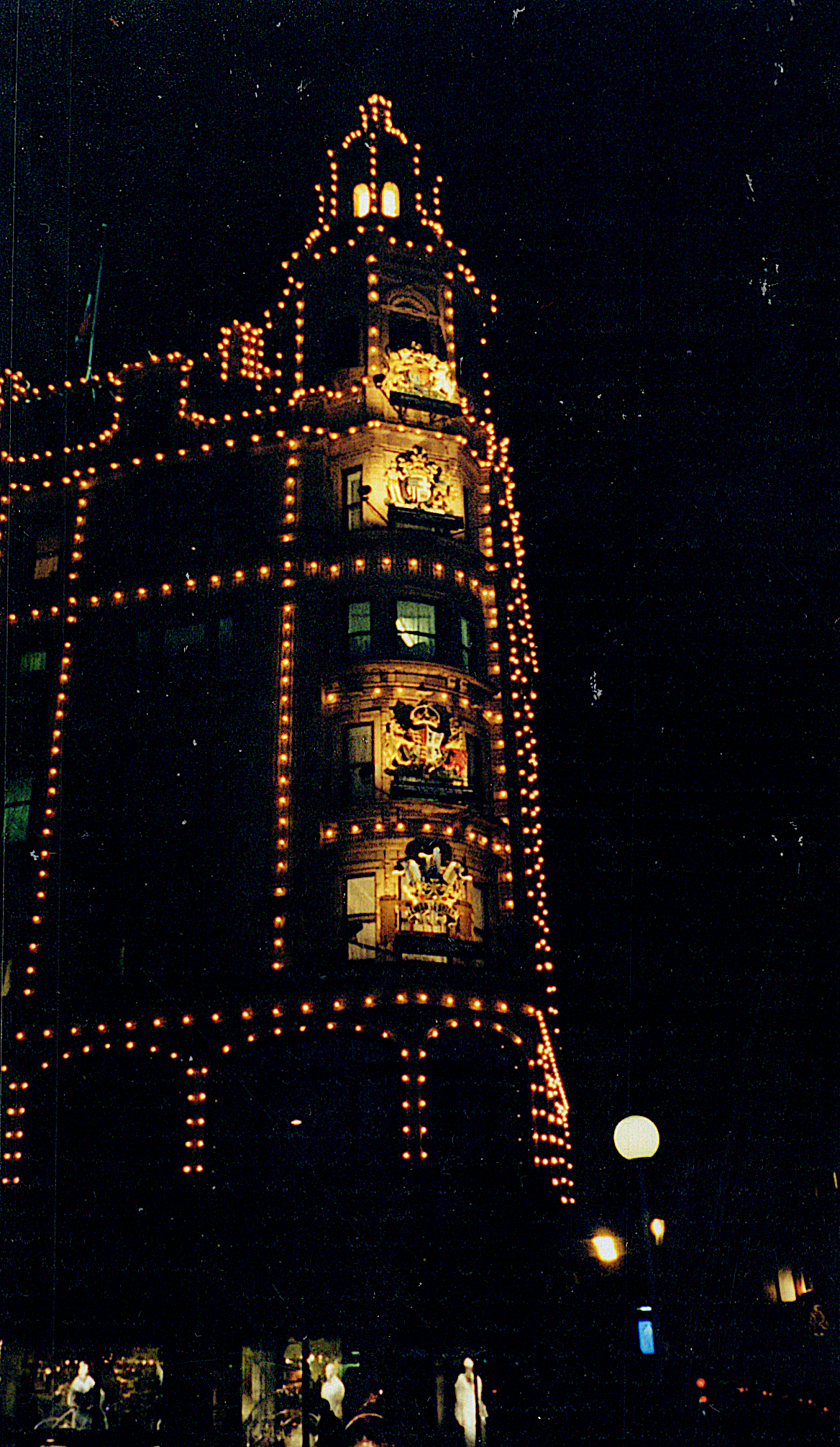
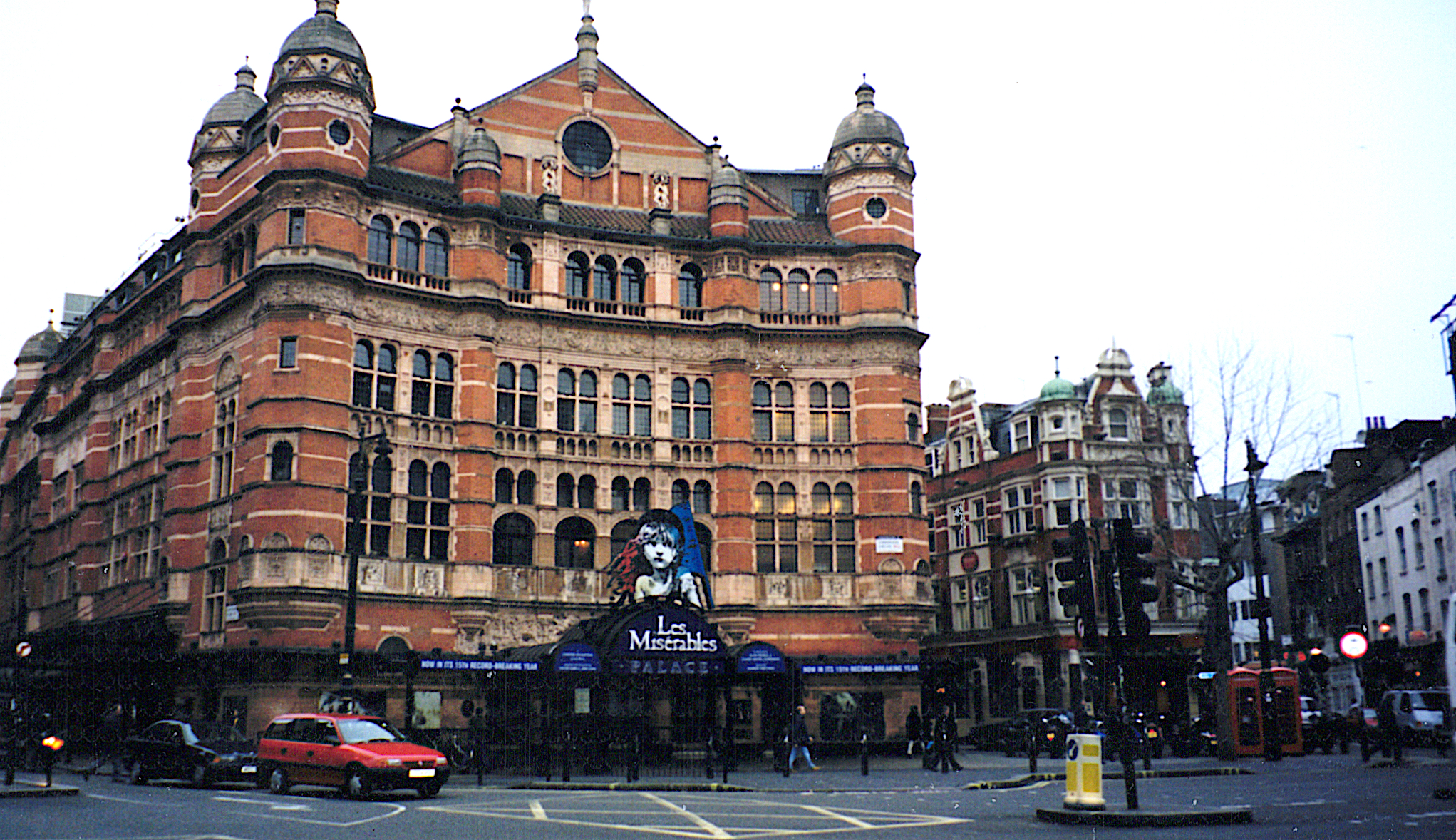
Of course we spent some time shopping at Harrods, which was impressively lit for the holiday season. A usual, we purchased dinner in the Food Court to take back to the hotel, and also enjoyed a pint at the Green Man pub in the basement. There's also a good wine shop in the basement of Harrods, with an impressive selection. We saw a total of four plays during the week; Quartet, starring Stephanie Cole, The Complete Works of William Shakespeare (abridged), Chicago, and Tess of the D'Ubervilles, at the Savoy Theatre. Afterwards we had a drink at the Savoy Hotel's American Bar.
|
The Stafford Hotel, St James
Windsor Castle
Piccadilly
Temple Church
Temple Church, William Marshal I (and family)
Shakespeare's Globe Theatre
Harrods at night
| For us, this was a quick 10-day trip to England that we really enjoyed. We loved the Amberley Castle hotel and the town of Arundel. It was also good to visit just one place each on our two full days there; Winchester and Lewes. Our week in London was eventful and remarkable, with just the right balance of history, shopping, dining, Christmas activities, and plays. We really enjoyed seeing how Christmas is celebrated in England. There were less lights, less glitz, and things seemed more traditional, with more emphasis on Church and family. We liked that. Can't really pick a favorite activity this time. We enjoyed it all! |
 Return to the main Travelogue page Return to the main Travelogue page
|