|
Britain 1998: A three-week trip to Britain but only a couple of days in Wales. On this trip we experienced different parts of Britain. Adventures in the Lake District, Northumberland, and Scotland, with a final few days in London. New castles in Wales, beautiful hikes in the Lake District, Roman sites in Northumbria, two real castle hotels, and lots and lots of castles in Scotland. Instead of writing a full-blown essay, I've decided to create a photo-essay using more photographs accompanied by just a few comments regarding each site or activity. In other words, this is more like a photo album with comments.
Places Visited:
Part I: South Wales → Caerleon: Roman Fortress & Ampitheatre → Penyclawdd Court & Castle → Llanthony Priory → Hay Castle → Bronllys Castle
Crickhowell Castle → Abergavenny Castle → Skenfrith & White Castles w/historian Richard Williams → Brecon Castle → Longtown Castle
Cilmeri: Llywelyn ap Gruffydd Memorial → Goodrich Castle → Pembridge Castle → Monmouth Castle → Usk Castle → Hereford Cathedral
Part II: The Lake District → Grasmere → Oak Bank Hotel → Hike to Alcock Tarn → Hike to Easedale Tarn → Keswick: Castlerigg Stone Circle
Part III: Northumberland → Raby Castle → Langley Castle Hotel → Hexham Abbey → Durham Cathedral → Hadrian's Wall Hike: Wallstown Crags
Hadrian's Wall Hike: Cawfields section → Vindolanda Roma Fort → Part IV: Scotland, The Highlands → Polmaily House Hotel → Loch Ness
Urquhart Castle → Stuart Castle → Corgarff Castle → Caledonian Canal, Dochgarroch Locks → Cawdor Castle → Brodie Castle → Balvenie Castle
Kildrummy Castle → Auchindoun Tower House → Glenbuchat Castle → Eilean Donon Castle → Isle of Skye → Dunvegan Castle → Huntley Castle
Fyvie Castle → Blair Castle → Glamis Castle → Part V: Scotland, Stirling → Culcreuch Castle Hotel → Stirling Castle → Castle Campbell
Doune Castle → Edinburgh Castle → The Royal Mile → Palace of Holyrood House → Holyrood Abbey → Village of Balquhidder (Rob Roy)
Kilchurn Castle → Oban → Dunstaffnage Castle → Part IV: London → The Goring Hotel → Buckingham Palace → St James Park
Kensington Palace → Picadilly → Plays: Phantom of the Opera (Her Majesty's) → Complete Works of Shakespeare (Criterion) → Hyde Park

Part V: Scotland, Stirling
Culcreuch Castle Hotel, Fintry
| For the second leg of our Scotland adventure we had booked a few nights at the Culcreuch Castle Hotel near Stirling. Culcreuch is an imposing former medieval fortress located in an impressive setting in the Campsie Fells in Central Scotland. For the last three centuries it has been a stately family home prior to being converted into a country house hotel. The main part of the castle comprises a Medieval Tower with a Georgian wing added later. The earliest parts date from the time of Maurice Galbraith (circa 1320), the Tower being completed by James Galbraith (10th Chief) by 1460. The walls are over 5' 6" thick in places. Our accommodations were in the "Naiper Suite," a second-floor 4-poster room located in the original tower, overlooking the front of the Castle. It was a very nice room. The grounds of the castle were beautiful. There were some lovely gardens and a nice lake in front of the castle, and we saw fields of grazing sheep, all framed by the mountains. Breakfast and dinner were served in the castle's well-appointed dining room. We enjoyed dinner here once during our stay. In the basement of the castle tower were two barrel vaulted cellars, originally lit by window-slits, that are now the "Dungeon" pub and restaurant. It was open to residents and the public and had picnic tables outside. The pub is popular with local residents. We enjoyed a couple of meals and pints of ale in pub and outside at the tables. We found Culcreuch similar to Langley in Northumberland. Langley Castle was a bit more medieval and a bit more formal, while Culcreuch seemed more casual, but also retains much of its medieval trappings. Langley had a formal after-dinner drawing room, and Culcreuch had a lively pub. Take your pick. We really liked both! |
 |
Below: (top row) the castle viewed from across and in front of the Lake, (bottom row): views of the grounds & gardens
The Naiper Suite; a comfortable period room overlooking the front of the castle, the loch, and the Campsie Fells.
Below: (left) a secret door next to the window revealed the medieval castle wall, (right) a resident of the lake
Below: The Dungeon, the castle's barrel vaulted cellars where we found a pub and restaurant.
William Wallace Monument & Rob Roy Statue, Stirling
|
The following day we began our exploration of the area. Our principal target was Stirling Castle. We made two quick stops before visiting Stirling. First up was the William Wallace monument, an impressive 220 foot tower, dedicated to Sir William Wallace, a 13th and 14th-century Scottish hero, who defeated the English army of Edward I at the Battle of Stirling Bridge in 1297. The victory gave temporary but short-lived independence to Scotland. Wallace was a member of the lesser nobility who came of age during the political crisis in Scotland following the death of King Alexander III. The sandstone tower took eight years to build. It was completed in 1869, and is one of Scotland's most popular tourist attractions.
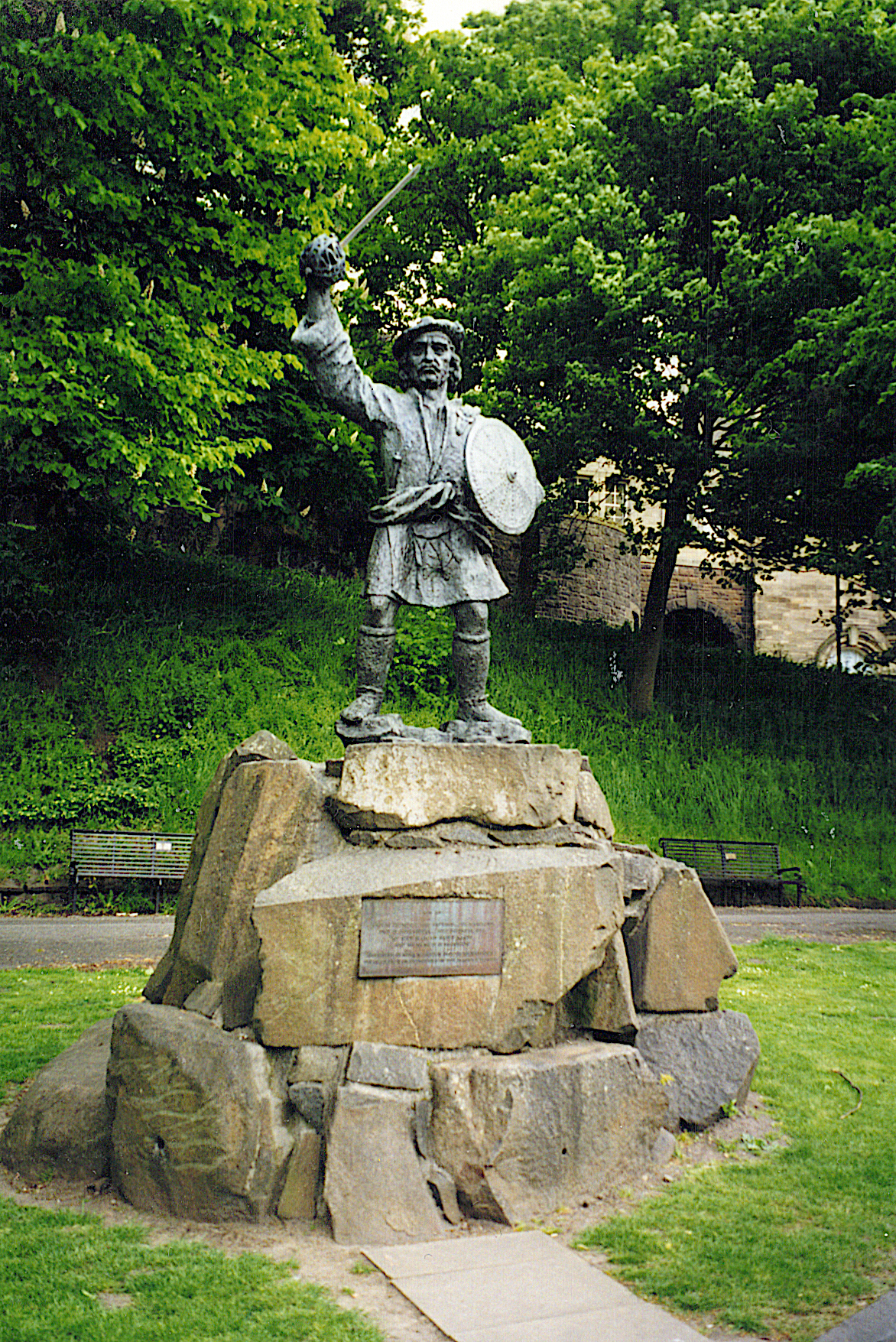
Next we visited a statue dedicated to Rob Roy, located Just outside Stirling on Corn Exchange Road. Rob Roy MacGregor was a cattle drover and outlaw, leader of the MacGregor clan and folk hero, who lived near Loch Lomond in the 17th and 18th centuries. He joined the Jacobite rising of 1689 with his father when he was just 18 years old. A plaque at the base of the statue reads ‘My foot is on my native heath and my name it is McGregor’, taken from Sir Walter Scott’s famous novel. We would visit his gravesite later in the week.
|
 |
 |
Stirling Castle
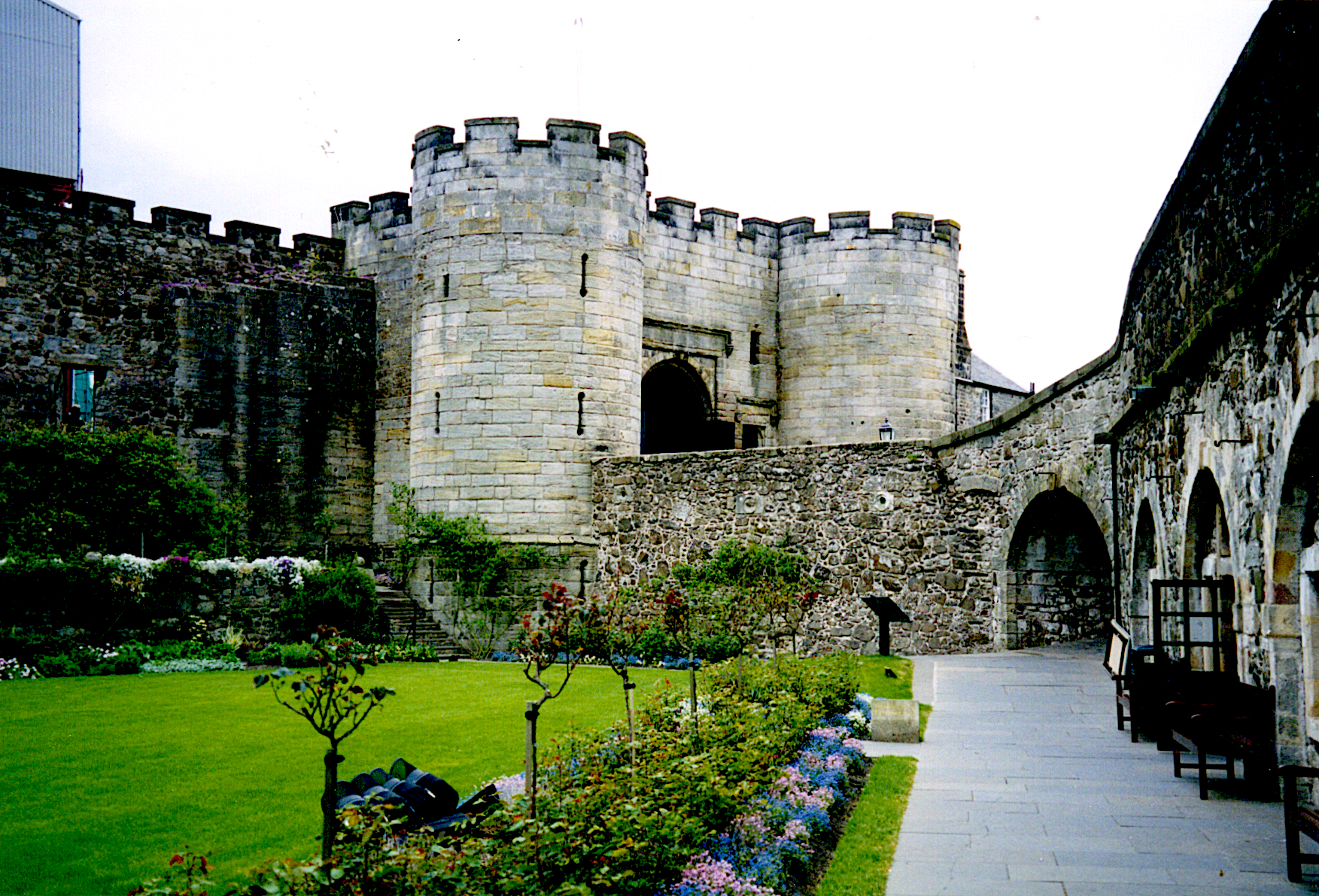
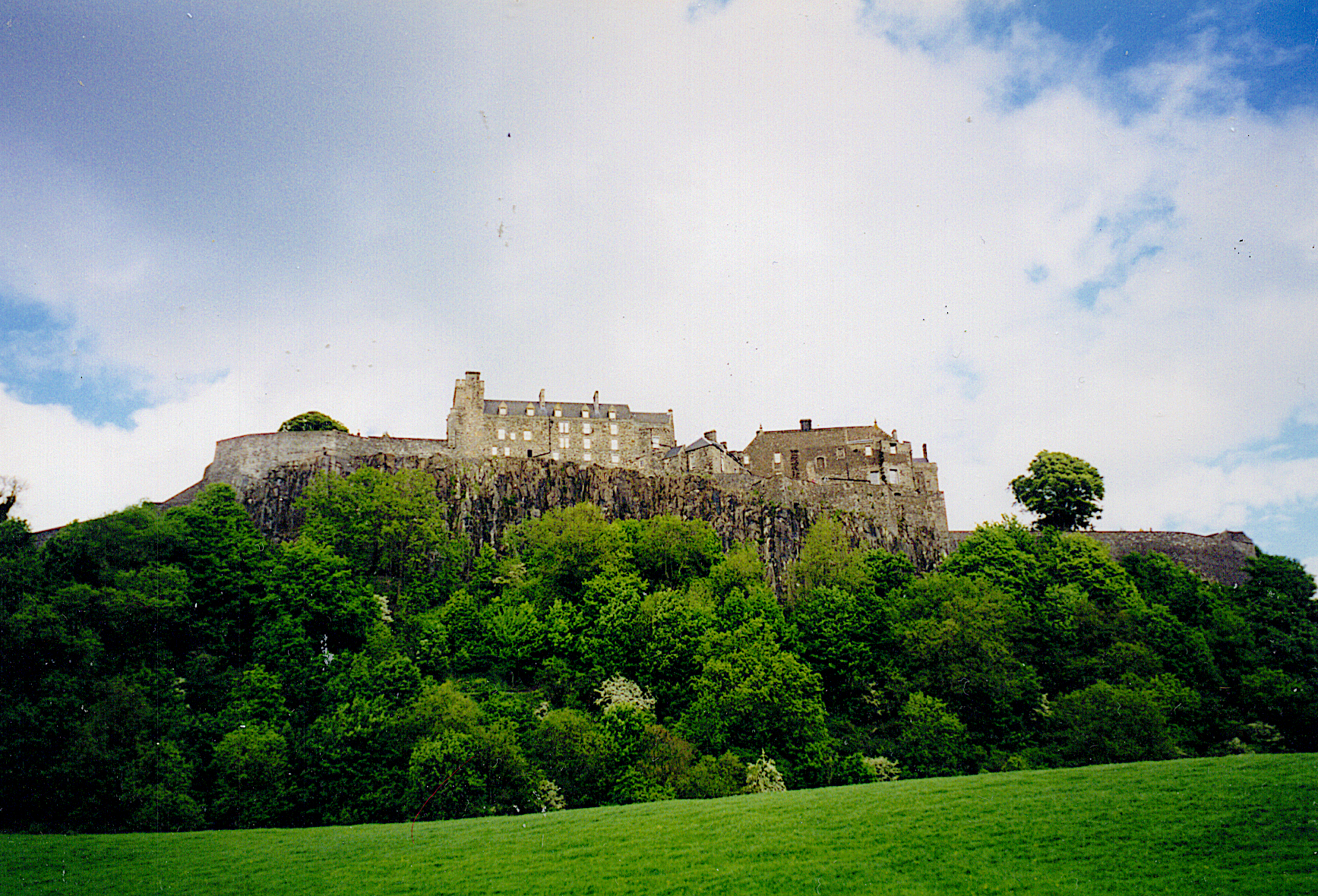
| We finally arrived at the castle in the late morning. Stirling is one of the largest and most historically significant castles in Scotland. The castle sits atop a large crag, which forms part of the Stirling Sill formation. It is surrounded on three sides by steep cliffs, giving it a strong defensive position. Most of the castle dates from the 15th and 16th centuries, although a few structures remain from the 14th century. The first record of Stirling Castle dates from around 1110, when King Alexander I dedicated a chapel here, and it appears to have been an established royal center by this time. Stirling remained a center of royal administration until the death of Alexander III in 1286. In 1296, Edward I invaded Scotland, beginning the Wars of Scottish Independence, and captured the castle. It was retaken by the Scots following the Battle of Stirling Bridge in 1297. We were unable to find parking close to the castle so it took us a while to get there. We spent a lot of time here; most of the day exploring the castle and its many buildings and towers, both inside and out. Afterwards we walked through the town and shops, enjoying lunch and a pint of Scottish Ale at the Hogshead Pub. (The ale was from the Belhaven Brewery Company, Yum!) |
 |
 |
Below: statue of Robert Bruce outside Stirling Castle
Castle Campbell
| Our next stop was Castle Campbell, one of the most famous of Scotland's clan castles, situated above the town of Dollar in Clackmannanshire. It was the lowland seat of the earls and dukes of Argyll, chiefs of Clan Campbell, from the 15th to the 19th century. The present tower was built around 1430 and the first historical record of the castle dates from the following year. In the 16th century, the 4th Earl of Argyll embraced the cause of religious Reformation, and became one of the leading Protestant lords of his days, and The Earls of Argyll continued to support the Protestant cause, amid the religious conflicts of the mid-17th century. Cromwell's forces were garrisoned in Castle Campbell in 1653, and in July 1654, Royalist rebels attacked and burned Castle Campbell over two nights. I took photographs of the castle at a distance as we approached the site. We entered the grounds of the castle and were immediately struck by Castle Campbell's large, square tower that still dominates the site. It was one of the largest and best-preserved "ruined towers" we had visited. All four levels of the tower were intact with floors, windows and ceilings, and the views from the top were outstanding. The East Range next to the next to the tower is also largely intact. As a bonus we found an attractive set of terraced gardens below the castle, complete with walking trails. Nice. I also remember that there was a farmer and his family on site that I think were acting as caretakers of the castle. All in all, this was an impressive castle experience. There is definitely something about Castle Campbell's proud clan heritage that still resonates here today. |
Below: view of the castle from a distance (left), and view of the terraced gardens below the castle (right)
Below: the Great Tower at Castle Campbell (left), and East Range (right)
Doune Castle, Stirling, Perthshire
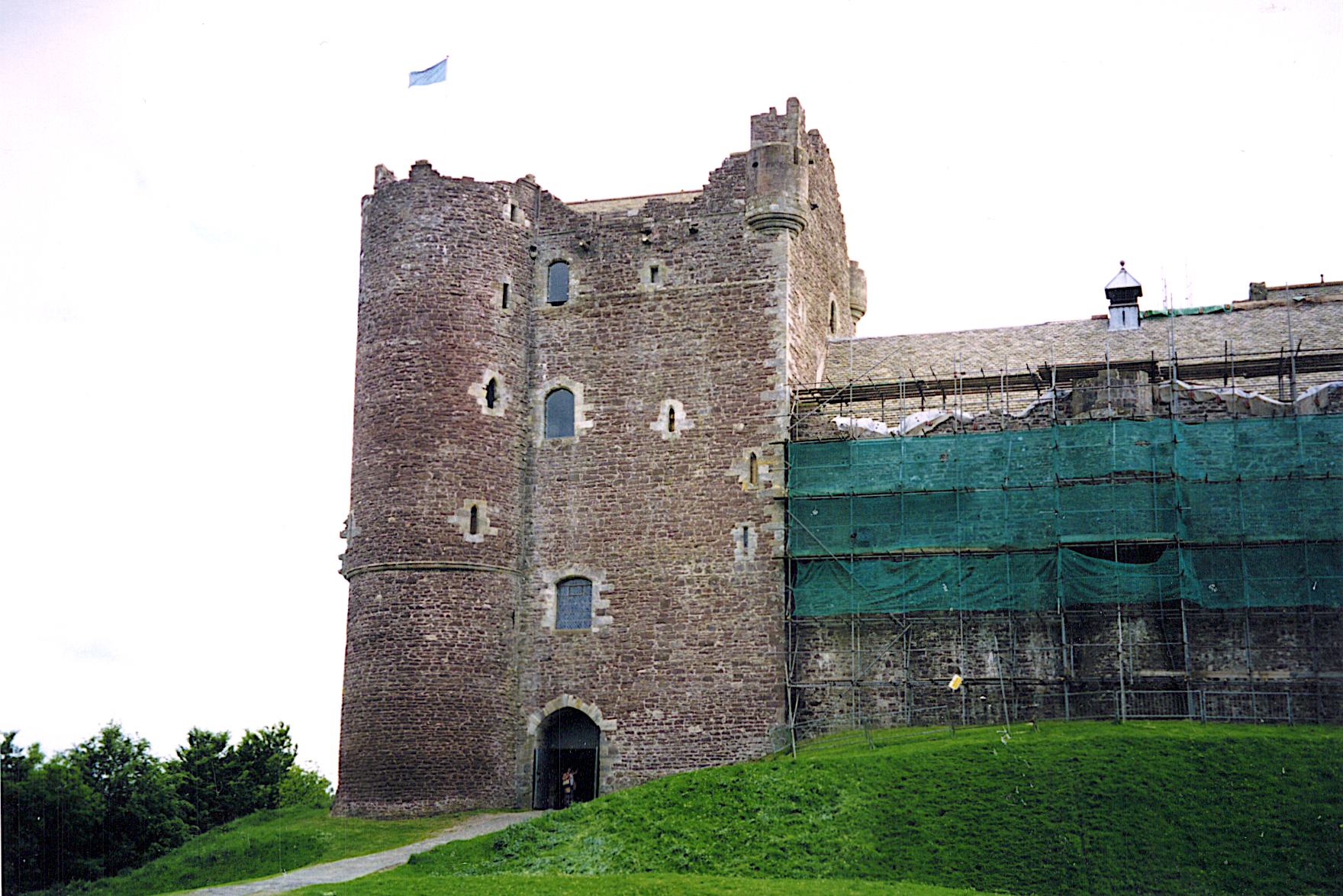
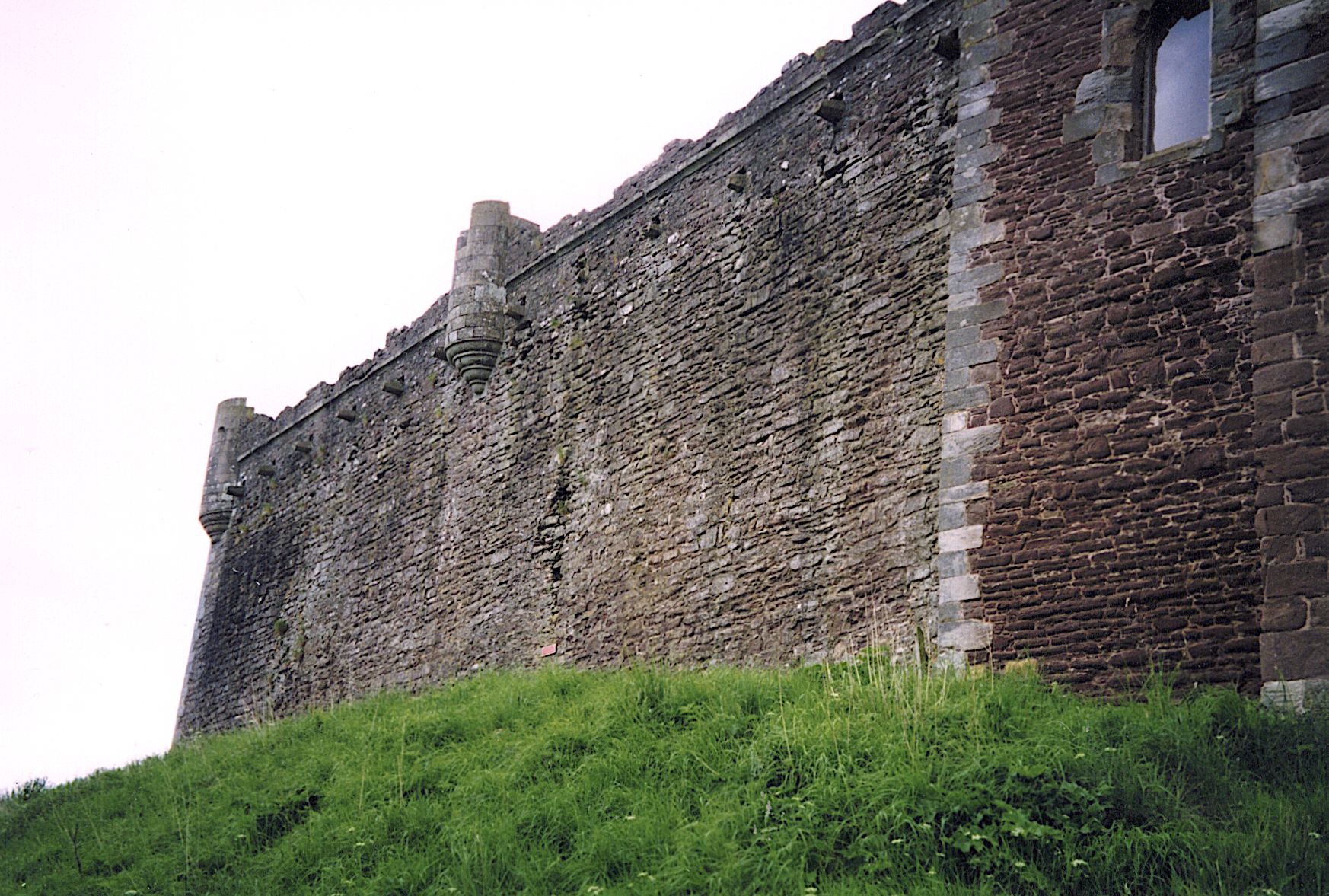
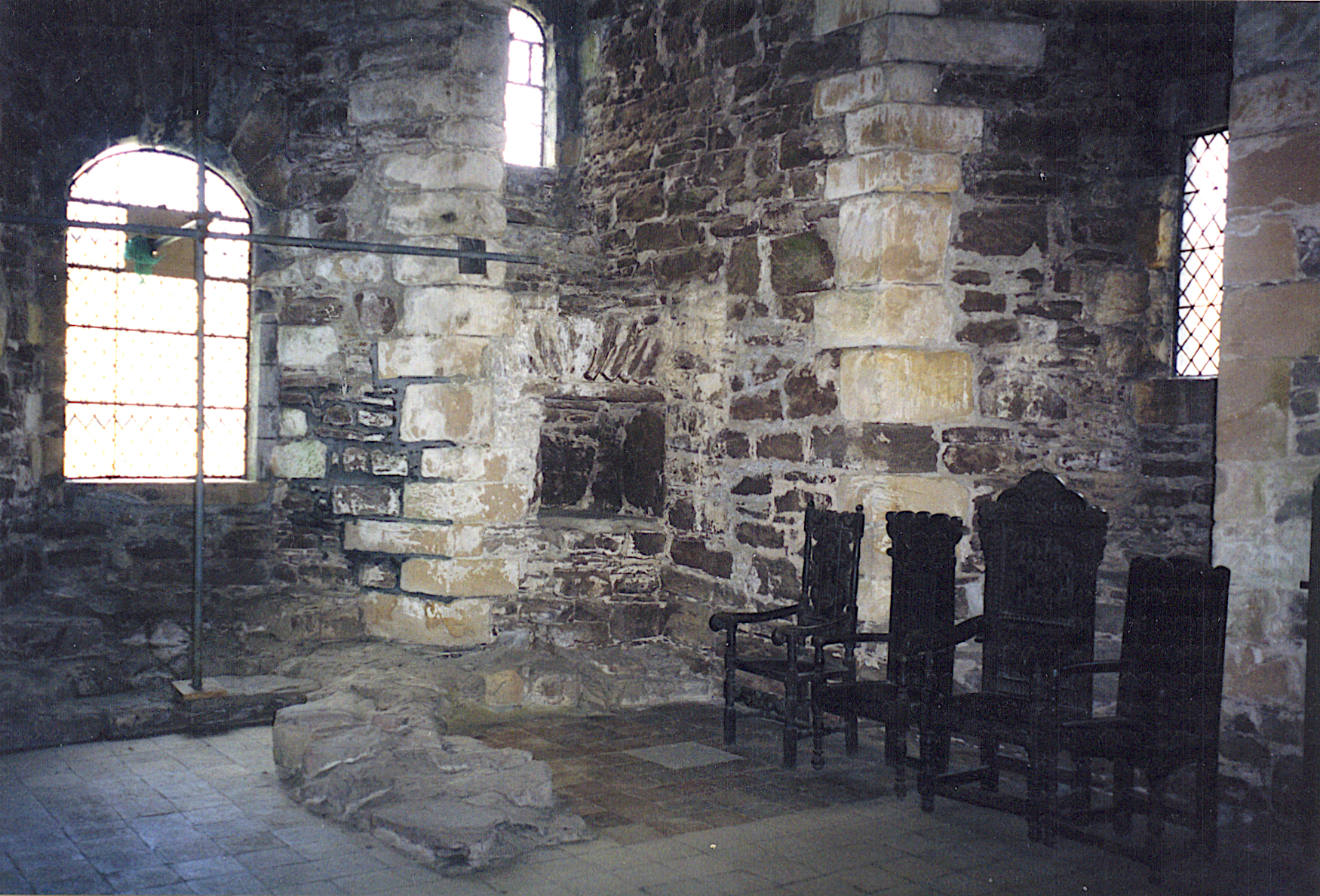
| Doune Castle was next on our list. Doune is an impressive nearly-complete medieval castle with a very large entrance tower and high curtain wall surrounding an inner courtyard. It was also one of the castles used in the 1975 Monty Python classic "Monty Python and the Holy Grail." One of the film's most famous scenes was shot at the castle. Doune's impressive stone walls and turrets were used as the exterior of the Castle of Guy de Lombard, the villain in the film. Once again there was a lot to explore inside the castle, which was also only a few miles from our hotel. |
Edinburgh Castle
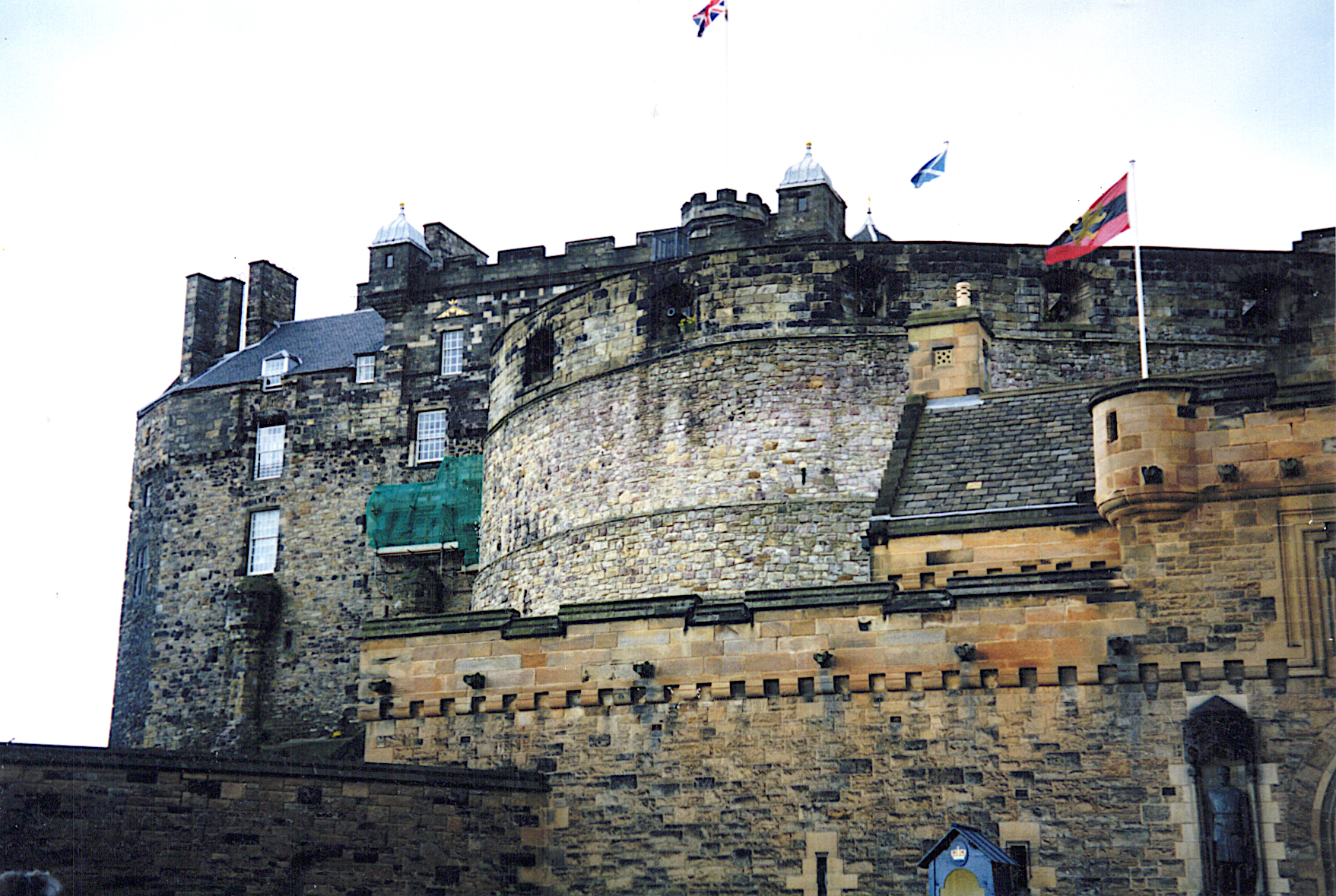
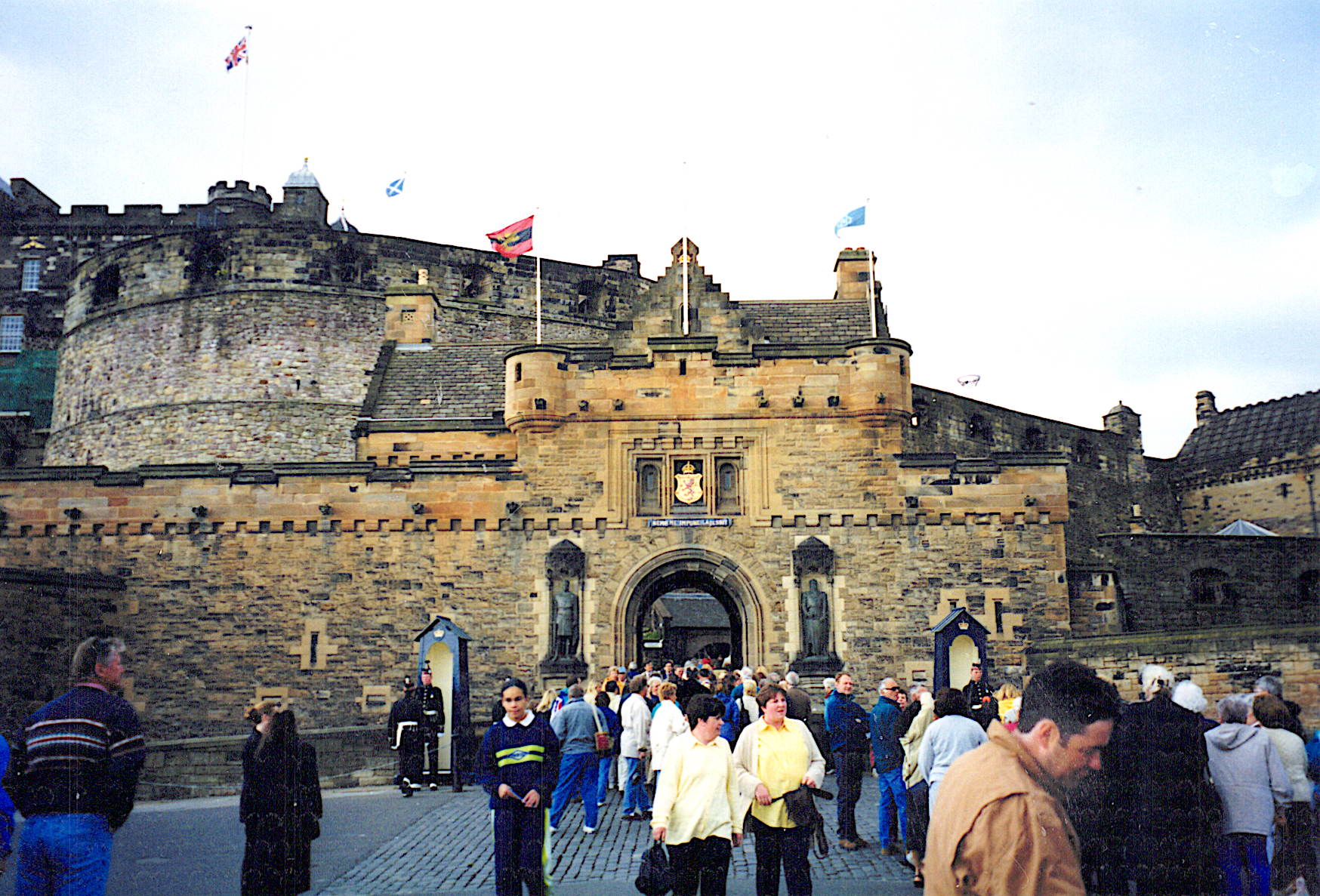
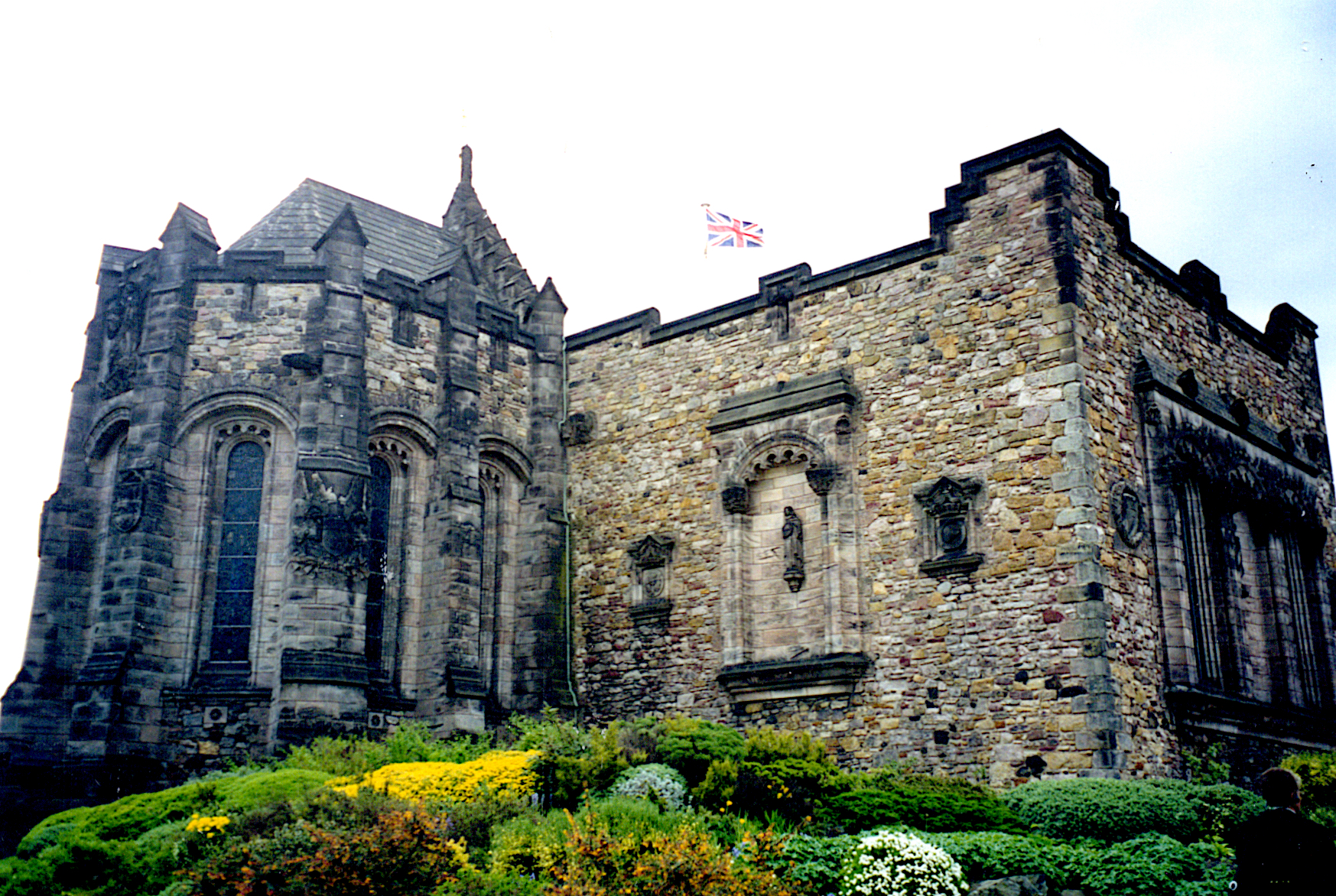
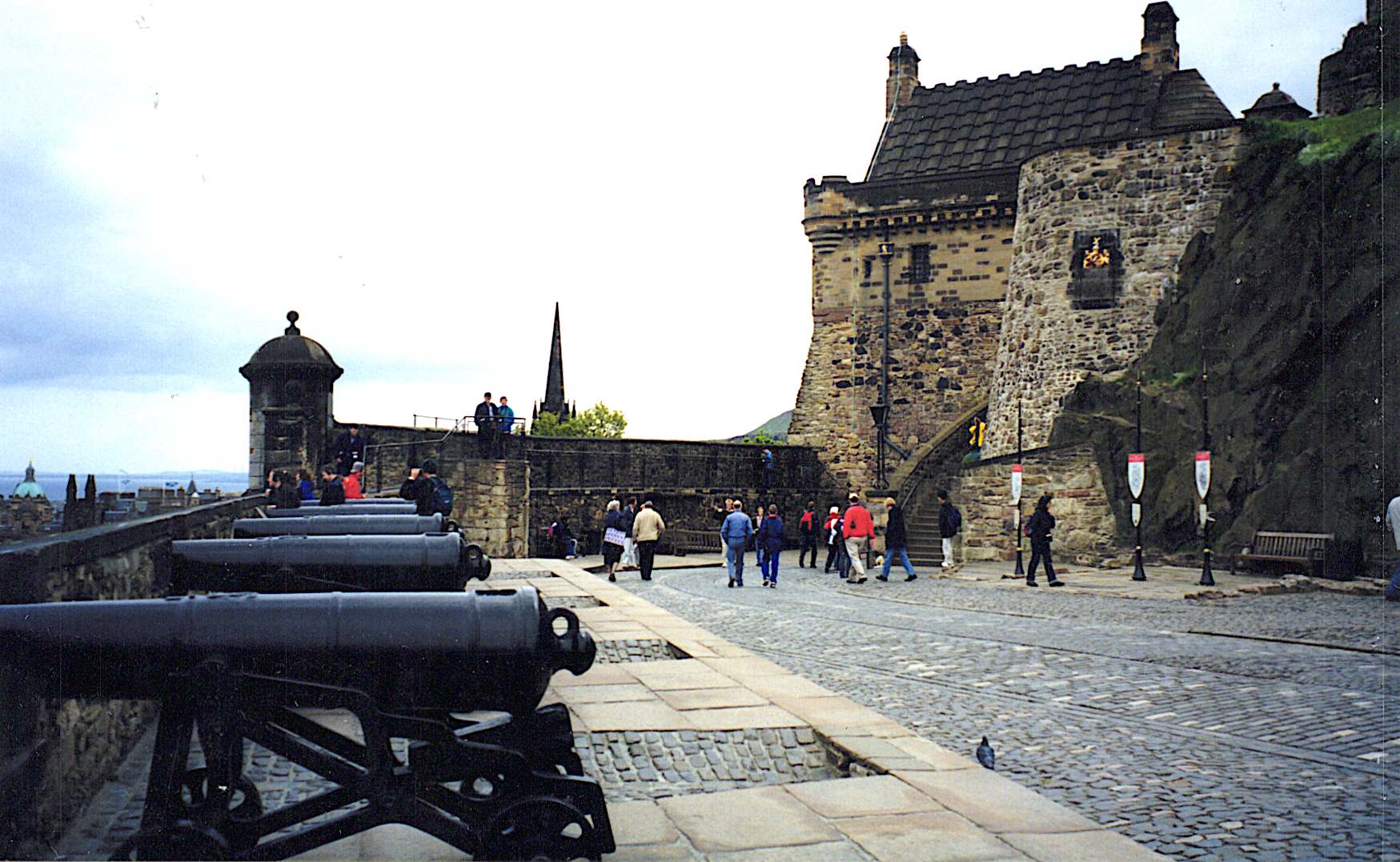
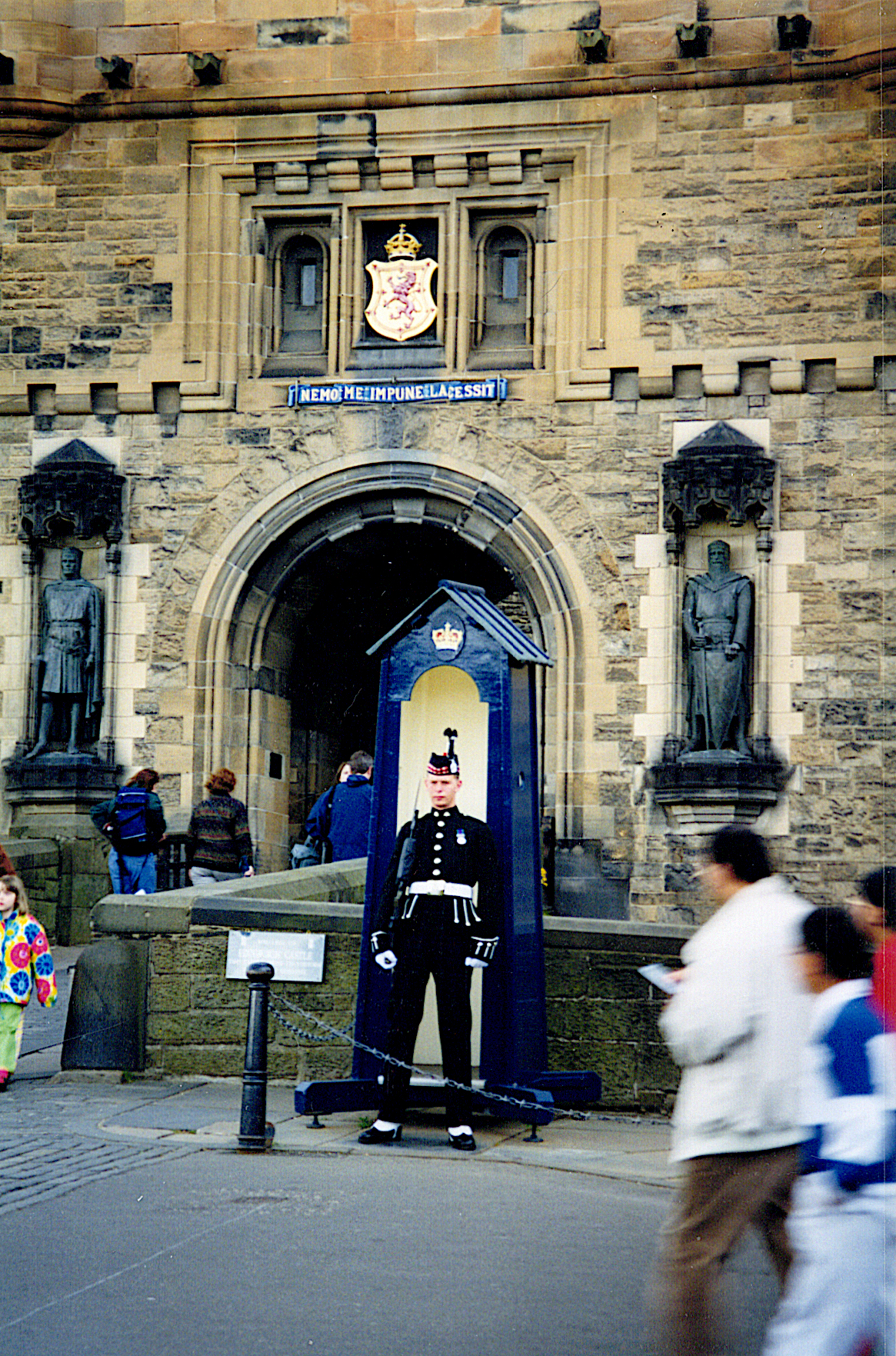
| Edinburgh Castle stands on Castle Rock, which has been occupied since at least the Iron Age. There has been a royal castle here since at least the reign of Malcolm III in the 11th century, and the castle continued to be a royal residence until 1633. The earliest buildings or defenses would probably have been of timber, although two stone buildings are documented as having existed in the 12th century. Of these, St. Margaret's Chapel remains at the summit of the rock. We found public parking in a lot near the foot of Castle Hill and started our walk to the entrance. We arrived at the Esplanade, the courtyard in front of the entrance to the castle which was already busy with visitors. We entered the castle via the gatehouse which brought us to the Lower Ward. We turned right and walked up a set of stairs and through the impressive Portcullis Gate, which brought us into the Middle Ward. There are so many buildings to explore inside the castle that they are simply too many to name. One thing I liked is that the castle exhibits different building periods from the 12th to 17th centuries. The Royal Palace was certainly a highlight. The Palace served as a residence for the later Steward kings and queens, and, like most of the castle, has been altered over the centuries. The Crown Room holds the "Honors of Scotland," sometimes referred to as The Sottish Crown Jewels. We had to purchase tickets to view these and it took about an hour standing in a long line inside the palace to reach the room. The Crown Jewels were magnificent, but even more exciting was to see the so-called the "Stone of Scone"," also known as the "Stone of Destiny". The stone is an oblong block of red sandstone that was used in the coronation of Scottish monarchs until the 13th century. In 1296 the forces of King Edward I (Boo!) stole the stone from Scone Abbey, and brought it to England where it wound up in Westminster Abbey. We had seen the stone in Westminster on our visit to London in 1992. In 1996 the stone was returned to Scotland and now resides in the same room as the Honors of Scotland. It was great to see the stone again, but even better to see it back where it belongs. (Although the Crown does still retains ownership of the stone.) Outside the castle we visited the Half-Moon Battery with its cannon placed along the outer wall and its wide open views of the surrounding countryside. |
Below: Edinburgh Castle
Below: the entrance to The Palace and Honors of Scotland
 |
|
It was about lunchtime when we finally left the castle so we headed down "The Royal Mile" towards the Place of Holyrood at the opposite end. We checked out a few of the shops along the way and enjoyed a pub lunch at Deacon Brodies Tavern. The pub is named after one of the city’s most famous residents, Deacon William Brodie, one of the inspirations behind Robert Louis Stevenson’s Jekyll and Hyde. By day, Brodie was a respectable citizen and a member of the town council but, by night, he became involved in gambling and drinking. To pay off his debts, he had to resort to burglary and a life of crime and, by 1786, he had a small gang of criminals working in the city. Literary associations aside, we enjoyed Fish and Chips and pints of real Scottish ale at the pub. Nevertheless, after lunch we visited Brodie's former residence, now The Deacon's House Cafe, where we picked up a brochure to learn more about one of Edinburgh's most notorious citizens.
|
Edinburgh, The Palace of Holyrood & Holyrood Abbey
| At the end of the Royal Mile we visited The Palace of Holyrood and Holyrood Abbey. The Palace was the site of some pretty significant Scottish history. The Palace of Holyrood , or Holyroodhouse, is the official residence of the British monarch in Scotland, and has served as the principal royal residence in Scotland since the 16th century. The ruined Holyrood Abbey that stands next to the Palace was founded in 1128 at the order of King David I. In 1768 the roof of the abbey collapsed in two stages, leaving the abbey as it currently stands, a roofless ruin. Between 1501 and 1505, James IV constructed a Gothic palace adjacent to the abbey, built around a quadrangle, situated west of the abbey cloister. The royal apartments in the Tower were occupied by Mary, Queen of Scots from her return to Scotland in 1561 to her forced abdication in 1567. It was in the royal apartments on 9 March 1566 that Mary witnessed the infamous murder of David Rizzio, her private secretary, at the instigation of her second husband, Lord Darnley. We toured the palace and were dazzled by the fine period furniture, paintings, and decorations we found. Part of the Palace is a museum containing many interesting and significant historical artifacts. We spent a lot of time in exploring the Palace before visiting the ruins of the abbey next door. By this time it was raining but that was OK. I was in my element exploring the skeletal remains of a once significant ruin. There is still a lot of fine detail left to explore in the abbey, although in a more compact space. As I left the abbey I snapped a quick photo of Arthur's Seat (below) before we walked back up the Royal Mile. We decided to duck into a cafe near the castle for a 4 o'clock tea before going back to the car and returning to our hotel. We had spent almost the entire day in Edinburgh, but came away thinking that we had only scratched the surface of all there is to explore here. |
The Palace of Holyrood
Holyrood Abbey
Edinburgh, Arthur's Seat
| Arthur's Seat is an ancient extinct volcano that is the main peak of the group of hills in Edinburgh, which form most of Holyrood Park. It is situated just to the east of the city center, overlooking the Palace of Holyrood, and about 1 mile the east of Edinburgh Castle. Arthur's Seat is often mentioned as one of the possible locations for Camelot, the legendary castle and court of King Arthur. |
Balquhidder, Perthshire
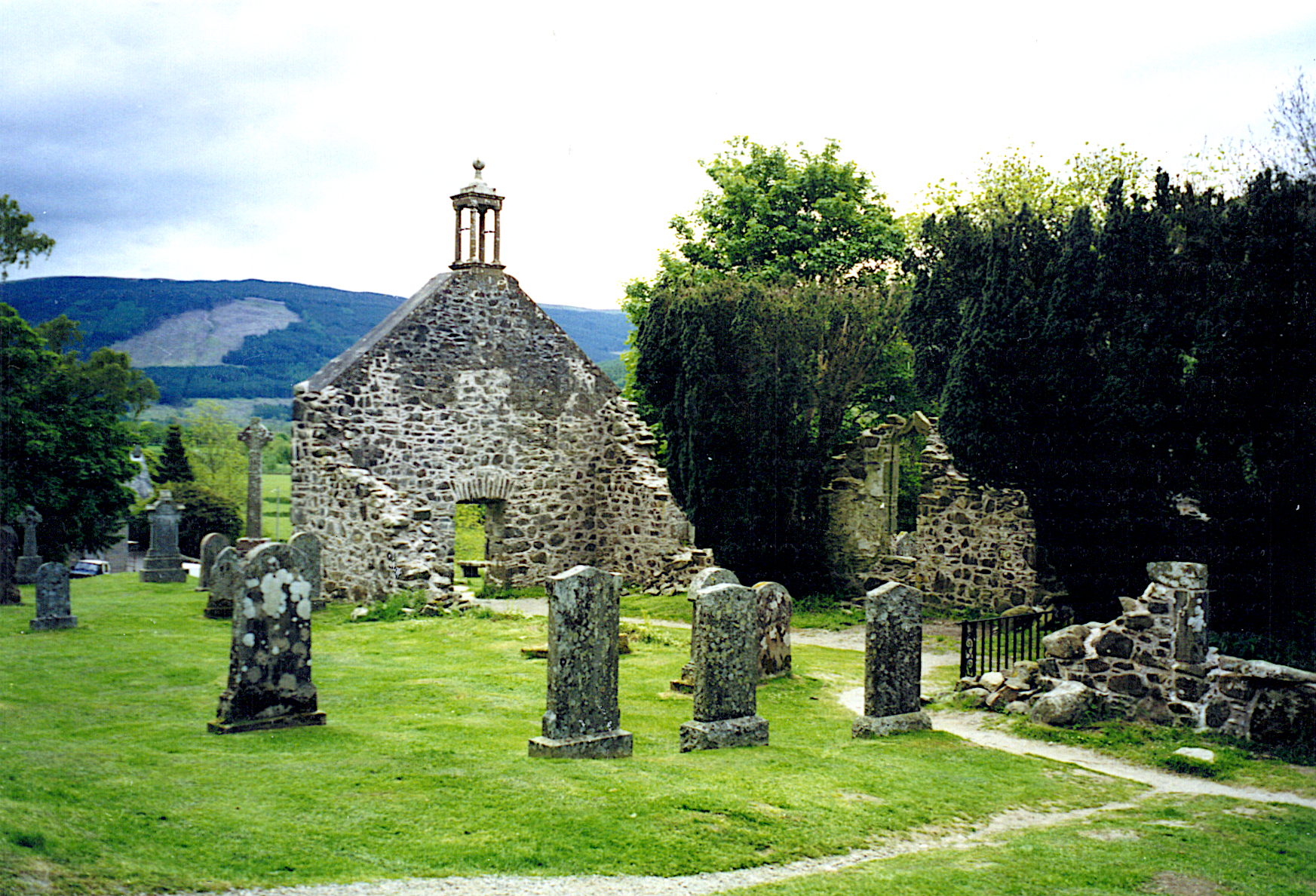
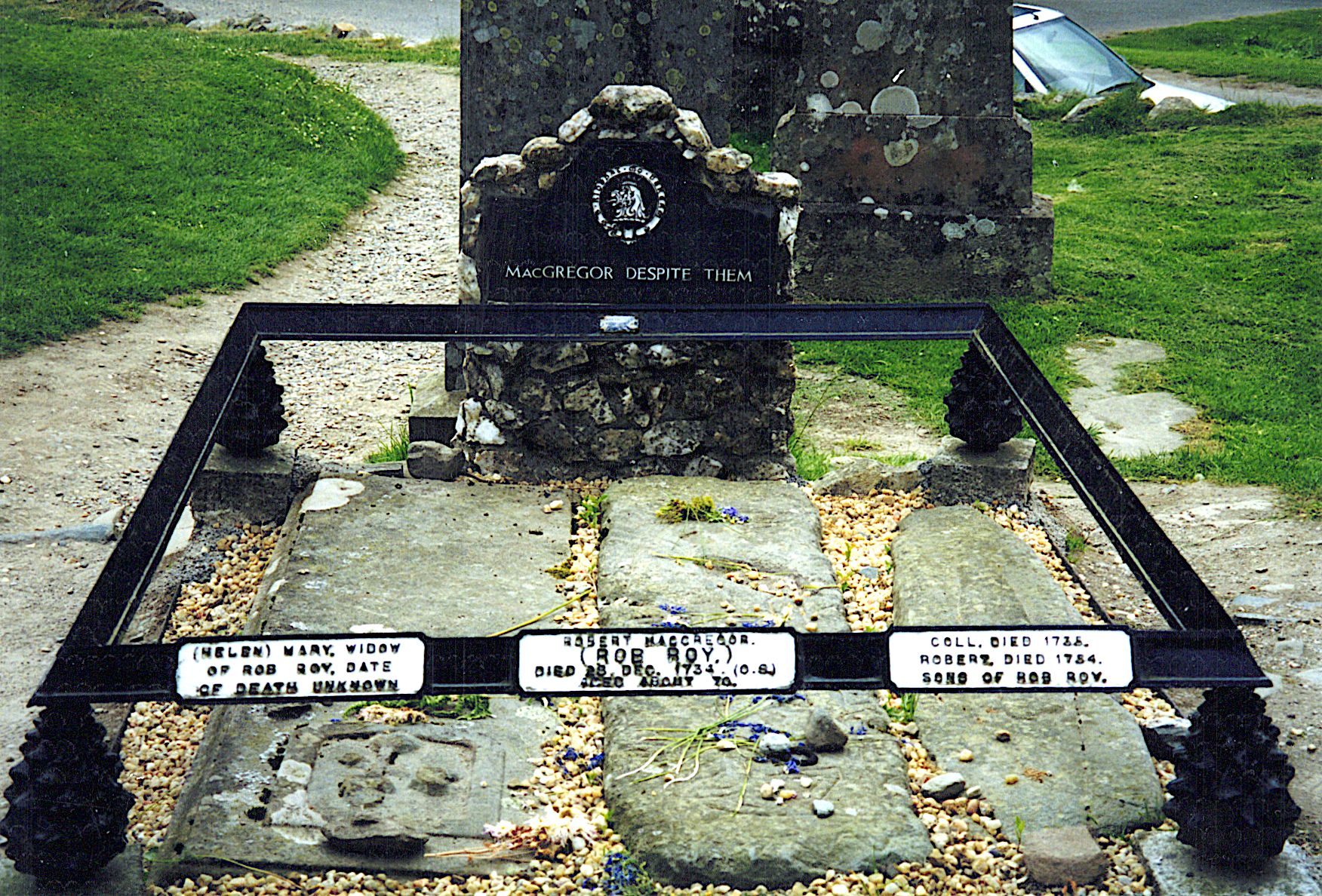
| Balquhidder is a small village in Perthshire overlooked by the dramatic mountain terrain of the 'Braes of Balquhidder', and is the final resting place go Rob Roy. Rob Roy MacGregor was a cattle drover and outlaw, leader of the MacGregor clan and folk hero, who lived near Loch Lomond in the 17th and 18th centuries. He joined the Jacobite rising of 1689 with his father when he was just 18 years old. MacGregor borrowed a large sum to increase his cattle herd, however his chief herder allegedly stole he money and MacGregor defaulted on his loan. As a result, he was branded an outlaw, and his wife and family were evicted from their house at Inversnaid. MacGregor then waged a private blood feud against his principal creditor, the Duke of Montrose, both raiding his cattle and robbing his rents. He died in his house at Inverlochlarig Beg, Balquhidder, in 1734, and is buried with his wife and two sons. We found two churches in the small village surrounded by a cemetery, one of which was ruined. Rob Roy's grave is near the front of the ruined church, his tombstone proudly proclaiming, MacGregor Despite Them." The best thing about our visit here was the stunning countryside that surrounds the site. Absolutely beautiful. |
 |
 |
Kilchurn Castle, Argyll and Bute
| Kilchurn Castle is a ruined structure on a rocky peninsula at the northeastern end of Loch Awe, in Argyll and Bute. It was first constructed in the mid-15th century as the base of the Campbells of Glenorchy, who extended both the castle and their territory in the area over the next 150 years. The first castle comprised the five-storey tower house, with a courtyard defended by an outer wall. At the time Kilchurn was on a small island scarcely larger than the castle itself, and would have been accessed via an underwater or low-lying causeway. This was yet another impressive castle set in a stunning location. We were able to climb to the top of the castle and enjoy views of the ruins and the loch. Outstanding. |
Oban
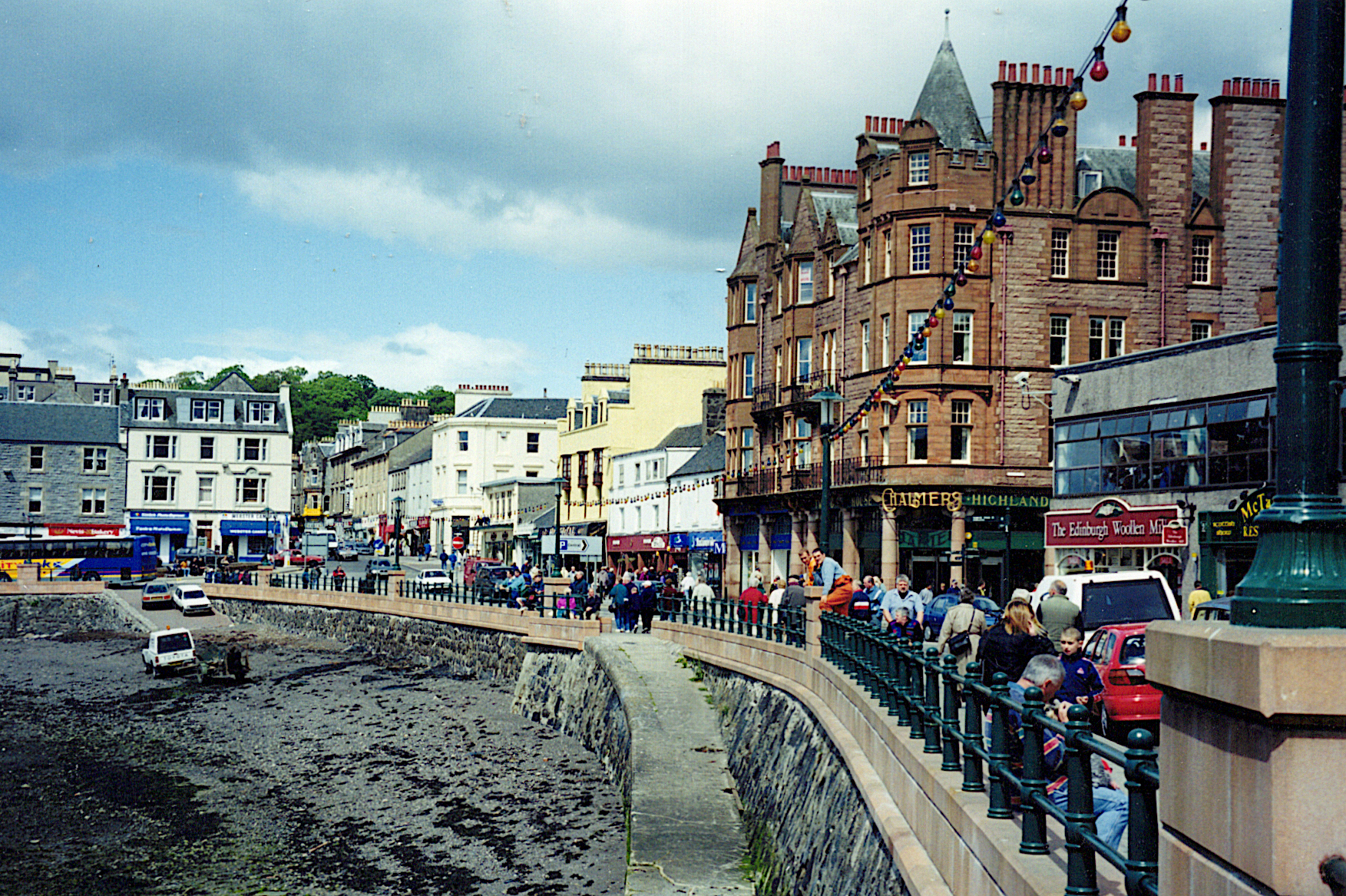
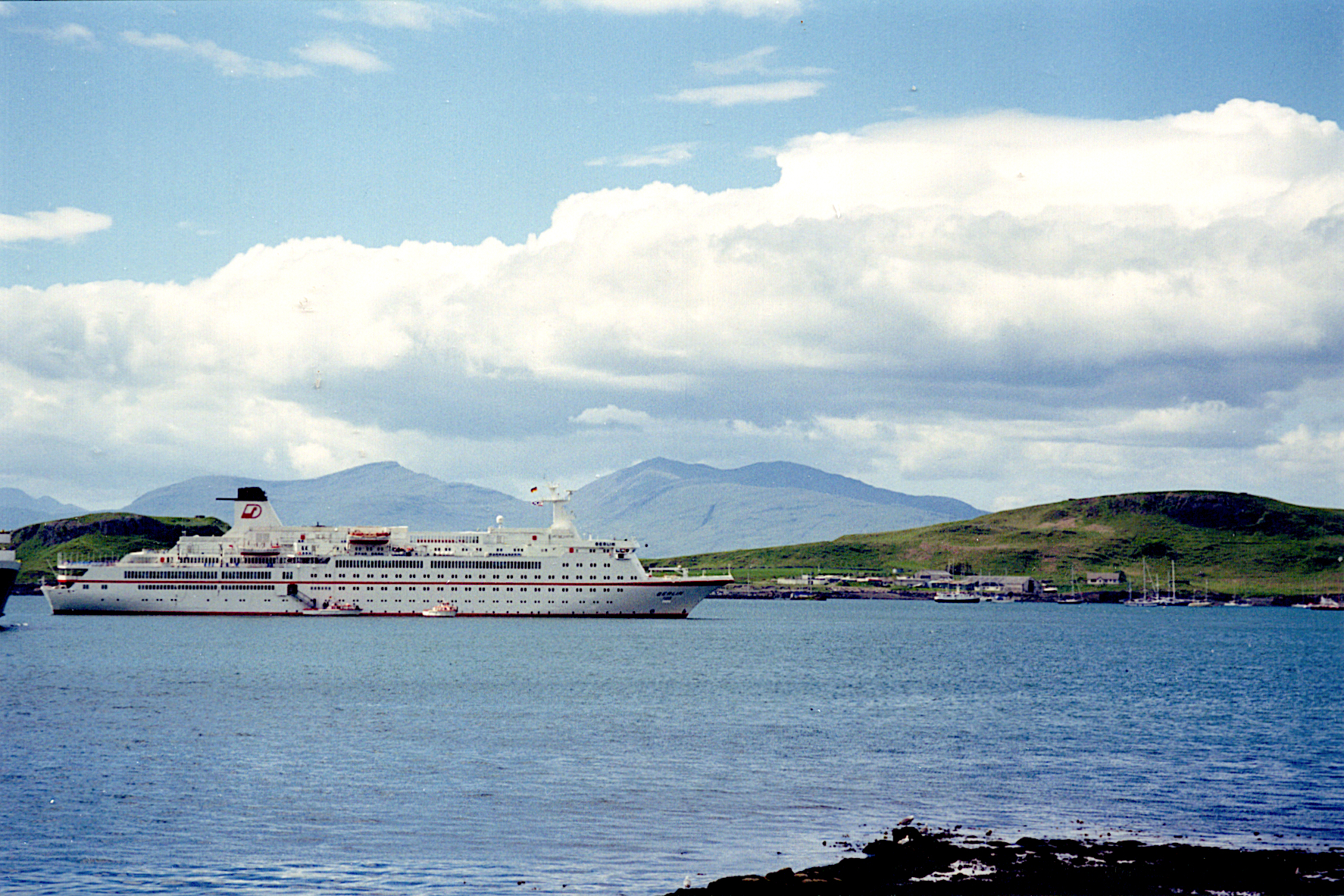
| Our plan for the afternoon was to drive to the lively seaside town of Oban and catch the ferry over to the Isle of Mull. I wanted to see Iona at the end of the Island, a holy site with an ancient monastery and royal cemetery that was arguably the birthplace of Christianity in Britain. Unfortunately we just missed the ferry and had to be content with exploring the town and enjoying a pub lunch. Better luck next time! |
Dunstaffnage Castle, Argyll and Bute
| Dunstaffnage Castle is located about 3 miles from Oban, situated on a promontory at the south-west of the entrance to Loch Etive, and is surrounded on three sides by the sea. The castle dates back to the 13th century, making it one of Scotland's oldest stone castles. It was built by the MacDougall lords of Lorn, and has been held since the 15th century by the Clan Campbell. The castle is an irregular quadrangular structure, with rounded towers at three of the angles. The gatehouse was built by the Campbells in the late 15th century, replacing an earlier round tower in the east corner, and takes the form of a four-storey harled tower house. The walls are up to 10 ft thick, affording strong defense to this highly strategic location, guarding the entrance to Loch Etive and the Pass of Brander beyond. This was the final castle we visited in Scotland and it was a good one. Once again, there was lots to explore here but my favorite part of the castle was the partially-restored parapet walk which provided some of the most outstanding castle views we had seen. Standing here and looking over to the boats and the hills beyond, reminded me a little of Conwy Castle in Wales, and there's nothing wrong with that. |
| Afterwards we drove back for our final night at the Culcreuch Castle Hotel, enjoying dinner a a few final pints of Scottish ale before taking the train from Edinburgh to London the following morning. In thinking about this leg of our trip, I feel that the high points were not the castles themselves, but rather the stunning countryside we encountered along the way. My two favorite non-ruined castles would have to be Castle Campbell and Dunstaffnage, however I also think that staying at Culcreuch Castle was perhaps my real favorite activity. It had been am incredible three weeks; hiking in the Lake District and along Hadrian's Wall, exploring the Highlands and our first Scottish castles, and visiting the historic cities of Stirling and Edinburgh. If I was forced to pick a favorite place or activity, it would have to be the hiking. In the Lake District we found the impossible, beauty that rivaled that of Wales, and with two different hikes along Hadrian's Wall, we checked off one of my "bucket-list" items at a very early age. We enjoyed a couple of nights in London before returning home, but, to be honest, it was a bit of a letdown after what we had experienced in Wales, England, and Scotland. |
 |
Part I: South Wales
Part II: The Lake District
Part III: Northumberland
Part IV: Scotland, The Highlands
Part VI: London
 Return to the main Travelogue page Return to the main Travelogue page
|